
Key Takeaways
- A true travel dog bed is designed around portability first: low weight, compact pack-down, fast drying, and easy cleaning. Comfort still matters, but it must be practical for cars, cabins, tents, and short stays.
- In Australian conditions, temperature management is part of bedding choice. Heavy, dark, high-walled beds can trap heat. In summer and the tropics, breathable mats or elevated mesh styles are often safer.
- Hygiene is not a minor detail when you are moving between beaches, bush tracks, caravan parks, and pet-friendly accommodation. Choose removable covers, simple construction, and materials that tolerate hot washing and thorough drying.
- Safe travel is bigger than bedding. Restraints, crate fit, ventilation, and “never leave a dog in a parked car” are essential, and repeatedly reinforced by RSPCA guidance.
- The best travel bed is the one your dog will actually settle on. Familiar texture, predictable shape, and consistent placement in the car and at the destination reduces stress and improves rest.
Recommended by PetCareShed: Smart Choices for Every Dog Owner
Introduction
A travel dog bed can look like a small purchase, yet it affects almost every part of a trip: comfort in the car, settling at a new accommodation, sleeping through cold nights, coping with heat, and staying clean enough that the dog remains welcome in pet-friendly spaces. Australian travel adds extra variables that are rarely discussed in detail—hot roads, long driving days, humid coastal towns, sandy beaches, burrs and bindis, paralysis tick regions, and accommodation rules that may expect dogs to stay off couches and human beds.
This guide explains how to choose the best travel dog bed in Australia with a focus on three practical outcomes: lightweight and portable, easy to clean, and safe and comfortable across Australian climates. It is written for dog owners with informational and commercial intent—people who want to understand what matters before purchasing.
Where health and safety are involved (heat stress, travel restraint, hygiene), the article follows the general direction of leading Australian welfare advice. RSPCA resources, for example, emphasise the importance of planning, containment during journeys, and never leaving dogs in hot vehicles. They also provide detailed heatstroke prevention guidance and first aid principles, including urgent veterinary attention if heatstroke is suspected.
Because Every Dog Deserves the Best — from PetCareShed
What Makes a Dog Bed “Travel-Friendly” in Australia?
A travel bed is not simply a smaller version of a lounge-room bed. It has to perform under conditions that are tougher and less predictable: packed into a boot, carried to a campsite, laid on dusty cabin floors, shaken out at the beach, and washed more frequently than a bed that stays at home.
The defining features of a travel dog bed are best understood as trade-offs.
The travel trade-off: You want the bed to be light and packable, but you also want it to provide enough insulation and joint support for your dog to rest well after long walks and new experiences.
Core characteristics that matter most
A practical travel bed for Australian use typically includes:
- Low weight and compact storage
- Folds flat, rolls, or compresses without losing shape.
- Fits easily in a car setup alongside a crate, barrier, luggage, and water.
- Fast drying and easy cleaning
- A removable cover is strongly preferable.
- Fabrics do not hold odour, water, or sand.
- Seams and corners do not trap grime.
- Non-slip stability
- The underside grips polished floors (holiday rentals), tiled caravan annexes, and crate bases.
- Appropriate thermal behaviour
- Breathable options for warm regions.
- Insulating layers for cold ground during winter travel.
- Practical shape and behaviour
- Dogs often settle better on a bed that feels familiar. A “travel version” of the home bed’s surface texture can make a difference.
Why Australian conditions change the checklist
In many parts of Australia, travel involves greater temperature variation than owners expect. A dog may be walking in the sun at midday, then sleeping on cold ground at night. Coastal humidity can prevent thick foam from drying quickly. Red dirt can stain light fabric. Some regions have high tick risk, and bed construction can make inspection and cleaning easier—or much harder.
A travel dog bed should be chosen with the same practical realism applied to selecting hiking boots: the goal is to reduce problems before they start.
Common Travel Setups (Car, Crate, Camping, Hotels) and What the Bed Must Do
The “best” travel bed depends on where the bed will be used most. Owners often buy a bed for one scenario (a weekend away) and then discover it is awkward in another (a long road trip, or a rainy camping trip). The best approach is to decide which setup is most frequent, then select a bed that can flex into secondary uses.
1) Car travel (back seat or cargo area)
For car travel, a bed is often used as a liner—either within a secured crate, on a rear seat under a dog seat cover, or in the cargo area behind a barrier.
A good car travel bed should:
- Stay flat and stable under braking
- Provide a non-slip surface
- Not be so thick that it compromises crate ventilation
- Avoid excessive bolsters that push the dog into awkward positions
RSPCA road-trip advice emphasises containment and appropriate space where a crate or container is used, allowing the dog to stand, lie down and turn around comfortably, and the crate should be secured within the vehicle.
2) Crate travel (car crate or accommodation crate)
A travel bed for a crate needs to fit precisely. If it bunches, it becomes a slip hazard. If it is too thick, it can reduce usable headroom and airflow.
A crate-compatible travel bed is typically:
- Low profile
- Easy to remove and shake out
- Either one-piece (simple) or with a tightly-fitted cover
3) Camping and caravanning
Camping shifts the priority from “protect the car interior” to “protect the dog from the ground.” In Australia, the ground can be cold, uneven, damp, or abrasive.
A camping-friendly bed should:
- Insulate from cold ground (winter, alpine, inland nights)
- Dry quickly after dew or rain
- Resist burrs and sand
- Be easy to clean and keep hygienic around food and sleeping spaces
In hot climates, thick beds can trap heat. Elevated mesh cots or thin breathable mats often make more sense.
4) Hotels, cabins, and pet-friendly accommodation
Many pet-friendly stays expect dogs to use their own bedding and remain off furniture. A travel bed acts as a “designated spot” that helps your dog settle and reduces shedding on carpets.
For accommodation, owners often value:
- A neat-looking bed that stays in one place
- Odour control and low dander retention
- Quiet materials (no loud crinkling that disturbs neighbours)
Types of Travel Dog Beds (Pros, Cons, and Best Uses)
Travel dog beds are commonly sold under many names. The most useful way to compare them is by structure.
Foldable travel mats
These are flat, low profile, and usually the easiest to pack.
Advantages
- Very portable and light
- Fits in crates and on car seats
- Easy to shake out
Limitations
- Less joint support for older dogs
- Less insulation in cold conditions unless layered
Best for: frequent car travel, short stays, dogs that like to sprawl.
Roll-up beds
Roll-up beds often include straps or a carry handle.
Advantages
- Compact storage
- Easy to carry to parks, cafes, and picnics
Limitations
- Can trap sand and hair if fabric is textured
- Some designs shift under the dog if too slippery
Best for: day trips, café training, multi-stop travel.
Lightweight foam pads with removable covers
These aim to balance portability with comfort.
Advantages
- Better support than thin mats
- Good for medium to large dogs when designed well
Limitations
- Foam can hold odour if the cover leaks
- Slower drying after washing if water penetrates inside
Best for: accommodation stays, dogs with mild joint sensitivity.
Elevated travel cots (mesh)
Elevated styles are particularly relevant in Australian summer.
Advantages
- Airflow under the dog helps cooling
- Keeps dog off hot or damp ground
- Reduces contact with sand, dirt, and insects
Limitations
- Bulkier than mats
- Not ideal for very small dogs or dogs that dislike raised surfaces
Best for: camping, caravanning, warm climates, dogs that overheat.
Bolster beds (travel-sized)
Some dogs love the security of bolsters, but this structure can create issues in hot environments and small spaces.
Advantages
- Dogs that curl up may settle quickly
- Can provide head support
Limitations
- Often heavier and bulkier
- Can trap heat
- Harder to clean if the cover is not fully removable
Best for: calm accommodation use, cooler climates, anxious dogs who benefit from a defined boundary.
Lightweight and Portable: How to Judge Packability Properly
“Lightweight” is often listed on product pages, yet many travel beds remain awkward to carry or store. In practice, portability is about the whole system: weight, pack shape, how it handles moisture, and how fast it can be deployed.
A practical portability checklist
Before purchasing, confirm:
- Weight and carry method
- Is there a handle or strap?
- Can it be carried one-handed while holding a leash?
- Pack-down size
- Does it fold flat or roll tightly?
- Will it fit behind a seat, in a crate, or in a caravan storage compartment?
- Speed of setup
- Beds that need complicated assembly are often left at home.
- Water behaviour
- If it gets wet, does it become heavy?
- Can it be dried quickly in the sun or shade?
Common portability mistakes
- Buying for comfort only: a thick bed that is comfortable at home can become dead weight on a trip.
- Ignoring vehicle space: if you use a crate or barrier, measure remaining cargo space first.
- Assuming you will carry it “sometimes”: travel beds are most useful when they are easy enough to bring every time.
Easy to Clean: Materials, Covers, and What “Washable” Really Means
Cleaning is where travel beds often fail. After a few trips, some beds hold odour, become permanently sandy, or develop a greasy film. This is usually not the owner’s fault; it is a function of fabric choice and construction.
What to look for in fabrics
Travel-friendly fabrics usually have these qualities:
- Tight weave (less sand and hair embedded)
- Low pile (less odour retention)
- Fast drying
- Durable seams
Common fabric types in travel dog beds include polyester and nylon blends. The exact chemistry matters less than the practical result: easy washing, fast drying, and resistance to abrasion.
Removable covers: the single biggest advantage
A removable cover allows routine washing without soaking the inner fill. This is especially important on trips where a dog may swim, roll in mud, or have an upset stomach.
A strong travel cover design typically includes:
- Full-length zipper (not a small corner opening)
- Zipper protection flap (reduces chewing and scratching damage)
- Inner liner or water-resistant layer (helps protect foam)
Washing temperature and hygiene considerations
General public health and infection control guidance increasingly treats pet textiles as potential carriers of dirt, parasites and pathogens. Infection-control guidance for companion animals in high-risk settings notes that animal bedding should be checked for cleanliness and external parasites, and recommends hot machine washing and laundering separately from human items in some contexts.
Practical approach for most households:
- Wash covers regularly during travel, especially after beach trips and bush walks.
- Dry thoroughly before reuse.
- If bedding is contaminated with diarrhoea or vomit, treat it as an urgent hygiene task and consider whether discarding a low-cost mat is safer and more practical.
For dogs with parasites or households with vulnerable people (very young children, elderly, pregnant people, immunocompromised family members), more cautious laundering routines are sensible.
Travel cleaning kit (simple but effective)
A small kit can prevent bedding from becoming an ongoing problem:
- Spare lightweight cover or blanket
- Small lint roller or rubber grooming glove (for hair)
- Compact brush for burrs and sand
- Waste bags and paper towel
- Laundry bag to separate dog items
Comfort and Orthopaedic Support When Away From Home
Dogs rest differently during travel. Many dogs sleep lightly in unfamiliar settings and may move between cool and warm spots. A bed that is “perfect” at home can become too warm, too restrictive, or too thin.
Matching support to your dog’s needs
- Young, healthy dogs: often do well with a padded mat or lightweight foam pad.
- Senior dogs and dogs with arthritis: typically benefit from more consistent cushioning. In travel settings, the compromise is a supportive pad that still packs down.
- Very large breeds: need enough thickness to prevent pressure points, particularly on hard floors.
The role of familiarity
A travel bed can reduce stress because it creates a predictable resting place. Many dogs settle more quickly when the same bed appears in the car, at a café, and at the accommodation.
Simple techniques to increase acceptance:
- Introduce the travel bed at home for short rests.
- Place a familiar, washable blanket on top.
- Use the bed for calm training (settle cues) before a trip.
Heat, Humidity, and Hot Surfaces: Australia-Specific Bedding Considerations
Heat management is not optional in Australia. Dogs are vulnerable to heat stress, and leading welfare advice warns that dogs can develop heatstroke quickly. RSPCA guidance highlights that dogs should never be left in vehicles and provides detailed signs of heatstroke and prevention measures.
Why bed choice affects overheating risk
A bed influences how a dog loses heat. Thick foam, plush covers, and high bolsters can reduce airflow around the body and trap warmth. On hot nights, a dog may refuse the bed entirely, choosing tile or dirt instead.
Signs of heat stress to take seriously
RSPCA guidance lists a range of signs consistent with heatstroke risk, including heavy panting, drooling, agitation, weakness, vomiting, diarrhoea, tremors, collapse and seizures, and stresses urgent veterinary care if heatstroke is suspected.
Bedding strategies for warm regions
In warm or humid conditions, consider:
- Thin, breathable travel mats
- Elevated mesh cots for airflow
- Light-coloured fabrics that do not absorb as much radiant heat
- A “layering” approach: use a light mat as the base, add a blanket only if needed
Hot surfaces: protecting paws and bodies
In many Australian locations, pavement and sand can become dangerously hot. Travel beds should not be placed on surfaces that radiate heat upward (such as metal ute trays or dark decking in full sun). A bed cannot compensate for an unsafe environment.
Brachycephalic dogs and heat risk
Flat-faced (brachycephalic) breeds have reduced ability to cool through panting and are consistently identified as higher risk in heat. For these dogs, owners should be particularly cautious with bedding that traps heat, and prioritise airflow and shade.
Car Travel Safety: Bedding, Restraints, and Crate Setup
A travel bed should never be considered a restraint. The bed’s role is comfort and stability, while safety is managed by appropriate containment.
RSPCA travel advice consistently emphasises that dogs should be contained during the journey and that containers must allow dogs to stand, sit, turn around and lie down comfortably, and should be secured within the car.
Basic principles for safe vehicle travel
- The dog should be effectively restrained so they cannot interfere with driving.
- The dog should travel in the rear seat or cargo area, not on the driver’s lap.
- The dog should not be left unattended in a vehicle, particularly in warm conditions.
Where the bed fits into a safe setup
In a secured crate:
- Use a low-profile mat or fitted crate pad.
- Avoid thick beds that reduce ventilation.
- Ensure the pad does not slide; non-slip bases help.
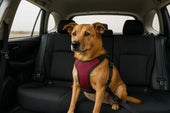
On the rear seat (with harness restraint):
- A flat mat can improve comfort and protect upholstery.
- Ensure the bed does not block seatbelt attachment points.
In the cargo area (behind a barrier):
- A larger mat can protect flooring and create a defined resting space.
- Non-slip and easy-to-clean surfaces are essential.
Heat and travel
Transport itself is a heat risk in Australia. Even with air conditioning, a dog can overheat if airflow is poor. RSPCA guidance emphasises that dogs should never be left in cars, as heat stress can develop rapidly.
Camping and Outdoor Travel: Cold Ground, Wet Weather, and Real-World Durability
Camping is where “easy to clean” becomes as important as “comfortable.” Your dog’s bed may be exposed to dew, rain splash, mud, and food smells that attract insects.
Ground insulation and cold nights
Cold ground can chill dogs more than expected, particularly lean breeds, older dogs, and short-coated dogs. A travel bed for camping should provide insulation without becoming waterlogged.
Practical approach:
- Use a water-resistant base layer.
- Add a washable top blanket.
- Keep the bed raised from wet ground where possible.
Wet weather and drying strategy
Fast drying matters because damp bedding can irritate skin and increase odour. When conditions are humid, thick foam may not dry before the next sleep.
Consider:
- Two thin layers rather than one thick layer
- A spare cover or spare mat
- Hanging covers in sun and breeze whenever possible
Burrs, bindis, and sand
Some fabrics attract burrs, which then work into the coat and skin. Tight-weave covers generally shed burrs more easily. A simple daily routine helps:
- Shake out the bed
- Brush off sand
- Inspect seams and corners
Hygiene, Parasites, and Biosecurity When Travelling Around Australia
Moving between regions changes your dog’s exposure to parasites. Bedding can become a hiding place for fleas and a surface where ticks may be noticed—or missed.
Infection-control guidance in Australian settings notes that animal bedding should be checked for cleanliness and external parasite infestation, and parasite treatment should be guided by veterinary identification and appropriate products.
Practical parasite-aware bedding habits
- Choose light-coloured covers where ticks are easier to see.
- Avoid deep pile fabrics that hide insects and flea dirt.
- Wash bedding more frequently when travelling through bushland or coastal tick regions.
- Keep bedding off the ground in tick-prone areas where practical.
When to discard rather than wash
If a bed is heavily contaminated (diarrhoea, persistent odour after washing, mouldy inner fill), discarding can be the safest choice. A low-cost, easy-to-replace travel mat is often a wise part of the travel system.
Measuring and Fit: Getting the Right Size Without Overpacking
Sizing mistakes are common, particularly when owners aim to “give extra space.” In travel, extra size can become a problem.
How to measure
Measure your dog in their typical sleep position:
- Curled up: measure nose to base of tail, add a modest margin.
- Sprawled: measure nose to tail tip, and shoulder width.
Then measure the intended travel location:
- Crate internal dimensions
- Cargo area floor space
- Tent floor plan (including door clearance)
Fit priorities by use
- Crate fit: precision matters most.
- Car seat fit: stability and restraint compatibility matter.
- Accommodation: slightly larger can be helpful if space allows.
What to Look for in Product Descriptions (and What to Be Cautious About)
Travel beds are often described with broad claims. The goal is to translate marketing terms into practical meaning.
Terms that usually indicate practicality
- “Removable, machine-washable cover” (confirm zipper access)
- “Water-resistant base” (useful for camping)
- “Non-slip underside” (useful on tiles and in cars)
- “Quick-dry fabric” (useful for beach and humid climates)
Claims to treat cautiously
- “Waterproof” without specifying whether the inner fill is protected
- “Orthopaedic” without describing foam density or structure
- “Chew-proof” (few fabrics truly are, and travel stress can increase chewing)
Comparison Table: Matching Bed Type to Travel Style
| Travel bed type | Best for | Main advantage | Main limitation | Cleaning practicality |
|---|---|---|---|---|
| Foldable mat | Road trips, cafes, crates | Very light and compact | Less joint support | Usually excellent |
| Roll-up bed | Day trips, multi-stop travel | Easy to carry | Can shift if slippery | Good if low-pile |
| Foam pad (removable cover) | Cabins, longer stays | Balanced comfort | Slower drying if soaked | Good with liner |
| Elevated mesh cot | Camping, hot climates | Airflow and cooling | Bulkier to pack | Very easy to wipe |
| Travel bolster bed | Cooler regions, anxious dogs | Security and head rest | Heat trapping, heavier | Varies by design |
A Practical Buying Framework (So You Can Choose Confidently)
A good buying decision is usually made by answering a short list of questions honestly.
Step 1: Where will the bed be used most?
Choose one:
- Mainly in the car
- Mainly in accommodation
- Mainly camping/caravan
- Mainly cafés and day trips
This determines whether you prioritise non-slip stability, insulation, or packability.
Step 2: What is your dog’s comfort need level?
- Low: young, healthy, settles anywhere
- Medium: prefers cushioning, fussy about surfaces
- High: senior, joint issues, thin coat, large breed pressure points
Step 3: What is your realistic cleaning routine?
Be practical:
- Will you wash weekly during travel, or only at home?
- Do you have access to a machine while away?
- Will the bed be exposed to saltwater, sand, and red dirt?
Step 4: What climate will you be travelling in?
- Hot/humid: prioritise breathable, quick-dry, and avoid thick plush
- Cold: prioritise insulation and layering
- Mixed: choose a modular system (thin base + washable top blanket)
Recommended Related Products from PetCareShed
The right travel bed is easier to use when it is part of a complete, practical travel system. The following product categories from PetCareShed are commonly relevant to travel bedding decisions.
- Foldable travel dog mat
- Useful for car travel, cafes, and as a crate liner. Best for owners who need fast pack-down and frequent washing.
- Water-resistant dog bed cover or spare cover
- A spare cover reduces downtime when one is being washed or drying, and helps manage beach and wet-weather trips.
- Non-slip dog bed mat
- Helps prevent sliding on tiles or polished floors in accommodation and caravans, and can be used under a bed for stability.
- Portable elevated dog bed (mesh cot)
- Particularly useful for camping and hot climates where airflow and ground separation improve comfort.
- Travel bowls and portable feeders
- Keeping food and water organised reduces mess around bedding and helps maintain a clean sleeping area.
- Dog grooming and cleaning essentials (wipes, brushes, deshedding tools)
- Quick grooming after beach or bush walks reduces the dirt and parasites transferred to bedding.
- Dog harnesses, leads, and car safety accessories
- Travel safety and bedding comfort work together. Proper restraint and containment reduces stress and helps dogs rest more calmly.
Care and Maintenance: A Simple Routine That Keeps a Travel Bed “Trip-Ready”
Travel beds last longer and stay more hygienic when maintenance is consistent.
Before the trip
- Wash and fully dry the cover.
- Inspect seams, zippers, and underside grip.
- If using a crate, confirm the pad lies flat and does not bunch.
During the trip
Daily (fast routine):
- Shake out sand and dust.
- Remove burrs.
- Check for dampness and dry in sun/breeze when possible.
Every few days (or after heavy use):
- Wash the cover if you have access to laundry.
- Wipe down water-resistant surfaces.
After the trip
- Wash and dry thoroughly.
- Store in a dry place to prevent mould.
- Restock the travel laundry bag and spare cover.
Safety Notes: Heatstroke, Vehicles, and When to Seek Veterinary Help
Heatstroke is an emergency. RSPCA guidance explains that heatstroke involves potentially life-threatening elevation in body temperature and stresses immediate veterinary attention. They also emphasise prevention measures such as shade, ventilation, and never leaving dogs in cars.
What to do if you suspect heatstroke
General first aid guidance from RSPCA resources includes:
- Begin cooling immediately with tepid/cool water (not ice-cold) and improve airflow.
- Seek urgent veterinary care.
Travel bedding is not a treatment tool, but a poor bedding choice (overly insulating, placed in sun, used in a poorly ventilated crate) can contribute to overheating. In Australian summer, bedding should support cooling and safe rest.
FAQ: Best Travel Dog Bed Australia
What is the best type of travel dog bed for Australian road trips?
For most road trips, a foldable mat or low-profile foam pad with a removable, washable cover is the most practical. It packs down easily, fits in common car setups, and can be washed frequently. If your dog travels in a crate, prioritise a fitted pad that does not bunch or slide.
Are elevated dog beds good for camping in Australia?
Elevated mesh cots can be excellent for Australian camping, particularly in warm climates. They allow airflow under the dog and keep the sleeping surface off hot, damp, or uneven ground. They are usually easier to wipe clean than fabric-filled beds, but they can be bulkier to pack.
How do I choose a travel bed for a senior dog with arthritis?
Senior dogs often need more consistent cushioning. Look for a supportive travel pad that still remains portable, preferably with:
- a removable cover
- stable, non-slip underside
- enough thickness to reduce pressure points on hard floors
A layering system can also help: a supportive base pad plus a washable blanket adjusted for temperature.
How often should I wash a travel dog bed?
During travel, washing frequency should be based on exposure:
- After beach trips, muddy walks, or heavy shedding periods: wash sooner.
- For typical accommodation stays: aim for regular washing as needed and thorough drying.
In infection-control guidance for higher-risk environments, pet bedding is washed using hot cycles and managed separately from human laundry. In a household setting, the practical principle remains the same: wash regularly and dry fully, and increase frequency when contamination or parasites are a concern.
What washing settings are best for dog bed covers?
Follow the care label. As a general hygiene approach, warmer washes and thorough drying are helpful, especially after contamination. If a cover cannot tolerate effective washing and drying, it may not be suitable for frequent travel use.
Is it safe to put a thick bed inside a travel crate?
It depends on crate size, ventilation, and temperature. A thick bed can reduce airflow and usable space. For Australian travel, many dogs do better with a low-profile mat inside the crate, particularly in warm weather. Always ensure the crate allows the dog to stand, turn, and lie down comfortably, and is well ventilated and secured.
Can a travel bed replace a car restraint?
No. A travel bed improves comfort and can reduce slipping, but it does not restrain the dog. RSPCA travel guidance emphasises containment during travel and the need for secured crates or appropriate restraint systems.
Should I choose a waterproof travel bed?
Water resistance is usually more practical than “waterproof.” A water-resistant base helps with dew and damp ground, but the bed must still be breathable and able to dry. If moisture gets into foam and cannot dry quickly, odour and mould risk increase.
What is the best travel bed for beach trips in Australia?
Look for:
- tight-weave, low-pile fabric that releases sand
- removable, machine-washable cover
- quick-dry materials
A spare cover is particularly useful for beach travel.
How do I stop my dog from refusing the travel bed?
Introduce it before the trip:
- place it in the living area at home
- reward calm settling on the bed
- add a familiar blanket
Consistency helps. Use the bed as your dog’s “spot” in multiple locations so it becomes predictable.
Are bolster beds suitable for hot Australian summers?
Often they are less suitable because bolsters and plush fabrics can trap heat and reduce airflow. If your dog prefers bolsters, consider a lighter, breathable version and monitor comfort closely. Many dogs choose cooler surfaces during heat; provide options and prioritise shade and ventilation.
What should I do if my dog’s bed gets contaminated with diarrhoea while travelling?
Treat it as a hygiene priority:
- remove solids carefully
- wash the cover promptly
- dry thoroughly
If the inner fill is soaked and cannot be cleaned and dried effectively, discarding may be the safest choice, especially if you are staying in shared accommodation.
Can bedding contribute to fleas and ticks?
Yes. Bedding can harbour flea eggs and can hide ticks if fabric is deep pile or cluttered. Infection-control guidance notes bedding should be checked for cleanliness and external parasite infestation, and parasite control should be guided by veterinary advice. For travel in tick-prone areas, choose lighter fabrics and inspect both the dog and bedding regularly.
What is the simplest “one-bed” solution for most Australian owners?
For many owners, the most versatile approach is:
- a foldable travel mat (base layer) plus
- a washable blanket (adjustable top layer)
This combination covers car travel, accommodation, cafes, and many camping setups, while staying easy to wash and quick to dry.