
Key Takeaways
- Treat dispensing dog toys turn everyday feeding into enrichment. They encourage natural foraging behaviours, provide cognitive stimulation, and can make time at home calmer and more structured.
- The best option depends on your dog’s chewing style, diet, and experience level. A toy that suits a gentle senior may fail quickly with a powerful chewer.
- Portion control matters. Treats should make up less than 10% of a dog’s daily calories, as recommended by the World Small Animal Veterinary Association (WSAVA) and echoed by Australian industry guidance. This is particularly important when toys are used daily for training or alone-time routines.
- Safety is mostly about supervision, sizing, and inspection. Oversized toys reduce choking risk; damaged toys should be discarded promptly to prevent obstruction or choking. Australian veterinary clinics and first-aid providers commonly note torn toys and stuffing as frequent hazards.
- Hygiene is non-negotiable for food toys. Clean and dry treat toys thoroughly to reduce bacterial and mould growth; public health guidance recommends cleaning pet supplies with soapy water and disinfecting when appropriate, then rinsing well.
- Australian heat changes the rules. Food left in toys outdoors can spoil quickly and attract ants and flies. Food safety guidance highlights the “danger zone” (roughly 5–60°C) where bacteria can multiply rapidly.
Tail-Wagging Favourites from PetCareShed
Introduction
Treat dispensing dog toys have moved from “nice-to-have” novelty items to practical tools used by many Australian dog owners to support enrichment, behaviour, and healthier daily routines. In a country where summer heat, busy working schedules, and suburban living often limit spontaneous, long-duration exercise, reward-based play offers a structured alternative that can complement walking, training, and social time.
At their best, treat toys do more than “keep a dog busy”. They ask the dog to think, to problem-solve, and to persist. This taps into natural seeking and foraging behaviour that many dogs do not fully express when meals are delivered in a standard bowl. Veterinary nursing education and behaviour resources increasingly describe food puzzles as a form of environmental enrichment that can increase activity and provide cognitive stimulation.
At their worst, however, the wrong treat toy can become a frustration trigger, a choking risk, or a silent contributor to weight gain. Australian households also face practical realities that are not always discussed in overseas toy guides: ants finding food residue in outdoor toys, stuffing spoiling rapidly in heat, and the need for cleaning routines that suit apartment living or limited yard space.
This guide explains what makes a treat dispensing dog toy genuinely “best” in Australia, how to choose by dog type and household routine, what to put inside, how to clean safely, and how to use reward-based play to build calmer, smarter dogs.
What Treat Dispensing Dog Toys Are (and What They Are Not)
Treat dispensing toys are devices that release food as the dog manipulates them through rolling, nudging, chewing, pawing, lifting, licking, or solving a mechanical puzzle. Some dispense small pieces quickly (useful for movement-based play), while others are designed to hold a meal or a smearable filling that takes time to extract (useful for calming and alone time).
It helps to be precise about categories, because “treat toy” is often used to describe everything from a simple rubber ball to a high-complexity puzzle board.
Common categories used in Australian homes
- Rolling dispensers: A hollow toy with an adjustable opening. The dog rolls it and treats fall out.
- Stuffable chew toys: A durable cavity that can hold kibble, wet food, or spreadable fillings.
- Lick-based toys: Designed to hold a smear (wet food, yoghurt-style dog-safe options, or mashed food). These are often calming because licking can be self-soothing.
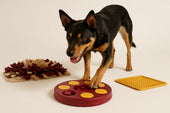
- Puzzle feeders (mechanical): Sliding covers, rotating compartments, or liftable flaps that hide food.
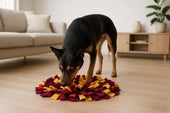
- Snuffle and foraging toys: Fabric-based, where food is hidden in folds or pockets to encourage sniffing.
What treat toys are not
- They are not a substitute for supervision with high-risk chewers. Any toy can become a choking or obstruction hazard when pieces break off.
- They are not automatically “healthy”. If extra treats are added on top of a full diet, the dog can gain weight quickly.
- They are not a cure for anxiety. They may be part of an evidence-based management plan that includes gradual training and, where needed, veterinary support.
Tail-Wagging Favourites from PetCareShed
Why Reward-Based Play Works: The Science of Enrichment and Learning
Treat dispensing toys sit at the intersection of three important areas: enrichment, feeding behaviour, and learning theory.
Enrichment: why “bowls are boring” can be true
Dogs evolved to spend significant time seeking food. Modern pet dogs often receive calories quickly, with minimal effort. When a dog is under-stimulated—especially in high-intelligence breeds or young adults—boredom can show up as nuisance barking, destructive chewing, pestering, or restlessness.
Food puzzles are widely used as enrichment because they encourage sniffing, manipulation, persistence, and problem-solving. Reviews and veterinary nursing guidance describe food puzzles as providing cognitive stimulation and increased activity.
Research findings are not uniform across all contexts (home vs kennel, short-term vs long-term), but there is evidence that food-based enrichment can reduce some stress-related behaviours in housed dogs. For example, a study on environmental enrichment reported findings consistent with reduced barking and increased activity with stuffed food toys in kennelled dogs.
The practical takeaway for Australian owners is straightforward: even when a treat toy does not “solve” a behavioural issue, it often improves the dog’s daily experience by adding variety and purpose to feeding.
Learning theory: positive reinforcement in everyday life
Treat toys are naturally aligned with positive reinforcement. When a dog interacts with the toy and receives a food reward, the behaviour is reinforced and becomes more likely to occur again. This is the same mechanism that makes training effective—timely rewards increase the chance the dog repeats the behaviour.
Importantly, this means treat toys can train persistence and problem-solving. But it also means they can inadvertently reinforce unwanted patterns if not managed (for example, if the dog becomes frantic and is repeatedly rewarded for high arousal).
Slower eating and better meal structure
For dogs that inhale food, puzzle feeding can extend meal duration. This can be useful for owners trying to reduce gulping, increase satiety, and create calmer mealtime routines. A UK veterinary publication on enrichment feeding (“Bowls are boring”) describes using puzzle feeders and strategies like feeding little and often as ways to address hunger-driven behaviours and improve feeding experiences.
Australian-Specific Considerations: Heat, Insects, and Household Routines
Many treat-toy guides assume temperate climates and indoor-only play. Australian conditions often require different habits.
Heat and food spoilage risk
In summer, a treat toy left outdoors can effectively become a warm incubator for food residue. Australian health guidance on food safety highlights that high-risk foods should be kept cold (around 5°C or below) or hot (above 60°C), avoiding the “temperature danger zone” where bacteria can grow quickly.
While that guidance is written for human food, the principle applies directly to dog food placed into toys—especially wet fillings, cooked meats, or dairy-style products.
Practical rule for treat toys in Australia:
- Prefer indoor use for wet or smearable fillings.
- For outdoor use, stick to dry kibble and pick up the toy promptly.
- Avoid leaving any food-filled toy outside “for later”. It attracts pests and can spoil.
Ants, flies, and wildlife
Food in toys can attract ants quickly in many Australian suburbs, and flies can contaminate exposed surfaces. If your dog plays outside, pick up toys after use and store them in a sealed container indoors. This reduces pest problems and discourages dogs from guarding outdoor “food resources”.
Busy schedules and the rise of “home-alone routines”
Many Australian households balance commutes, school runs, and hybrid work. Treat toys can be used to create a predictable alone-time routine, but they should be introduced carefully and matched to the dog’s emotional state.
Safety First: Risk Management for Treat Dispensing Toys
The “best” treat toy is the one that is safe for your dog in your environment.
Choking and obstruction risks
Veterinary and pet first-aid resources consistently warn that damaged toys, loose parts, and stuffing can cause choking or gastrointestinal obstruction. An Australian first-aid provider notes that stuffing from dog toys is a common choking cause and recommends discarding toys once torn open.
Additional veterinary advice highlights selecting toys appropriate for the dog’s size, because small toys and balls can be choking or obstruction hazards for larger dogs.
Non-negotiable safety checks
Before each use (particularly for strong chewers), check:
- Cracks, splits, or sharp edges
- Loose inserts, caps, or adjustable parts
- Fraying fabric (snuffle toys, rope-based toys)
- Changes in texture (rubber becoming brittle)
If a toy is damaged, dispose of it. “One more use” is a common way dogs end up with foreign bodies.
Choose the right size (bigger is usually safer)
A treat toy should be large enough that it cannot be swallowed whole. When in doubt, select the next size up and use smaller treats.
Supervision guidelines by dog type
- Puppies (especially teething): Supervise closely; puppies explore with their mouth and may shred softer components.
- Power chewers: Avoid complex toys with small moving parts; use heavy-duty, simple designs.
- Dogs new to puzzles: Supervision prevents frustration and teaches appropriate interaction.
- Multi-dog homes: Supervise to prevent resource guarding and conflict.
Materials: what matters in practice
Most durable treat toys are made from rubber-like polymers, tough plastics, nylon-type materials, or fabric composites. No material is perfect. Instead of looking for “indestructible”, aim for:
- Durability appropriate to chewing style (gentle vs intense)
- Food-safe surfaces (smooth enough to clean, resistant to absorbing odours)
- Low-fragmentation (pieces should not shear off easily)
If a dog can remove pieces, the toy is not suitable for unsupervised use.
Types of Treat Dispensing Dog Toys and When to Use Each
Different toys suit different goals. A helpful way to choose is to decide whether your priority is movement, chewing, licking, sniffing, or mechanical problem-solving.
Rolling treat dispensers
These are best for:
- Dogs that enjoy chasing and nudging toys
- Owners who want a quick, low-mess enrichment option
- Using part of a meal as “earned” kibble
Limitations include noise on hard floors and potential frustration for dogs that do not naturally push objects.
Stuffable chew toys
These are best for:
- Calm, long-duration enrichment
- Alone-time routines when the dog is already comfortable being alone
- Teaching settling on a mat or bed
They are also easier to portion-control because you can measure the exact amount of food going in.
Lick-based toys
Licking is often calming, and these toys are commonly used for:
- Grooming tolerance (brushing, nail clipping practice)
- Vet-handling training
- Settling after exercise
Because they use wet food, they require strict cleaning and should not be left outside in heat.
Mechanical puzzle feeders
These are best for:
- Dogs that quickly “solve” rolling toys
- Intelligent breeds that need higher mental challenge
- Indoor enrichment during bad weather
They can be less suitable for power chewers because complex components can break.
Snuffle and foraging toys
Sniffing is a major part of canine enrichment. Foraging toys are best for:
- Dogs that become over-aroused by chase games
- Dogs that need quieter enrichment in apartments
- Supporting natural scent work behaviours
Fabric-based toys absorb saliva and food oils, so they require frequent washing.
How to Choose the Best Treat Dispensing Dog Toy for Your Dog
A “best of” list is less useful than a selection framework. The following factors provide a reliable way to choose.
1) Your dog’s chewing style
A dog that gently mouths toys needs a different design than a dog that crushes and tears.
- Gentle chewers: Can use a wider range, including more complex puzzles and some fabric-based options.
- Moderate chewers: Suit durable rubber and tougher plastic designs with minimal small parts.
- Power chewers: Generally do best with simple, thick-walled stuffable toys and heavy-duty rolling dispensers.
2) Your dog’s frustration tolerance
Some dogs persist calmly; others escalate quickly. Signs of unhelpful frustration include:
- Rapid panting and frantic pawing
- Vocalising at the toy
- Tossing the toy repeatedly without progress
- Redirecting onto furniture or people
Dogs with low frustration tolerance need easier “beginner wins” and short sessions.
3) Your dog’s diet and health
Dogs with:
- Weight management needs: Use measured kibble as rewards; avoid calorie-dense fillings.
- Dental disease: Avoid very hard toys that could exacerbate pain; discuss chewing options with your veterinarian.
- Food sensitivities: Use known-safe treats only, and clean toys thoroughly to avoid residue mixing.
4) Your household environment
- Apartment living: Choose quieter toys (lick mats, snuffle mats, stuffed toys) over hard rolling toys.
- Hard floors: Rolling toys can be noisy; consider rubberised bases or use on a mat.
- Outdoor spaces: Prefer dry food and pick toys up promptly to avoid pests.
5) Cleaning practicality
If a toy is difficult to clean, it will eventually become unhygienic. Prioritise:
- Smooth internal surfaces
- Dishwasher-safe options where available
- Minimal seams and hidden cavities
Difficulty Levels: Matching Challenge to Your Dog
A common reason owners stop using puzzle toys is mismatch: too easy (dog loses interest) or too hard (dog gives up).
A simple difficulty progression
- Level 1 (easy): Treats fall out with minimal movement; open cavities; visible food.
- Level 2 (moderate): Adjustable openings; food partially hidden; simple sliding covers.
- Level 3 (advanced): Multi-step sequences; rotating compartments; hidden triggers.
Dogs that are new to puzzles should start at Level 1 and progress over weeks, not days.
What to Put Inside Treat Dispensing Toys (Australia-Friendly Options)
The best filling is safe, appropriate to your dog’s diet, and practical for your routine.
Portion control: the 10% rule
Treat calories add up quickly, particularly when toys are used daily. WSAVA guidance states treats should make up less than 10% of a dog’s daily calorie intake.
Australian industry guidance similarly notes that treats should not exceed 10% of daily energy intake.
A practical approach is to use your dog’s regular kibble as the default “treat” inside toys, and reserve richer foods for occasional use.
Filling options by toy type
For rolling dispensers
- Regular kibble
- Dry training treats (small, low-crumb)
For stuffable chew toys
- Soaked kibble (then packed) and chilled
- Wet food (measured)
- Mashed pumpkin or mashed sweet potato (plain, dog-appropriate)
For lick-based toys
- Wet food spread thinly
- Mashed dog-safe foods (thin layers reduce calories and speed of consumption)
Using freezing for longer play
Freezing a stuffed toy can extend duration, particularly in hot weather when indoor calm time is needed. Freeze only foods suitable for your dog and avoid leaving frozen toys outdoors where they can thaw and sit for long periods.
Caution with raw animal-source proteins
Policies and guidance on raw feeding vary by country and veterinarian. However, major veterinary bodies such as the American Veterinary Medical Association (AVMA) discourage feeding raw or undercooked animal-source proteins due to pathogen risks such as Salmonella, and emphasise hygiene and safe handling.
For Australian owners, the key point for treat toys is that raw foods can contaminate surfaces and toys, and are harder to clean safely. If you choose to use raw items, strict hygiene and veterinary guidance are essential.
Step-by-Step: Introducing Treat Dispensing Toys (Without Frustration)
Dogs do not automatically understand puzzle toys. Introducing them gradually supports confidence and reduces frantic behaviour.
Behaviour and training guidance commonly recommends starting simple, demonstrating the toy, and increasing complexity slowly.
A practical introduction plan (7–14 days)
- Days 1–2: Let the dog sniff the toy. Place a few treats outside and just inside the opening. The dog should succeed quickly.
- Days 3–5: Add a small amount of kibble inside. Adjust the opening to be generous.
- Days 6–9: Increase the amount of food and reduce the opening slightly if the dog remains calm.
- Days 10–14: Introduce a second toy type (for example, a lick-based toy for calm time and a rolling toy for active time).
Session length guidelines
- Beginners: 3–8 minutes, once or twice daily
- Intermediate: 10–20 minutes
- Advanced: Up to a full meal in a puzzle feeder, if the dog remains relaxed
Stop the session before frustration escalates. Success builds motivation.
Building Smarter Dogs: Training Goals You Can Pair with Treat Toys
Treat toys are more effective when linked to a goal rather than used randomly.
Goal 1: Calm settling on a bed or mat
Stuffable and lick-based toys are well suited. Give the toy only when the dog is on the mat, and remove it when finished. Over time, the mat becomes a calm cue.
Goal 2: Reduce frantic pre-walk behaviour
Offer a short puzzle activity before attaching the lead. This can reduce arousal and teach patience.
Goal 3: Encourage independent play
For dogs that constantly seek human interaction, treat toys can teach that good things happen even when the owner is not actively entertaining them.
Goal 4: Mental exercise on low-walk days
During extreme heat, storms, or smoky days, puzzle feeding provides meaningful stimulation without high physical exertion.
Treat Toys and Separation Anxiety: Helpful, but Not a Standalone Fix
Separation-related distress is complex. Enrichment can support management, but it does not replace structured training or veterinary support.
A veterinary association resource on separation anxiety describes the disorder as excessive stress when separated and commonly recommends management strategies.
Food-dispensing toys are often recommended as part of a safe, enriched space to help a dog cope during alone time.
When treat toys help
They tend to help when:
- The dog can still eat when alone (a dog that refuses food when alone may be too distressed)
- Alone time is introduced gradually
- The toy is easy enough to be rewarding without frustration
When treat toys may not help
They may be ineffective or even risky when:
- The dog destroys objects in panic (ingestion hazard)
- The dog is too distressed to engage with food
- The toy triggers guarding behaviours in multi-dog homes
If your dog shows severe signs (escape attempts, self-injury, persistent distress), consult a veterinarian or qualified behaviour professional.
Hygiene and Cleaning: Keeping Treat Toys Safe to Use
Treat toys have direct contact with saliva and food residue. Without cleaning, they can develop odours, mould, and bacterial build-up.
Public health guidance for cleaning pet supplies recommends cleaning hard items (including rubber and plastic toys) with soapy water, and disinfecting when appropriate, then rinsing thoroughly.
Cleaning routines by toy type
- Hard rubber/plastic toys: Wash with hot soapy water after use with wet foods; weekly if used daily with dry foods.
- Lick mats: Wash after every use; ensure grooves are scrubbed.
- Puzzle boards: Disassemble if possible; scrub compartments; air-dry fully.
- Snuffle toys/fabric: Machine wash regularly; dry completely to prevent mildew.
A simple “cleaning standard” for Australian households
- Wash immediately after wet fillings.
- Air-dry fully before refilling.
- Rotate toys so each can dry completely.
- Replace toys that hold odours even after cleaning.
Hand hygiene
Health guidance advises washing hands after handling pet supplies and toys.
A Practical Comparison: Which Toy Type Suits Which Goal?
| Goal | Best toy type | Why it works | Watch-outs |
|---|---|---|---|
| Slow down fast eating | Puzzle feeder, rolling dispenser | Extends feeding time | Frustration if too hard |
| Calm settling | Stuffable toy, lick toy | Licking/chewing promotes focus | Wet food requires cleaning |
| Apartment-friendly enrichment | Snuffle toy, lick toy | Quiet, low-impact play | Fabric hygiene, supervision |
| High-energy indoor play | Rolling dispenser | Movement plus reward | Noise on hard floors |
| Smarter problem-solving | Mechanical puzzle | Multi-step challenges | Not ideal for power chewers |
How to Avoid the Most Common Mistakes (That Reduce Results)
Mistake 1: Using the toy only when the dog is already over-aroused
If the dog is frantic, they often struggle to solve puzzles calmly. Use treat toys as part of routine—after a walk, during quiet periods, or as a planned activity.
Mistake 2: Making it too hard too soon
Dogs can learn to abandon puzzles quickly if early experiences are frustrating. Start easy and increase difficulty gradually.
Mistake 3: Overfeeding “because it is enrichment”
Enrichment still contains calories. Use measured portions and stay within the treat guideline (<10% of daily calories).
Mistake 4: Leaving food toys outside
In Australian conditions, this can attract pests and spoil quickly. Food safety guidance emphasises avoiding time in the temperature danger zone (5–60°C).
Mistake 5: Assuming “indestructible” means “safe unsupervised”
Even durable toys can fail. Supervision, sizing, and inspection remain key.
Best Treat Dispensing Dog Toys in Australia: A Buying Checklist
Instead of naming external brands, the following checklist supports informed purchasing across product ranges available to Australian owners.
Checklist for quality and suitability
- Size appropriate for your dog’s mouth (err larger)
- Minimal detachable parts (especially for chewers)
- Easy-to-clean design (smooth surfaces, accessible cavities)
- Stable base or non-slip features if used on tiles
- Adjustable difficulty if you want long-term use
- Clear usage instructions for cleaning and safe play
Quick decision guide
- If your dog is a power chewer, prioritise heavy-duty stuffable toys and simple rolling dispensers.
- If your dog is anxious or easily overstimulated, prioritise lick toys and snuffle-style foraging.
- If your dog is highly intelligent and bored, prioritise mechanical puzzles and rotate them.
- If your dog needs weight management, use kibble-based puzzles and measured portions.
Recommended Related Products from PetCareShed
The following product categories are commonly used alongside treat dispensing toys to support safe, structured reward-based play. Selections should be matched to your dog’s size, chewing style, and diet plan.
- Treat dispensing chew toys (heavy-duty): Suitable for dogs that prefer chewing and need longer-lasting enrichment with measured fillings.
- Rolling treat dispenser toys (adjustable opening): Useful for active dogs and for turning part of a meal into a foraging game.
- Puzzle feeder toys (beginner to advanced levels): Helpful for dogs that need more cognitive challenge and for rainy or hot-day indoor enrichment.
- Lick mats (textured, easy-clean): Practical for calm settling, grooming tolerance training, and short structured quiet time.
- Snuffle mats and foraging toys: Appropriate for scent-focused enrichment and quieter indoor play.
- Slow feeder bowls: A useful alternative when you want slower eating without toy-style movement.
- Food storage containers (airtight): Helps keep kibble fresh and reduces pest attraction in warm weather.
- Cleaning brushes for pet bowls and toys: Useful for scrubbing grooves and internal cavities where food residue collects.
A Weekly Enrichment Plan Using Treat Toys (Realistic for Australian Households)
A plan reduces the temptation to overuse one toy and keeps novelty high.
- Monday: Rolling dispenser with measured kibble (10 minutes)
- Tuesday: Lick mat with thin spread of wet food (5–8 minutes)
- Wednesday: Snuffle mat with kibble (10 minutes)
- Thursday: Stuffable toy packed with soaked kibble and chilled (15–25 minutes)
- Friday: Puzzle feeder board with part of dinner (10–15 minutes)
- Saturday: Short training session using the treat toy as the “jackpot” reward
- Sunday: Rest day or simple scatter feed in the yard (supervised, pick up leftovers)
Adjust timing and calories to your dog’s size and energy needs.
Troubleshooting: If Your Dog Is Not Using the Toy
If your dog ignores it
- Use a higher-value smell (small amount) to create interest.
- Start with treats placed on the outside and just inside.
- Demonstrate movement so food drops out.
If your dog gets frustrated
- Reduce difficulty immediately.
- Shorten sessions.
- Consider a different toy type (snuffle or lick toys can be less frustrating).
If your dog tries to destroy it
- Switch to a heavier-duty, simpler design.
- Limit access to supervised sessions.
- Discuss chewing behaviour with a veterinarian if destruction is extreme or sudden.
If your dog guards the toy
- Do not attempt to take it by force.
- Feed separately in multi-dog homes.
- Seek professional behaviour guidance if guarding is persistent.
When to Speak to a Veterinarian
Treat dispensing toys are generally safe when used correctly, but veterinary guidance is sensible if:
- Your dog has a history of foreign body ingestion or intestinal surgery
- Your dog has dental pain, fractures, or severe periodontal disease
- Your dog is overweight and you need a calorie plan
- Your dog shows severe separation distress
- Your dog has food allergies requiring strict avoidance
Australian veterinary guidance emphasises nutrition as a key component of health and welfare assessment. [AVA nutrition policy: https://www.ava.com.au/policy-advocacy/policies/companion-animals-management-and-welfare/nutrition-of-dogs-and-cats/]
Frequently Asked Questions (FAQ)
What is the best treat dispensing dog toy for Australian power chewers?
For power chewers, the best treat dispensing toys are usually simple, heavy-duty stuffable chew toys with thick walls and minimal moving parts. Complex puzzle boards with sliders and removable components tend to break more easily under strong chewing pressure. Supervise use and inspect frequently for cracks or missing pieces.
Are treat dispensing toys safe to leave with my dog when I’m at work?
Some dogs can use certain toys safely when alone, but safety depends on the dog’s history and chewing style. If your dog destroys toys or has swallowed non-food items before, treat toys should be supervised only. Food-dispensing toys are sometimes recommended as part of enrichment for alone time in separation-related cases, but they are not a standalone solution and should be used within a broader plan.
Can treat toys help with separation anxiety?
They can help some dogs by giving them an engaging activity and building a positive routine around alone time. However, dogs with severe distress may not eat when alone or may destroy items. Separation anxiety management often involves gradual desensitisation and professional guidance; treat toys are supportive tools rather than cures.
How many calories should come from treats if I use treat toys daily?
A widely accepted guideline is that treats should make up less than 10% of a dog’s daily calories. This is supported by WSAVA guidance and reinforced by Australian industry advice on responsible treating.
What can I put in a treat toy besides commercial treats?
Many owners use measured kibble, wet food, or mashed dog-appropriate foods. The key is portion control, suitability for your dog’s digestion, and hygiene. Wet fillings should be cleaned out promptly and the toy washed.
Is it okay to leave a stuffed treat toy outside in summer?
It is generally not recommended. Australian food safety guidance warns about the temperature “danger zone” (about 5–60°C) where bacteria can multiply rapidly. Outdoor heat also increases ant and fly attraction. Prefer indoor use for wet fillings and pick up toys promptly.
How do I clean treat dispensing toys properly?
For hard rubber/plastic toys, wash with soapy water, scrub crevices, and rinse thoroughly. Disinfect when appropriate, then rinse again and dry fully. This aligns with public health guidance on cleaning pet supplies.
How often should I clean them?
- After every use if the toy had wet food or smearable fillings.
- Weekly (or more often) for daily-use dry-food toys.
- Immediately if the toy smells, looks dirty, or has food residue.
My dog finishes the toy in 2 minutes. Does that mean it’s not working?
Not necessarily, but it may be too easy for that dog. You can:
- Reduce the opening (for adjustable dispensers)
- Use larger kibble pieces (if appropriate)
- Freeze a stuffed toy to extend time
- Move to a higher-complexity puzzle
Increase difficulty gradually to avoid frustration.
My dog gets angry at puzzle toys. What should I do?
Anger or frantic behaviour often indicates the toy is too difficult or the dog is not ready. Return to easier puzzles and short sessions. Start with visible, easy-to-access treats and build success. Guidance on introducing food puzzles commonly emphasises gradual difficulty increases.
Are snuffle mats hygienic?
They can be, but they require consistent washing and thorough drying. Because they are fabric-based, they can retain moisture and food oils. Choose washable designs and follow a routine that suits your household.
Can puppies use treat dispensing toys?
Yes, but choose puppy-appropriate sizes and materials and supervise closely. Puppies are more likely to chew destructively during teething and may ingest pieces.
What are the main toy hazards to avoid?
Veterinary guidance commonly highlights:
- Small detachable parts that can be swallowed
- Components like squeakers that can be removed and ingested
- Rope fibres and strings that can cause intestinal problems if swallowed
If your dog can remove parts, the toy is not suitable for unsupervised use.
What should I do if I think my dog is choking on part of a toy?
Choking is an emergency. Seek urgent veterinary care immediately. Australian first-aid guidance notes toy stuffing and damaged toys as choking risks and emphasises prompt action.
Can treat toys replace walks?
They do not replace physical exercise, social exposure, and outdoor sniffing. They are best used as a complement—particularly helpful on extreme weather days or when structured calm time is needed.
How many treat toys should I own?
Many households do well with 3–6 toys across different styles (rolling, stuffable, lick, puzzle, snuffle). Rotation maintains novelty and allows time for proper drying after cleaning.