
Key Takeaways
The Siberian Husky is a visually striking and emotionally engaging breed, but in Australia, ownership requires far more consideration than appearance alone. Beneath the wolf-like coat lies a dog bred for endurance, efficiency, and independent decision-making, traits that directly influence how well this breed adapts to Australian homes and lifestyles.
One of the most overlooked realities is that Huskies are not high-intensity sprinters, but long-distance workers. Unlike breeds developed for explosive bursts of activity, Huskies were designed to conserve energy over hours of movement. This means that short daily walks are rarely sufficient. Instead, they thrive on structured, sustained exercise combined with purposeful mental engagement. Without this balance, behavioural issues such as roaming, vocalisation, and destructive boredom become highly likely.
Climate suitability is another area frequently misunderstood. While Huskies can live in Australia, they are not naturally heat-tolerant dogs. Research published in Frontiers in Veterinary Science highlights that double-coated breeds experience higher thermal stress in warm environments when exercise, humidity, and solar exposure are not carefully managed. Australian owners must therefore adapt routines seasonally, prioritising early-morning or late-evening activity, access to shade, and cooling strategies. Ownership in consistently hot regions demands exceptional commitment, not casual adjustment.
From a temperament perspective, Huskies are social but not submissive. They form strong emotional bonds with humans yet retain a level of autonomy uncommon in many companion breeds. This independence often leads to frustration for first-time owners who expect obedience similar to herding or guarding dogs. Evidence from canine cognition studies suggests that Huskies score highly in problem-solving ability but lower in handler-focused compliance, reinforcing the need for motivation-based training rather than control-based methods.
Financial and time investment is another underestimated factor. Between secure fencing, enrichment tools, professional training support, and increased grooming demands during seasonal sheds, the true cost of Husky ownership in Australia is significantly higher than average medium-large breeds. According to Australian veterinary cost surveys, active double-coated breeds incur up to 18–25% higher annual care costs, largely driven by parasite control, skin care, and injury prevention.
In summary, a Siberian Husky can be an exceptional companion in Australia only when lifestyle, environment, and expectations are aligned. This breed rewards informed owners with loyalty, personality, and resilience—but challenges unprepared households quickly and visibly. Responsible ownership begins not with admiration, but with honest self-assessment and long-term planning.
Because Every Dog Deserves the Best - from PetCareShed
Meet the Siberian Husky: An Introduction
What Is a Siberian Husky?
The Siberian Husky is a medium-sized working dog originally developed for endurance travel rather than strength or speed. Unlike many modern companion breeds shaped by appearance or temperament alone, the Husky was refined through functional survival requirements—pulling light loads across vast frozen terrain while conserving energy and cooperating within a team.
This distinction matters greatly for Australian owners. Huskies are not bred to wait patiently for direction at every step. Instead, they are genetically inclined toward decision-making autonomy, a trait that allowed them to navigate dangerous Arctic conditions independently when human guidance was limited. In a household environment, this translates to a dog that thinks before it obeys—and sometimes chooses differently.
Origins as an Arctic Sled Dog
The breed was developed over thousands of years by the Chukchi people of northeastern Siberia, who relied on dogs for transportation, warmth, and survival. Historical records and genetic studies published in Science Advances confirm that Siberian Huskies are among the oldest dog lineages still closely aligned with their ancient working purpose.
Unlike larger sled dogs bred later in North America, Huskies were intentionally kept compact, efficient, and socially tolerant. They lived in close quarters with families, including children, which shaped their typically gentle disposition toward humans. However, they were never intended to guard property or livestock, a fact that continues to surprise many modern owners.
Why Huskies Appeal to Australian Dog Owners
In Australia, Huskies are often chosen for their aesthetic appeal, expressive eyes, and perceived “wolf-like” presence. Data from the Australian National Kennel Council indicates that Siberian Huskies consistently rank among the top 20 registered breeds, particularly in urban and suburban regions.
What is less discussed is why they emotionally resonate with owners. Behavioural researchers suggest that Huskies display unusually high social engagement paired with emotional expressiveness, making them feel almost conversational. Their vocalisations, facial expressions, and playful antics create a strong sense of companionship—especially appealing to active households.
However, this popularity has also contributed to misaligned ownership, with many dogs surrendered due to unmet exercise and containment needs. Australian rescue organisations frequently cite Huskies as overrepresented among high-energy breed relinquishments, particularly after the first two years of maturity when puppy novelty fades.
Temperament at a Glance
At their core, Siberian Huskies are friendly, energetic, and people-oriented, but they are not eager-to-please in the traditional sense. They typically welcome strangers rather than challenge them, making them poor guard dogs but excellent social companions. Their independence is not stubbornness—it is a legacy of survival-based problem-solving.
Another seldom-mentioned trait is their low tolerance for monotony. Repetitive routines without variation can lead to disengagement and behavioural decline. Studies in applied animal behaviour have shown that Huskies respond more positively to rotating enrichment tasks than fixed training drills, a finding particularly relevant for Australian households with predictable daily schedules.
A Breed Defined by Purpose, Not Convenience
Understanding the Siberian Husky requires shifting perspective. This is not a breed designed to fit seamlessly into modern domestic life without adaptation. Instead, it thrives when owners are willing to reshape their routines, environments, and expectations around the dog’s inherited needs.
In Australia, where climate, housing density, and work schedules differ dramatically from the breed’s origins, this understanding becomes essential. A Husky is not difficult by nature—but it is unforgiving of neglect, boredom, and constraint. For owners prepared to meet those realities, the relationship can be deeply rewarding and intellectually engaging.
Fast Facts About the Siberian Husky
| Category | Details | Why It Matters for Australian Owners |
|---|---|---|
| Breed Type | Medium-sized working dog bred for endurance | Requires sustained physical and mental activity, not just short daily walks |
| Height (Males) | 53–60 cm | Tall, athletic build needs space to move and stretch safely |
| Height (Females) | 50–56 cm | Slightly smaller but equally energetic and agile |
| Weight (Males) | 20–27 kg | Lean body can mask under-exercise or stress until behaviour changes appear |
| Weight (Females) | 16–23 kg | Light frame still demands strong muscle conditioning |
| Life Expectancy | 12–14 years | Long-term commitment with climate-related health considerations |
| Coat Type | Dense double coat with insulating undercoat | Requires proactive heat management in Australian conditions |
| Common Colours | Black and white, grey and white, red and white, sable, white | Coat colour does not improve heat tolerance |
| Eye Colours | Brown, blue, or mixed (heterochromia) | Cosmetic trait with no impact on health or climate adaptation |
| Shedding Pattern | Heavy seasonal shedding (“coat blow”) | Irregular Australian seasons may increase grooming demands |
| Energy Style | Endurance-based rather than high-intensity bursts | Needs long, structured activity rather than brief play sessions |
| Intelligence Type | Independent problem-solving intelligence | Training must be motivational, varied, and purpose-driven |
| Trainability | Learns quickly but resists repetition | Inconsistent engagement if training lacks variety or reward |
| Guarding Ability | Very low | Unsuitable as a watchdog despite wolf-like appearance |
| Social Nature | Friendly and people-oriented | Typically welcoming to strangers rather than protective |
| Vocalisation | High (howling and “talking”) | May be unsuitable for noise-sensitive urban settings |
| Climate Suitability | Limited heat tolerance | Requires careful summer management and regional suitability assessment |
This table provides a practical snapshot of the Siberian Husky while highlighting real-world implications for Australian households considering this breed.
Expertly Chosen by PetCareShed for Australia’s Dogs
A Brief History of the Siberian Husky
Ancient Origins With the Chukchi People
The Siberian Husky is not a modern invention shaped by kennel clubs or aesthetic trends. Its roots trace back more than 3,000 years to the Chukchi people of northeastern Siberia, an Indigenous culture that depended on dogs for survival. Unlike many working breeds developed for dominance or guarding, Huskies were bred for cooperation, efficiency, and trust.
What is rarely discussed is that Chukchi dogs were expected to make independent decisions in life-threatening conditions. They navigated unstable ice, blizzards, and long distances where human commands were often impossible to hear or impractical to follow. This historical requirement explains why modern Huskies still display self-directed behaviour rather than blind obedience. It is not defiance; it is inherited judgment.
Anthropological records indicate that these dogs lived inside family dwellings, sleeping alongside children to provide warmth. This early cohabitation shaped the breed’s unusually gentle orientation toward humans, a trait still evident today despite their working intensity.
Built for Endurance, Not Power
Unlike heavier sled dogs developed later in North America, Siberian Huskies were intentionally kept small, light, and metabolically efficient. Their task was not to haul heavy freight, but to travel vast distances with minimal food intake.
Modern canine physiology studies show that Huskies have a remarkably efficient gait and oxygen utilisation compared to many breeds of similar size. This efficiency is one reason they can appear calm indoors while still requiring significant daily activity. Their energy is conserved, not absent—an important distinction for Australian owners who may underestimate their needs based on quiet behaviour at home.
This endurance-based design also explains their strong roaming instinct. Historically, distance was normal. In suburban Australia, this instinct often manifests as escape attempts unless fencing and enrichment are taken seriously.
Global Recognition and the Serum Run Legacy
The Siberian Husky entered global awareness during the 1925 serum run to Nome, Alaska, when teams of sled dogs transported diphtheria antitoxin across extreme conditions. While popular culture often focuses on individual dogs, the broader significance lies in the breed’s demonstrated reliability under sustained stress.
Following this event, Huskies gained recognition beyond Indigenous communities and were eventually standardised as a breed. However, standardisation prioritised appearance alongside function, beginning the gradual shift from survival tool to companion animal.
This transition is critical to understand. The breed did not lose its working traits—it simply gained owners who were not always prepared to manage them.
Arrival and Establishment in Australia
Siberian Huskies were introduced to Australia primarily in the mid-to-late 20th century, gaining traction through dog sports, sled-style recreation, and show circles. Their rise coincided with increased interest in active companion breeds.
However, Australia presented challenges entirely absent from the breed’s development environment. Heat, urban density, and wildlife exposure fundamentally altered how Huskies needed to be managed. Despite this, demand grew faster than owner education, leading to mismatches between expectation and reality.
Rescue data from Australian breed-specific organisations indicates that many Huskies are surrendered between 18 months and 3 years of age, precisely when adolescent energy peaks and novelty wears off. This pattern highlights how historical traits resurface most strongly once a dog reaches maturity.
Reputation Among Working and Sporting Communities
Within endurance sport and sled-style communities in Australia, the Siberian Husky is respected for mental toughness and team cohesion. Experienced handlers often describe them as emotionally resilient yet sensitive to unfair handling.
A seldom-mentioned insight from working-dog trainers is that Huskies respond poorly to correction-heavy systems but excel when given choice-based tasks. This aligns directly with their historical role, where initiative was rewarded, not punished.
Why History Still Matters Today
Understanding the Siberian Husky’s past is not academic—it is practical. Every behavioural trait that challenges modern owners once ensured survival in extreme conditions. In Australia, where those conditions no longer exist, owners must replace environmental purpose with structured alternatives.
When history is ignored, frustration follows. When it is respected, the Siberian Husky becomes not just manageable, but deeply fulfilling to live with.
Siberian Husky Appearance: Built for Endurance
Athletic Structure Designed for Distance
The Siberian Husky’s appearance is often described as striking or wolf-like, but this description overlooks the breed’s true design purpose. Every aspect of the Husky’s body reflects efficiency over power. Their frame is balanced and lightly built, allowing sustained movement over long distances without unnecessary strain on joints or muscles.
Unlike bulkier working breeds, Huskies have a moderate bone structure, long limbs, and a fluid gait that minimises energy loss. This means they can travel for extended periods while appearing deceptively relaxed. In an Australian context, this can mislead owners into assuming their dog needs less activity simply because it does not look restless indoors. In reality, this physical economy conceals unmet needs rather than eliminates them.
Veterinary biomechanics research highlights that endurance-bred dogs distribute load more evenly across joints, which supports longevity when exercise is appropriate—but increases injury risk when activity is inconsistent or explosive, such as irregular weekend-only exercise patterns common in urban Australia.
The Double Coat: Protection, Not Decoration
One of the most misunderstood features of the Siberian Husky is its double coat. The coat consists of a dense, insulating undercoat and a straight, weather-resistant outer layer. This system was developed to trap warmth in freezing conditions while repelling snow and wind.
A critical but seldom-discussed fact is that the double coat also regulates heat, provided it remains healthy and unobstructed. Shaving a Husky does not improve cooling and may actually impair thermal regulation. Studies published in veterinary dermatology journals confirm that removal of the outer coat increases the risk of sunburn, heat stress, and long-term skin damage.
In Australia’s climate, the coat’s effectiveness depends entirely on management, airflow, and hydration. Dogs kept in humid environments without adequate brushing often develop compacted undercoat, which traps heat rather than releasing it. Proper grooming is therefore a functional necessity, not an aesthetic choice.
Colour, Markings, and Eye Variations
Siberian Huskies display a wide range of coat colours, including black and white, grey and white, red and white, sable, and pure white. Facial markings are often symmetrical and expressive, contributing to the breed’s intense eye contact and communication style.
Eye colour varies widely, with brown, blue, and bi-coloured eyes all considered normal. While blue eyes are often romanticised, there is no proven correlation between eye colour and temperament, intelligence, or heat tolerance.
Australian veterinarians note that lighter eye colours may show increased sensitivity to intense sunlight, particularly in high-UV regions. While this does not typically require intervention, shaded outdoor areas and reduced midday exposure can support long-term eye comfort.
Tail, Ears, and Facial Expression
The Husky’s tail is thick and plume-like, carried over the back when alert and lowered when relaxed. This tail once served as insulation when dogs curled up to sleep in snow, covering their noses to retain warmth.
Ears are upright, triangular, and highly mobile. This design reduces frostbite risk in cold climates but also contributes to the breed’s acute environmental awareness. In Australia, this heightened sensitivity can manifest as reactivity to unfamiliar sounds, wildlife, or urban noise if early exposure is insufficient.
Facially, Huskies are exceptionally expressive. Behaviourists often describe them as “emotionally transparent,” making their stress, boredom, or excitement easy to read—for owners who know what to look for.
Why Appearance Can Be Misleading
Perhaps the most important appearance-related insight is this: the Siberian Husky does not look like the dog it actually is. Its calm posture, soft expression, and compact size often mask a high-capacity working engine beneath the surface.
In Australian shelters, Huskies are frequently surrendered with notes describing them as “too much dog” despite appearing manageable as puppies. This gap between visual expectation and functional reality is one of the breed’s greatest challenges.
Understanding the Husky’s appearance as a tool for survival rather than decoration helps reset expectations. When owners interpret the breed’s physical traits correctly, they are better equipped to meet its needs—and far less likely to feel overwhelmed as the dog matures.
Siberian Husky Temperament: Friendly but Independent
Social by Nature, Not by Obligation
The Siberian Husky is widely regarded as a friendly and people-oriented breed, yet this friendliness operates very differently from that of many companion or guarding dogs. Huskies are socially open rather than socially dependent. They enjoy human company, seek interaction, and often show warmth even toward strangers—but they do not rely on constant reassurance or approval to feel secure.
This trait stems directly from their historical role as team-based working dogs, where cooperation with both humans and other dogs was essential. Aggression toward people was never tolerated in early breeding practices. As a result, modern Huskies are typically approachable, tolerant, and emotionally expressive. In Australian households, this makes them well-suited to social families, but less suitable for owners seeking a dog that is naturally protective or territorial.
Independence Is Not Stubbornness
One of the most misunderstood aspects of the Siberian Husky temperament is independence. This independence is often mislabeled as stubbornness, disobedience, or defiance. In reality, Huskies possess a strong self-referencing decision-making style.
Canine behaviour studies suggest that breeds developed for autonomous work environments evaluate commands differently from handler-focused breeds. Huskies are more likely to assess context, motivation, and outcome before responding. If a request appears unnecessary, repetitive, or unrewarding, the dog may simply disengage.
For Australian owners, this means that traditional dominance-based training methods are often ineffective and counterproductive. Huskies respond best when they are treated as participants rather than subordinates. When training lacks meaning, engagement drops sharply.
Emotional Intelligence and Sensitivity
Despite their independence, Huskies are emotionally perceptive dogs. They are highly sensitive to tone, inconsistency, and environmental tension. This sensitivity is seldom discussed because it contrasts with their confident appearance.
Veterinary behaviourists note that Huskies exposed to chronic frustration or unpredictable handling may develop anxiety-driven behaviours such as excessive vocalisation, pacing, or withdrawal. These responses are not signs of defiance, but of emotional overload. In Australian households with long work hours or limited enrichment, this sensitivity can be unintentionally triggered.
A stable routine, clear boundaries, and calm communication are essential for maintaining emotional balance in this breed.
Low Guarding Instinct, High Awareness
Siberian Huskies are not natural guard dogs. They may alert to unfamiliar sounds or activity, but they rarely display defensive or territorial aggression. Many will greet intruders with curiosity rather than suspicion.
This does not mean they lack awareness. Huskies are highly observant and environmentally alert. They notice changes quickly and often investigate without hesitation. In suburban Australia, this curiosity can extend to wildlife, neighbours, and moving objects—sometimes with unintended consequences if containment is inadequate.
Owners expecting protective behaviour often feel disappointed, while those who understand this trait appreciate the Husky as a social companion rather than a security asset.
Prey Drive and Movement Sensitivity
A seldom-considered temperament trait is the Husky’s strong response to movement. Fast-moving objects—cats, small dogs, birds, or wildlife—can trigger instinctive chasing behaviour.
In Australia, where native wildlife is abundant and legally protected, this trait requires careful management. Huskies should never be off-lead in unfenced areas unless specifically trained under controlled conditions. Many incidents involving wildlife occur not due to aggression, but due to instinctive pursuit without intent to harm.
Early exposure, impulse control training, and secure fencing are essential to managing this aspect of temperament responsibly.
Vocal, Expressive, and Communicative
Unlike many breeds, Huskies are known for vocal communication. Howling, “talking,” and expressive sounds are common and deeply ingrained behaviours. These vocalisations are social signals rather than signs of distress.
In dense Australian urban environments, this trait can become problematic if not anticipated. Noise complaints are a common reason for rehoming Huskies in city areas. However, vocalisation often decreases when mental and physical needs are consistently met.
Understanding vocal behaviour as communication rather than misbehaviour allows owners to address underlying causes rather than suppress natural expression.
Temperament in the Right Context
At their best, Siberian Huskies are joyful, engaging, and emotionally rich companions. They thrive in households that value interaction, variety, and mutual respect. At their worst, they become frustrated, disengaged, and destructive—not because they are difficult dogs, but because their temperament is incompatible with restrictive or sedentary lifestyles.
For Australian owners willing to adapt routines and expectations, the Siberian Husky offers a unique relationship—one built on partnership rather than control.
Exercise Needs: Managing a High-Energy Breed
Endurance Over Intensity
A critical misconception about Siberian Huskies is that they require constant high-speed activity. In reality, Huskies are endurance athletes, not sprinters. Their physiology is optimised for sustained, moderate output over long periods, which differs significantly from breeds bred for explosive bursts of energy.
This distinction matters in Australia, where many owners rely on short, high-intensity play sessions or weekend-only exercise. These patterns do not align with the Husky’s biological design and often result in pent-up energy rather than healthy fatigue. Research into canine energy expenditure shows that endurance-bred dogs experience improved behavioural regulation when exercise is distributed consistently across the week, rather than condensed into sporadic bursts.
Daily Physical Requirements in Practical Terms
For an adult Siberian Husky, the baseline physical requirement typically includes 90–120 minutes of purposeful movement per day. This does not mean constant running. Effective exercise combines steady locomotion, terrain variation, and controlled engagement.
Examples of suitable activities include:
- Long-distance walking or jogging at a consistent pace
- Hiking on varied surfaces to engage stabilising muscles
- Canicross, bikejoring, or sled-style pulling activities
- Structured off-lead time only in secure environments
In Australian urban settings, this often requires intentional planning rather than convenience-based routines. Without this structure, Huskies frequently compensate through destructive behaviours such as digging, chewing, or escape attempts.
Mental Fatigue Is as Important as Physical Fatigue
One of the most overlooked exercise-related insights is that physical tiredness alone does not satisfy a Husky. In fact, excessive physical exertion without mental engagement can increase arousal levels, leading to restlessness rather than calm.
Studies in applied animal behaviour suggest that mental workload plays a key role in post-exercise relaxation. For Huskies, activities that require decision-making—such as route selection, scent tracking, or obstacle navigation—create cognitive fatigue, which is far more effective at promoting contentment.
Australian trainers often recommend incorporating mental challenges early in the exercise session, followed by steady movement. This mirrors sled work logic, where dogs must think clearly while working, rather than run until exhausted.
Heat Management and Exercise Timing
Australia’s climate fundamentally changes how Husky exercise must be managed. Huskies are highly susceptible to heat stress, particularly when humidity is high or airflow is limited.
Best practice includes:
- Exercising during early morning or late evening hours
- Avoiding asphalt and artificial surfaces that retain heat
- Allowing frequent water breaks and access to shade
- Monitoring for subtle signs of overheating such as slowed response, excessive panting, or glazed focus
Veterinary heat-stress studies show that double-coated breeds can experience internal temperature spikes before visible distress occurs. This means owners must be proactive rather than reactive.
In warmer regions of Australia, it may be necessary to reduce duration but increase frequency, ensuring consistent stimulation without thermal overload.
Puppies, Adolescents, and Joint Protection
Exercise needs vary significantly by age. Over-exercising Husky puppies—particularly on hard surfaces—can increase the risk of joint and growth plate injuries. Despite their energetic nature, puppies benefit most from free, self-directed movement rather than forced endurance.
Adolescent Huskies, however, often appear capable of limitless activity. This phase is deceptive. Structured exercise with clear start and end points helps prevent the development of chronic hyperarousal patterns, which are difficult to reverse later.
Australian veterinary orthopaedic data suggests that controlled endurance builds joint resilience more effectively than high-impact play, especially in medium-sized working breeds.
When Exercise Is Insufficient
A lack of appropriate exercise rarely results in simple boredom. In Huskies, it often manifests as:
- Persistent escape behaviours
- Increased vocalisation
- Destructive chewing or digging
- Heightened reactivity to movement or noise
These behaviours are frequently mislabelled as “naughty” or “unmanageable,” when they are more accurately signs of unmet biological needs.
Exercise as a Relationship Tool
For Siberian Huskies, exercise is not merely physical maintenance—it is a relationship-building mechanism. Shared activity builds trust, predictability, and mutual understanding. Dogs that exercise cooperatively with their owners are statistically less likely to develop anxiety-related behaviours.
In Australia, where climate and lifestyle impose additional constraints, successful Husky ownership depends on intentional exercise design, not convenience. When movement is purposeful, varied, and consistent, Huskies become balanced, engaged companions rather than constant challenges.
Australian Climate Considerations for Siberian Huskies
Dispelling the Heat Tolerance Myth
One of the most persistent misconceptions surrounding the Siberian Husky is that its thick coat makes it incapable of coping with warm weather, while an equally dangerous counter-myth suggests that the coat somehow “self-cools” the dog. The truth sits between these extremes and is far more complex.
Huskies are not heat-adapted dogs. Their thermoregulatory system evolved for cold environments where conserving warmth was critical. While the double coat can offer limited insulation from external heat when well maintained, it does not make Huskies tolerant of prolonged heat exposure. Australian summers—characterised by high ambient temperatures, intense UV radiation, and variable humidity—present conditions entirely outside the breed’s evolutionary experience.
Veterinary studies on heat stress indicate that double-coated working breeds experience earlier onset of thermal fatigue during exercise compared to short-coated breeds, particularly when airflow is restricted. Importantly, dogs may reach dangerous internal temperatures before showing obvious signs of distress.
Regional Differences Matter More Than Many Owners Realise
Australia’s climate is not uniform, and Husky suitability varies significantly by region. Cooler southern areas, elevated regions, and coastal zones with consistent airflow are generally more manageable than inland or tropical environments.
In contrast, consistently hot regions—particularly those with high humidity and minimal nighttime cooling—require exceptional management. In these areas, even early-morning temperatures may remain elevated enough to limit safe exercise windows.
Seldom discussed is the cumulative effect of chronic low-grade heat stress. Even when dogs avoid acute heatstroke, repeated exposure to suboptimal temperatures can contribute to inflammatory skin conditions, reduced appetite, disrupted sleep, and behavioural irritability. These effects are subtle, gradual, and often misattributed to temperament rather than environment.
Exercise Scheduling and Heat Load
For Huskies in Australia, when exercise occurs is often more important than how much occurs. Early mornings and late evenings are not merely preferable—they are essential.
Key considerations include:
- Avoiding exercise when ambient temperatures exceed 20–22°C, particularly if humidity is high
- Eliminating midday outdoor activity during summer months
- Reducing duration while maintaining mental engagement on warmer days
- Using shaded routes and grassed surfaces instead of heat-retaining concrete
Research published in Veterinary Record highlights that dogs exercising on asphalt can experience paw surface temperatures exceeding 50°C, increasing burn risk even when air temperatures feel moderate.
Cooling Strategies That Actually Work
Many cooling products are marketed to Husky owners, but not all are equally effective. Evidence-based cooling focuses on evaporation, conduction, and airflow, rather than gimmicks.
Effective strategies include:
- Constant access to fresh, cool water
- Shaded outdoor areas with airflow rather than enclosed kennels
- Cooling mats that draw heat away from the body
- Indoor rest areas during peak heat
One seldom-mentioned technique used by working-dog handlers involves pre-cooling—allowing dogs to cool down indoors before exercise to reduce initial heat load. This approach has been shown to extend safe activity duration without increasing risk.
Shaving the coat is strongly discouraged. Veterinary dermatology research consistently shows that shaving compromises natural insulation, increases sunburn risk, and disrupts coat regrowth cycles, often worsening heat management long-term.
Hydration, Nutrition, and Heat
Hydration plays a central role in thermal regulation, yet many Huskies do not drink adequately during heat unless prompted. Offering water during breaks rather than waiting for post-exercise thirst significantly reduces heat stress markers.
Nutrition also matters. Diets excessively high in fat during summer months can increase metabolic heat production. Some Australian veterinarians recommend seasonal dietary adjustments, favouring balanced protein intake with digestibility over calorie density during hotter periods.
Electrolyte supplementation should only be used under veterinary guidance, as improper use may disrupt fluid balance.
Indoor Environment and Recovery
Rest and recovery are as important as active cooling. Huskies need access to cool, quiet sleeping areas where body temperature can normalise. Airflow is often more effective than air conditioning alone, as stagnant cold air does little to dissipate body heat trapped in dense coats.
Disrupted sleep due to heat has been linked to increased daytime irritability and reduced learning capacity in dogs. In Australian households without climate control, this factor is frequently overlooked when behavioural issues arise.
When a Husky May Not Be Appropriate
An uncomfortable truth is that not every Australian environment is suitable for a Siberian Husky, regardless of owner dedication. Regions with prolonged heat waves, limited cooling infrastructure, or restricted exercise opportunities may place the dog’s welfare at risk.
Responsible ownership includes acknowledging environmental limitations. Choosing a breed aligned with local climate is not a failure—it is an ethical decision grounded in animal welfare.
Climate Awareness as a Core Ownership Skill
In Australia, successful Husky ownership depends less on passion and more on climate literacy. Understanding how heat accumulates, how dogs dissipate warmth, and how subtle stress presents allows owners to prevent problems before they emerge.
When climate considerations are taken seriously and managed proactively, Siberian Huskies can live healthy, enriched lives in Australia. When ignored, even the most devoted intentions may fall short.
Is Your Home Right for a Siberian Husky?
Space Requirements Go Beyond Square Metres
A common assumption among prospective owners is that Siberian Huskies require large properties to thrive. While space is important, the quality and functionality of that space matters far more than raw size. Huskies are movement-oriented dogs, but they do not self-exercise meaningfully in backyards without human engagement.
In Australian suburban homes, even generously sized yards often fail to meet a Husky’s needs if they lack variation, stimulation, and secure boundaries. A bored Husky in a large yard is no better off than a bored Husky in a small one. What they require is structured use of space—areas that support movement, exploration, rest, and enrichment.
Fencing and Containment: A Non-Negotiable Requirement
Siberian Huskies are among the most notorious escape artists in the dog world. This trait is not mischief—it is an inherited survival behaviour rooted in long-distance travel and problem-solving.
Australian rescue data consistently shows that inadequate fencing is one of the leading causes of Husky rehoming and injury. Standard suburban fencing is often insufficient. Huskies can:
- Jump higher than expected from standing positions
- Dig persistently under barriers
- Exploit weak points in gates and corners
- Use environmental features as leverage
Secure fencing should be tall, dig-proof, and reinforced, with gates that cannot be manipulated. From a welfare perspective, containment is not about restriction—it is about safety, particularly in Australia where traffic, heat, and wildlife pose significant risks.
Apartment Living: Possible but Rarely Ideal
While it is technically possible to keep a Siberian Husky in an apartment, it is rarely appropriate without exceptional commitment. Apartment living removes the margin for error. Exercise, mental enrichment, and routine must be meticulously planned, and environmental stressors such as noise and restricted movement must be actively managed.
In Australian cities, apartment Huskies are more likely to experience:
- Vocalisation complaints
- Overstimulation from shared spaces
- Reduced off-lead opportunities
- Heat retention within buildings
Only highly experienced owners with flexible schedules, access to cool environments, and daily structured exercise plans should consider this setup. For most households, a house with secure outdoor access is a more realistic and humane option.
Household Activity Levels and Daily Rhythms
A Siberian Husky does not adapt well to sedentary or unpredictable households. This breed thrives on routine, purpose, and engagement. Homes where residents are absent for long hours without enrichment support often struggle to meet these needs.
Australian work patterns play a significant role here. Long commutes and extended workdays are common, and many Huskies left alone for prolonged periods develop frustration-related behaviours. These behaviours are not signs of separation anxiety in the clinical sense, but of under-stimulation and unmet social needs.
Homes with:
- Active individuals
- Predictable schedules
- Willingness to involve the dog in daily activities
are far better suited to Husky ownership than those relying solely on morning and evening walks.
Children and Household Dynamics
Siberian Huskies are generally tolerant and gentle with children, particularly when raised with them. However, their size, enthusiasm, and movement sensitivity require supervision, especially with younger children.
In Australian family homes, it is important to establish:
- Clear boundaries for interaction
- Calm handling expectations
- Safe retreat spaces for the dog
Huskies do best in households where children are taught respectful engagement rather than unrestricted access. When managed well, they often become affectionate, playful companions who enjoy family life.
Other Pets and Wildlife Considerations
Homes with small pets or free-roaming animals require careful assessment. The Husky’s prey drive can present challenges, particularly with cats, poultry, or native wildlife.
Australian households near bushland or open spaces must be especially vigilant. Even well-trained Huskies may chase instinctively, placing wildlife and the dog at risk. Secure containment and supervised outdoor time are essential in these environments.
Noise, Neighbours, and Local Regulations
Huskies are vocal dogs, and this trait has practical implications in dense residential areas. Local council regulations and neighbour tolerance should be considered before bringing a Husky home.
Noise-related complaints are a common reason for conflict and rehoming. In many cases, vocalisation reflects boredom or frustration rather than temperament. However, even well-managed Huskies may howl occasionally, and owners must be prepared to manage this responsibly.
Emotional Availability and Commitment
Perhaps the most underestimated factor is emotional availability. Siberian Huskies form strong social bonds and notice when engagement drops. They do not cope well with being treated as background pets.
A suitable home is one where:
- The dog is integrated into daily life
- Interaction is intentional rather than incidental
- Training, exercise, and enrichment are seen as ongoing responsibilities
Home Suitability Is About Alignment, Not Perfection
No home is perfect, but some homes are better aligned with the Siberian Husky’s needs than others. The key question is not whether a home can contain a Husky, but whether it can support the breed’s physical, mental, and emotional requirements consistently.
In Australia, where climate, housing density, and lifestyle vary widely, honest self-assessment is the foundation of responsible ownership. When the home environment aligns with the breed’s nature, the Siberian Husky becomes not a challenge to manage—but a companion that thrives.
Grooming and General Care
Grooming Is a Health Practice, Not a Cosmetic Task
Grooming a Siberian Husky is often underestimated, particularly by Australian owners who associate grooming primarily with appearance. In reality, grooming for this breed is a core health practice that directly affects temperature regulation, skin integrity, and overall wellbeing.
The Husky’s dense double coat evolved to function as a finely balanced system. When maintained correctly, it insulates against both cold and heat. When neglected, it becomes a liability—trapping heat, moisture, and debris close to the skin. In Australia’s climate, this distinction is critical.
Veterinary dermatology studies have shown that compacted undercoat significantly reduces airflow to the skin, increasing the risk of hot spots, fungal infections, and chronic irritation, particularly in humid regions.
Brushing Frequency and Technique
Huskies require regular, thorough brushing, not occasional surface grooming. Outside of seasonal shedding periods, brushing two to three times per week is typically sufficient. During coat blow events—usually once or twice a year—daily brushing may be necessary.
Effective coat care focuses on:
- Removing loose undercoat without damaging guard hairs
- Allowing air to circulate close to the skin
- Preventing matting in high-friction areas such as behind ears and under legs
A seldom-discussed point is that improper tools can do more harm than good. Aggressive rakes or blades used incorrectly may damage the outer coat, disrupting its protective function. Gentle, systematic removal of undercoat is far more effective than forceful stripping.
Seasonal Shedding and Australian Conditions
In Australia, Huskies often experience irregular shedding cycles. Artificial lighting, indoor climate control, and unpredictable seasonal transitions can confuse natural coat rhythms. Some dogs shed lightly year-round rather than undergoing defined coat blows.
This pattern increases the importance of consistent grooming. Owners who wait for a dramatic shedding event may find that dead undercoat accumulates gradually instead, leading to skin problems that are harder to reverse.
Australian veterinarians frequently report that Huskies presenting with skin complaints are often under-groomed rather than over-groomed, despite owners believing they are shedding “normally.”
Bathing: Less Is More
Huskies have relatively clean coats with low natural odour. Frequent bathing is unnecessary and can strip essential oils from the skin, increasing dryness and irritation.
Bathing every 8–12 weeks, or as needed after heavy soiling, is generally sufficient. When bathing is required:
- Use mild, dog-specific shampoos
- Rinse thoroughly to avoid residue buildup
- Ensure the coat is fully dried, especially the undercoat
In humid Australian climates, leaving the undercoat damp can create an environment conducive to yeast overgrowth, particularly in warmer months.
Nail, Ear, and Dental Care
General care extends beyond the coat. Huskies are active dogs, but this does not guarantee proper nail wear—especially for dogs exercised primarily on grass or soft surfaces.
Routine care should include:
- Nail trimming every 3–4 weeks
- Regular ear inspections, particularly after swimming or bathing
- Consistent dental hygiene to reduce plaque buildup
Dental disease is a widely overlooked issue in active breeds. Australian veterinary surveys indicate that a significant percentage of dogs over three years of age show early signs of periodontal disease, regardless of breed activity level.
Parasite Prevention in Australia
Australia presents unique parasite risks that require year-round vigilance. Fleas, ticks, and intestinal parasites thrive in many regions, and Huskies’ thick coats can make early detection difficult.
Preventive strategies should be:
- Consistent and veterinarian-guided
- Adapted to local parasite prevalence
- Reviewed seasonally
Tick paralysis, in particular, poses a serious risk in certain Australian regions. Huskies with dense coats may show delayed visible symptoms, making preventive care especially important.
Time and Commitment Reality
A seldom-considered aspect of Husky grooming is time commitment. Effective coat maintenance is not a quick task, particularly during shedding seasons. Owners must be prepared to invest regular time, not just occasional effort.
This commitment is often underestimated prior to ownership and later becomes a source of frustration. However, when grooming is approached as routine care rather than a chore, it becomes an opportunity for bonding and early detection of health changes.
Grooming as Preventive Care
Perhaps the most valuable benefit of regular grooming is early awareness. Changes in coat texture, skin condition, or shedding patterns often signal underlying health or environmental stress before more obvious symptoms appear.
For Australian Husky owners, grooming is not optional upkeep—it is preventive healthcare. When done consistently and correctly, it supports comfort, resilience, and long-term quality of life in a climate far removed from the breed’s origins.
Common Health Concerns in Siberian Huskies
A Generally Robust Breed With Specific Vulnerabilities
Siberian Huskies are often described as a naturally healthy and resilient breed, and this reputation is largely deserved. Their long development history and relatively moderate conformation mean they avoid many extreme structural problems seen in heavily modified breeds. However, “healthy” does not mean health-risk free, particularly in Australian conditions that differ significantly from the breed’s evolutionary environment.
What is seldom discussed is that many Husky health issues are context-dependent. Climate, exercise patterns, diet, and breeding practices interact to influence risk far more than genetics alone. Understanding these vulnerabilities early allows owners to prevent problems rather than react to them.
Hip Dysplasia: Lower Risk, Not No Risk
Compared to many medium-large breeds, Siberian Huskies have a lower incidence of hip dysplasia, a fact supported by international orthopaedic registries. This reduced risk is linked to their lighter frame and endurance-based movement style.
However, in Australia, certain lifestyle factors can increase susceptibility:
- Rapid growth from overfeeding during puppyhood
- High-impact exercise on hard surfaces
- Irregular activity patterns rather than consistent conditioning
Australian veterinary orthopaedic specialists note that Huskies presenting with hip discomfort often have environmental contributors, such as weekend-only running or excessive jumping during adolescence, rather than purely genetic causes.
Responsible breeders who perform hip scoring remain essential, but owners must also manage growth and exercise carefully to preserve joint health.
Eye Conditions: A Breed-Specific Consideration
Eye health is one of the more significant inherited concerns in Siberian Huskies. Conditions such as juvenile cataracts, progressive retinal atrophy, and corneal dystrophy have been documented within the breed.
What is often overlooked is how Australia’s high UV exposure may compound these risks. Prolonged exposure to intense sunlight can exacerbate eye irritation and may accelerate degeneration in dogs already genetically predisposed.
Routine eye examinations, particularly in breeding lines, are critical. For pet owners, early detection through regular veterinary checks allows management strategies to be implemented before vision loss affects quality of life.
Zinc-Responsive Dermatosis
A condition rarely discussed outside veterinary circles is zinc-responsive dermatosis, to which Siberian Huskies are genetically predisposed. This condition affects the dog’s ability to absorb or utilise zinc effectively, leading to skin lesions, hair loss, and inflammation—often around the face, mouth, and pressure points.
Australian climates can aggravate this condition due to:
- Increased skin stress from heat and humidity
- Higher exposure to allergens
- Seasonal dietary fluctuations
Treatment typically involves dietary management and supplementation under veterinary guidance. Early recognition is key, as symptoms are sometimes mistaken for allergies or infections, delaying appropriate care.
Epilepsy and Neurological Conditions
Idiopathic epilepsy has been reported in Siberian Huskies, although it remains relatively uncommon. When present, seizures typically appear between six months and three years of age.
In Australia, access to veterinary neurology specialists may vary by region, making early diagnosis and management particularly important. Modern treatment protocols allow many dogs with epilepsy to live full, active lives when properly managed.
Owners should be aware that stress, heat, and inconsistent routines can act as seizure triggers, reinforcing the importance of environmental stability.
Skin Health and Allergic Conditions
Despite their thick coats, Huskies are not immune to skin issues. In fact, their dense fur can mask early symptoms, allowing problems to progress unnoticed.
Australian veterinarians frequently report:
- Contact allergies to grasses and pollens
- Moisture-related skin infections in humid areas
- Secondary infections caused by compacted undercoat
Regular grooming, parasite control, and environmental awareness play a central role in prevention. Skin issues are often the first indicator of broader health or management problems.
Weight Management and Metabolic Health
Huskies are known for their ability to self-regulate food intake, but this trait is not universal. In Australian households where activity levels drop during hot months, weight gain can occur gradually and unnoticed.
Excess weight places additional strain on joints, increases heat intolerance, and exacerbates inflammatory conditions. Maintaining lean body condition is one of the most effective ways to extend a Husky’s healthy lifespan.
Preventive Veterinary Care Matters
A seldom-considered reality is that working-breed dogs often hide discomfort remarkably well. By the time symptoms become obvious, issues may already be advanced.
Preventive care should include:
- Annual or biannual health checks
- Regular parasite prevention tailored to region
- Dental assessments
- Early screening for breed-specific conditions
Australian veterinary associations consistently emphasise that preventive care reduces long-term costs and improves welfare outcomes, particularly in active breeds.
Health as a Shared Responsibility
While genetics play a role in Siberian Husky health, daily management decisions play an equally powerful role. Climate adaptation, exercise design, nutrition, and grooming all influence long-term wellbeing.
For Australian owners, understanding these health considerations is not about fear—it is about informed stewardship. When vulnerabilities are anticipated and managed proactively, Siberian Huskies remain one of the more resilient and capable companion breeds available.
Feeding Your Siberian Husky: Nutrition Basics
Built for Efficiency, Not Excess
Siberian Huskies have a distinct metabolic profile compared to many modern companion breeds. Developed to survive on limited resources while performing sustained work, Huskies are exceptionally efficient at converting food into usable energy. This trait is often misunderstood in Australian households, where feeding practices are influenced by portion sizes designed for less efficient breeds.
A seldom-discussed reality is that Huskies generally require less food per kilogram of body weight than many dogs of similar size. Overfeeding does not produce more energy or better condition—it more often leads to unwanted weight gain, reduced heat tolerance, and increased joint strain.
Veterinary nutrition studies indicate that endurance breeds maintain optimal condition when fed to lean body scores, rather than “well-filled” appearances. In Huskies, visible waist definition and palpable ribs are signs of health, not underfeeding.
Working Versus Companion Energy Needs
Not all Huskies have the same nutritional requirements. Diet must reflect actual energy output, not breed stereotype. In Australia, most Huskies live as companion animals rather than working sled dogs, yet many are fed as though they perform high-output labour daily.
Key distinctions include:
- Highly active Huskies (endurance sports, daily running): require higher caloric intake with balanced protein and fat
- Moderately active Huskies (regular walks, mental work): benefit from controlled-calorie diets to prevent weight creep
- Low-activity periods (summer heat): require portion adjustment rather than exercise substitution
Failing to adjust intake seasonally is one of the most common contributors to gradual obesity in Australian Huskies.
Protein Quality Matters More Than Quantity
Huskies do not require excessively high protein levels, but they do require high-quality, digestible protein. Poor-quality protein increases metabolic waste and internal heat production, which is particularly problematic in warm climates.
Australian veterinary nutritionists often recommend:
- Moderate protein levels from identifiable animal sources
- Avoidance of heavily processed fillers
- Consistent formulation rather than frequent brand switching
Sudden dietary changes can trigger digestive upset or exacerbate skin sensitivities, which are already a known concern in the breed.
Fat Intake and Heat Considerations
Dietary fat is an efficient energy source, but it also increases metabolic heat generation during digestion. In cooler climates, this is beneficial. In Australian summers, it can become counterproductive.
A seldom-considered strategy is seasonal fat adjustment. Some owners and veterinarians reduce fat content slightly during hotter months while maintaining protein quality, helping to manage heat load without compromising nutrition.
This adjustment should always be gradual and guided by body condition, not assumptions.
Raw, Fresh, and Dry Diets: Practical Realities
There is no single “best” diet format for Siberian Huskies. Dry, fresh, and raw diets can all be appropriate when balanced, consistent, and carefully managed.
Important considerations include:
- Digestibility and stool quality
- Food safety in warm Australian conditions
- Practical storage and handling
- Cost and long-term sustainability
Raw feeding, in particular, requires strict hygiene in Australia’s climate to avoid bacterial contamination. Fresh diets may offer palatability and moisture benefits but must be nutritionally complete. Dry diets provide convenience and consistency but vary widely in quality.
The success of any diet depends less on format and more on appropriate formulation and portion control.
Food Sensitivities and Skin Health
Siberian Huskies may exhibit food sensitivities that manifest as skin irritation rather than digestive symptoms. This can complicate diagnosis, as itching or coat changes are often attributed to environmental allergies instead.
Common triggers include:
- Low-quality protein sources
- Excessive additives or artificial colourings
- Inconsistent feeding routines
Australian veterinarians frequently recommend elimination diets when chronic skin issues persist, emphasising patience and strict adherence to protocols.
Feeding Schedules and Behaviour
Huskies often benefit from structured feeding routines, particularly in households where behavioural issues such as resource guarding or restlessness occur. Predictable schedules support emotional stability and improve training outcomes.
Some Huskies naturally self-regulate intake, skipping meals during hot weather or low-activity days. This behaviour is normal for the breed and should not be immediately corrected unless weight loss or lethargy occurs.
Forcing consumption during heat can increase discomfort rather than benefit health.
Hydration Is Non-Negotiable
Water intake is as important as food, especially in Australia. Huskies may not drink proactively during activity, increasing the risk of dehydration and heat stress.
Encouraging hydration through:
- Frequent water breaks
- Multiple water stations
- Moisture-rich foods during summer
can significantly reduce heat-related health risks.
Nutrition as Preventive Care
Feeding a Siberian Husky is not about maximising intake—it is about supporting efficiency. When diet aligns with activity level, climate, and individual metabolism, Huskies maintain lean condition, stable energy, and resilient health.
For Australian owners, thoughtful nutrition management is one of the most powerful tools available to enhance longevity and quality of life in this remarkable breed.
Family Compatibility: Children, Pets, and Social Life
Living With Children: Tolerant but Not Carefree
Siberian Huskies are generally patient and tolerant with children, a trait rooted in their history of close coexistence with human families. Unlike some breeds that prefer minimal handling, Huskies often accept physical interaction well and enjoy being included in household activity. This makes them appealing to Australian families seeking an engaging, playful companion.
However, tolerance should not be confused with limitless patience. Huskies are energetic and movement-sensitive dogs. Sudden gestures, running, or high-pitched noise—common in homes with young children—can overstimulate them. Without guidance, this may result in unintentional knocking over, mouthing during play, or disengagement rather than aggression.
Australian child-safety studies consistently emphasise that positive dog–child relationships depend more on education and supervision than on breed alone. Teaching children respectful interaction—such as avoiding the dog during rest, not interfering with food, and recognising stress signals—significantly reduces risk and improves long-term harmony.
Teenagers and Active Families
Huskies often thrive in households with older children or teenagers, particularly when activity is shared. Walking, jogging, training, and enrichment tasks provide both physical outlet and social bonding.
A seldom-discussed benefit is that Huskies can encourage healthy outdoor routines for families, acting as catalysts for regular movement and structured schedules. In Australia, where sedentary lifestyles are an increasing concern, this dynamic can be a positive influence—provided responsibility does not fall unevenly on one household member.
Clear role allocation is essential. When exercise and care responsibilities are vague, Huskies often experience inconsistency, which undermines training and behaviour stability.
Compatibility With Other Dogs
Siberian Huskies are generally dog-social, especially when raised with other dogs. Their cooperative working background favours group interaction over territorial behaviour. Many coexist well with canine companions and even benefit from shared activity.
However, compatibility depends on:
- Individual temperament
- Similar energy levels
- Proper introductions and management
In Australian multi-dog households, issues most commonly arise when Huskies are paired with low-energy or elderly dogs. The Husky’s constant desire for movement and interaction can overwhelm less active companions, leading to frustration on both sides.
Same-sex pairings may require additional supervision, particularly during adolescence, though this is not unique to Huskies.
Cats and Small Pets: Proceed With Caution
One of the most challenging compatibility considerations involves small animals. Huskies possess a strong prey drive that can be triggered by rapid movement. While some Huskies live peacefully with cats when raised together from puppyhood, this outcome is never guaranteed.
In Australia, where many households also keep poultry, rabbits, or have access to native wildlife, this risk becomes more significant. Even Huskies that are calm indoors may chase instinctively outdoors, especially if movement triggers override learned behaviour.
Professional trainers often emphasise that management—not trust—is the key to safety. Secure containment, supervision, and realistic expectations are essential. Off-lead freedom in unfenced areas is rarely appropriate where small animals are present.
Social Life and Visitors
Huskies are typically welcoming toward visitors, which makes them enjoyable in social households. They are unlikely to display suspicion or protective behaviour and often greet guests with enthusiasm.
This friendliness can be both an advantage and a challenge. Jumping, excitement, and vocalisation may occur if manners are not consistently reinforced. In Australian homes where entertaining is frequent, early training around greetings and impulse control improves both safety and guest comfort.
Unlike guarding breeds, Huskies rarely escalate social situations, but they may become overstimulated if events are chaotic or prolonged.
Alone Time and Social Needs
Despite their independence, Huskies are socially oriented dogs. Extended periods of isolation can lead to frustration, boredom, and behavioural decline. This is particularly relevant in Australia, where long work hours and commuting are common.
Huskies left alone for extended periods without enrichment may develop:
- Excessive vocalisation
- Destructive behaviour
- Heightened escape attempts
These behaviours are often misinterpreted as separation anxiety when they are more accurately signs of social deprivation combined with insufficient stimulation.
Households that can stagger schedules, incorporate dog-friendly activities, or provide structured enrichment during absences are far better suited to the breed.
Community and Public Spaces
Huskies are visually striking and often attract attention in public spaces. While many enjoy this interaction, it places additional responsibility on owners to manage leash behaviour and impulse control.
In Australia, leash laws and wildlife protection regulations require strict compliance. Huskies should not be relied upon for off-lead obedience in open areas, regardless of friendliness.
Compatibility Is About Management, Not Idealism
Siberian Huskies can integrate successfully into family life, but success depends on active management rather than passive expectation. They are not fragile, but they are sensitive to inconsistency and under-engagement.
When families understand the breed’s social tendencies, prey drive, and stimulation needs, Huskies often become affectionate, entertaining, and deeply bonded companions. When those realities are overlooked, strain emerges quickly—not because the breed is unsuitable, but because compatibility was assumed rather than planned.
Behaviour Challenges and How to Manage Them
Understanding Behaviour as Communication
Many behavioural challenges seen in Siberian Huskies are not behavioural flaws, but expressions of unmet needs. This distinction is often overlooked, particularly in Australian households where time constraints and climate limitations can unintentionally restrict stimulation.
Huskies are highly expressive dogs. When their physical, mental, or social needs are not adequately met, they do not withdraw quietly. Instead, they communicate through action. Digging, howling, escaping, or destroying household items are rarely acts of defiance—they are indicators of frustration, excess energy, or environmental mismatch.
Recognising behaviour as feedback rather than failure is the first step toward effective management.
Escape Behaviour: More Than Just Curiosity
Escape attempts are one of the most frequently reported issues with Siberian Huskies in Australia. This behaviour is deeply rooted in the breed’s history of long-distance travel and environmental exploration.
Common triggers include:
- Insufficient daily exercise or mental stimulation
- Inadequate fencing or predictable confinement
- Seasonal changes that increase restlessness, such as cooler weather
What is seldom discussed is that Huskies do not escape to run away from home, but to expand their perceived working territory. Once they learn that escape is possible, the behaviour becomes self-reinforcing.
Effective management focuses on:
- Reinforcing containment rather than correcting escape attempts
- Increasing structured engagement to reduce roaming motivation
- Removing environmental leverage points near fences
Punishment after an escape is ineffective, as it does not address the underlying drive.
Destructiveness and Boredom-Driven Behaviour
Destructive behaviour in Huskies is commonly mislabelled as mischief. In reality, it is often the result of cognitive underload rather than excess energy alone.
Chewing furniture, digging holes, or dismantling household items often occurs when:
- Mental stimulation is absent
- Routines lack variation
- Dogs are left alone without enrichment
Australian behaviourists note that Huskies are particularly prone to problem-solving destruction—they dismantle objects methodically rather than chaotically. This is a sign of intelligence seeking outlet, not spite.
Providing structured mental challenges, rotating enrichment tools, and offering problem-based activities dramatically reduces destructive tendencies.
Vocalisation and Noise Complaints
Huskies are naturally vocal, and this trait often conflicts with urban Australian living conditions. Howling, “talking,” and expressive sounds are normal forms of communication.
However, excessive vocalisation usually indicates:
- Under-exercise
- Loneliness
- Environmental overstimulation
- Inconsistent routines
Attempts to suppress vocalisation without addressing these causes often fail. Instead, management should focus on reducing the need to vocalise by meeting core needs.
Predictable schedules, adequate engagement, and calm departures and arrivals can significantly reduce noise-related issues.
Reactivity and Overstimulation
While Huskies are not typically aggressive, they can become reactive when overstimulated or under-socialised. Reactivity may present as pulling, lunging, or vocalising at other dogs, people, or moving objects.
In Australian environments rich with wildlife, traffic, and unfamiliar stimuli, this response can escalate quickly if not managed early.
Effective strategies include:
- Controlled exposure rather than avoidance
- Teaching calm observation rather than forced interaction
- Avoiding overstimulating environments during training phases
Reactivity in Huskies is often rooted in arousal imbalance, not fear. Managing energy levels before exposure is key.
Separation and Confinement Challenges
Huskies are not inherently prone to clinical separation anxiety, but they do struggle with prolonged confinement without purpose. This distinction is important, as treatment approaches differ.
Dogs experiencing frustration from confinement may:
- Pace
- Vocalise
- Engage in escape attempts
Providing structured activities before and after absences, along with enrichment during alone time, reduces these behaviours far more effectively than increasing confinement or punishment.
Crate training, when introduced thoughtfully, can provide a sense of security—but it must never be used as a substitute for exercise or interaction.
When Professional Support Is Necessary
Some behavioural challenges exceed what can be managed through routine adjustments alone. Professional guidance may be warranted when:
- Behaviour escalates despite consistent effort
- Safety risks emerge
- Owner frustration begins to affect the relationship
In Australia, seeking support from qualified force-free trainers or veterinary behaviourists ensures interventions are grounded in welfare and evidence-based practice.
Early intervention is not a sign of failure—it is a commitment to responsible ownership.
Behaviour Management as Ongoing Care
Behaviour is not static. It evolves with age, environment, health, and routine. Siberian Huskies require ongoing behavioural management, not one-time training fixes.
Owners who view behaviour as part of overall care—alongside nutrition, exercise, and health—are far more likely to experience success.
When challenges are addressed proactively and empathetically, Huskies do not become “difficult dogs.” They become engaged, expressive companions whose behaviour reflects a life well-matched to their nature.
Essential Supplies for Siberian Husky Owners
Choosing Equipment That Matches Function, Not Fashion
Siberian Huskies are often drawn into lifestyle marketing that prioritises appearance over practicality. However, for this breed, equipment selection directly affects safety, behaviour, and welfare. In Australian conditions—where heat, terrain, and containment laws add complexity—supplies must be chosen with function-first logic.
A seldom-considered insight is that poorly chosen gear can create behavioural problems. Ill-fitting harnesses can increase pulling, inappropriate leads can reduce communication, and inadequate enrichment tools can accelerate boredom-related behaviours.
Harnesses and Leads: Control Without Conflict
Huskies are powerful pullers by design. Traditional flat collars often encourage opposition reflex, increasing resistance rather than control. For most Australian owners, a well-fitted Y-front or sled-style harness offers safer load distribution and improved communication.
Key considerations include:
- Chest and shoulder freedom without restricting gait
- Strong stitching and reinforced attachment points
- Breathable materials suited to warm climates
Leads should balance durability with feedback. Overly heavy leads reduce responsiveness, while retractable leads often reinforce pulling habits and reduce handler control—particularly risky in wildlife-rich Australian environments.
Identification and Safety Gear
Given the Husky’s escape tendencies, reliable identification is essential. Collars should hold ID tags securely, and microchipping must be kept current with accurate contact details.
In Australia, where dogs are legally required to be identified in most states, failure to do so increases the risk of permanent loss if escape occurs. Reflective or high-visibility elements are particularly valuable for early morning or evening exercise during hotter months.
Enrichment Tools: Preventing Behavioural Decline
Mental enrichment is not optional for Siberian Huskies—it is a preventive behavioural investment. Generic chew toys often fail to engage this breed long-term.
More effective enrichment includes:
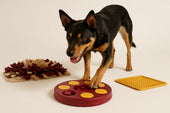
- Problem-solving feeders
- Scent-based games
- Durable chew items that require effort rather than destruction
- Rotating toys to maintain novelty
Australian trainers frequently note that Huskies become destructive not because they enjoy destruction, but because they lack cognitive challenge. Purpose-built enrichment tools significantly reduce this risk when used consistently.
Bedding and Rest Areas
Despite their active nature, Huskies require quality rest to regulate stress and recover physically. Bedding should support joints while remaining cool and breathable.
In warm Australian climates, elevated beds or mats that allow airflow underneath are often more comfortable than thick, insulated cushions. Rest areas should be positioned away from direct sunlight and household traffic to encourage proper downtime.
A quiet rest zone also supports emotional regulation, particularly in busy family homes.
Cooling and Climate Management Supplies
Heat management is a critical supply category for Huskies in Australia. While no product replaces responsible scheduling and shade, certain tools provide meaningful support.
Useful items include:
- Cooling mats that disperse body heat
- Multiple water stations indoors and outdoors
- Portable shade for outdoor activity
Avoid novelty cooling products that rely on gimmicks rather than evaporative or conductive cooling. Evidence-based tools focus on airflow and surface heat reduction.
Grooming Equipment: Health-Focused Tools
Proper grooming tools are essential for maintaining coat function. Huskies benefit from:
- Undercoat rakes designed for dense fur
- Soft slicker brushes for finishing
- Nail clippers or grinders suited to medium-sized dogs
Using incorrect tools can damage the coat and increase heat retention. Australian veterinary dermatologists often emphasise that tool selection matters as much as frequency.
Travel and Transport Essentials
Safe travel is another often-overlooked area. Huskies are curious and alert, making unsecured transport dangerous.
Appropriate options include:
- Crash-tested harnesses
- Secure crates for vehicle travel
- Ventilated transport solutions for warm conditions
In Australia, where long drives are common, ensuring adequate ventilation and rest stops is essential for welfare.
Puppy-Proofing and Indoor Safety
For Husky puppies and adolescents, environmental management prevents many future behavioural issues. Securing electrical cords, removing access to small chewable objects, and controlling space reduces rehearsal of destructive habits.
This proactive approach is particularly important during adolescence, when curiosity peaks and impulse control is still developing.
Supplies as Behavioural Infrastructure
Essential supplies are not accessories—they are infrastructure that supports appropriate behaviour, safety, and comfort. When chosen thoughtfully, they reduce friction between dog and household, making daily life smoother for everyone involved.
For Australian Husky owners, investing in the right equipment early is far more effective—and humane—than attempting to correct problems later.
Is the Siberian Husky Right for You? A Practical Decision Checklist
Moving Beyond Admiration to Reality
The Siberian Husky is often chosen with the heart before the head. Their appearance, personality, and social presence are undeniably appealing. However, successful ownership in Australia depends on alignment between the breed’s needs and the owner’s lifestyle, not enthusiasm alone.
This section is not about discouragement—it is about honest evaluation. Many challenges associated with Huskies arise not because owners lack care, but because they underestimate the daily, ongoing commitment required.
You May Be Well-Suited If You…
You are more likely to succeed with a Siberian Husky if the following statements reflect your reality:
- You enjoy daily physical activity and are willing to exercise regardless of convenience
- You value routine and structure, even on busy days
- You are comfortable managing an independent thinker rather than a compliance-driven dog
- You can adapt schedules around heat management in Australian summers
- You are willing to invest time in mental enrichment, not just physical exercise
Owners who thrive with Huskies often describe the relationship as a partnership, not ownership in the traditional sense.
You May Struggle If You…
Certain lifestyle factors significantly increase the risk of frustration—for both owner and dog. A Siberian Husky may not be appropriate if:
- Your household is largely sedentary
- You are frequently absent for long, uninterrupted hours
- You expect a dog that is naturally obedient or protective
- You live in a consistently hot region with limited cooling options
- You prefer low-maintenance grooming and minimal shedding
These factors do not reflect poor ownership—they reflect mismatch. In Australia, many Huskies are rehomed because these realities were not fully considered at the outset.
Experience Level: First-Time Owners
While Siberian Huskies are not inherently aggressive or unpredictable, they are challenging for first-time dog owners. The combination of independence, energy, and escape tendencies requires confidence and consistency.
First-time owners who succeed often:
- Seek professional guidance early
- Commit to learning canine behaviour principles
- Adjust expectations quickly rather than resisting reality
Those unwilling to adapt often experience escalating frustration during adolescence, when the breed’s traits become most pronounced.
Time, Cost, and Long-Term Commitment
A seldom-discussed aspect of Husky ownership is the cumulative cost of doing things properly. Beyond food and veterinary care, expenses often include:
- Secure fencing upgrades
- Enrichment tools and replacements
- Professional training or behaviour support
- Climate-related utilities and cooling solutions
Time commitment is equally significant. Huskies do not become “easy” with age unless their needs have been consistently met throughout development.
Emotional Readiness and Flexibility
Siberian Huskies are emotionally expressive dogs. They notice inconsistency, disengagement, and frustration. Owners must be prepared to remain patient during setbacks, particularly during adolescence and seasonal changes.
This breed rewards flexibility and emotional resilience. Owners who adapt routines and remain curious about their dog’s behaviour tend to build strong, lasting bonds.
The Most Important Question
The most revealing question is not “Do I love Huskies?” but:
Am I willing to shape my lifestyle around this dog’s needs for the next 12–14 years?
If the answer is yes—with clear understanding rather than hope—then the Siberian Husky can be a deeply fulfilling companion. If the answer relies on the dog adapting instead, disappointment is likely.
Responsible Choice Is an Act of Care
Choosing not to bring a Siberian Husky into your life can be just as responsible as choosing to do so. In Australia, where climate and lifestyle constraints are real, ethical ownership sometimes means selecting a breed better suited to local conditions.
For those whose lives align, however, the Siberian Husky offers something rare: a relationship built on mutual respect, shared effort, and genuine companionship.
How to Find a Siberian Husky in Australia
Why Sourcing Matters More Than Many Owners Expect
Where a Siberian Husky comes from has a direct and lasting impact on temperament, health, and long-term behaviour. In Australia, sourcing is particularly important due to the breed’s popularity and the growing number of poorly bred Huskies entering the market.
A seldom-discussed reality is that many behavioural and health challenges attributed to the breed are actually the result of irresponsible breeding practices, not inherent traits. Selecting the right source is one of the most influential decisions an owner will make.
Identifying Ethical Breeders in Australia
Ethical breeders prioritise health, temperament, and suitability, not volume or appearance trends. They breed selectively, often producing only occasional litters, and are deeply knowledgeable about the breed’s needs—particularly within Australian conditions.
Key indicators of responsible breeders include:
- Comprehensive health testing of both parents
- Transparency about genetic risks and limitations
- Willingness to discuss climate suitability honestly
- Lifetime support and return policies
Ethical breeders often ask as many questions as they answer. This screening is not gatekeeping—it is an attempt to prevent future rehoming and welfare issues.
Australian kennel club affiliations can be a useful starting point, but affiliation alone does not guarantee ethical practice. Conversations, documentation, and breeder philosophy matter more than labels.
Health Certifications and Documentation
Prospective owners should expect clear documentation relating to:
- Hip and joint assessments
- Eye health screening
- Genetic condition awareness
A seldom-considered point is that absence of problems in parents does not guarantee absence in offspring, but it significantly reduces risk. Breeders who dismiss the importance of health testing or rely solely on anecdotal reassurance should be approached with caution.
In Australia, reputable breeders are generally willing to explain why specific tests matter, not just that they were performed.
Avoiding Puppy Mills and Impulse Purchases
The demand for Huskies has unfortunately attracted unethical breeding operations that prioritise profit over welfare. Puppy mills often advertise through online marketplaces with minimal screening and vague health claims.
Warning signs include:
- Multiple litters available simultaneously
- Reluctance to allow visits or provide references
- Emphasis on eye colour or coat pattern over temperament
- Pressure to purchase quickly
Impulse purchases frequently lead to long-term challenges. Australian rescue organisations report that many surrendered Huskies were acquired without prior breed research or planning.
Considering Rescue and Rehoming
Adoption is a valuable option, particularly for experienced owners. Many Siberian Huskies in Australian rescues are young, healthy, and well-socialised, but were relinquished due to lifestyle mismatch rather than behavioural pathology.
Rescue organisations often provide:
- Behavioural assessments
- Foster-based insights into temperament
- Support during transition
A seldom-discussed advantage of rescue is that adult dogs have fully developed personalities, reducing uncertainty around energy levels and behaviour.
However, adoption requires realistic expectations. Some rescued Huskies may need additional training or decompression time, particularly if previous needs were unmet.
Puppies Versus Adults: Choosing What Fits
Puppies offer the opportunity for early socialisation, but they also demand intense time investment and patience—especially during adolescence. Adult Huskies often adapt more quickly to routine and may already have foundational training.
In Australia’s climate, adult adoption can sometimes be advantageous, as temperament and heat tolerance are already observable rather than speculative.
Choosing between puppy and adult should be guided by lifestyle capacity, not novelty.
Ethical Sourcing Is a Welfare Decision
Finding a Siberian Husky in Australia is not about speed—it is about long-term welfare alignment. Whether choosing a breeder or rescue, the goal is the same: to place the right dog in the right environment with owners who understand the responsibility involved.
When sourcing is approached with patience and discernment, the result is not just a pet acquisition—but the foundation of a stable, rewarding relationship built to last.
Preparing Your Home for a Siberian Husky
Preparation Is Prevention
Many challenges attributed to Siberian Huskies emerge before training even begins. The early home environment shapes behaviour, emotional security, and long-term habits. In Australia, where climate, fencing standards, and household routines vary widely, preparation is not optional—it is preventive care.
A well-prepared home reduces stress for both dog and owner and significantly lowers the risk of escape, destruction, and anxiety-driven behaviour during the critical adjustment period.
Securing the Physical Environment
Containment is the first and most important consideration. Siberian Huskies explore boundaries quickly and remember weaknesses.
Key preparation steps include:
- Inspecting fencing for gaps, soft ground, and climbable features
- Reinforcing gate latches and hinges
- Removing objects near fences that could be used as launch points
In Australian suburban settings, colorbond or timber fencing often requires dig-proof reinforcement. Even adult Huskies can exploit shallow soil gaps in surprisingly short timeframes.
Containment should be tested before the dog arrives, not after an escape attempt occurs.
Creating Zones Rather Than Open Access
Open-plan living can overwhelm newly arrived Huskies. Instead of granting unrestricted access, creating clearly defined zones helps establish boundaries and predictability.
Effective zones include:
- A quiet rest area away from foot traffic
- A feeding location free from interruption
- A supervised play and enrichment space
This structure supports emotional regulation and reduces overstimulation, particularly during the first few weeks when novelty is high.
Heat-Appropriate Setup for Australian Homes
Climate preparation is a critical yet often delayed step. Before bringing a Husky home, owners should identify:
- The coolest areas of the house during summer
- Locations with natural airflow
- Shade availability throughout the day
Tiles, shaded verandas, and well-ventilated indoor areas often provide better comfort than heavily insulated spaces. Cooling mats and multiple water stations should be placed in areas the dog naturally chooses, not where owners prefer them to be.
Preparing for heat early prevents stress accumulation rather than reacting to it later.
Introducing Routine From Day One
Siberian Huskies respond strongly to predictability. Establishing routines immediately helps reduce anxiety and accelerates adjustment.
Key routines include:
- Consistent feeding times
- Scheduled exercise windows aligned with cooler periods
- Predictable rest and enrichment cycles
In Australian households with variable schedules, even partial consistency provides stability. Dogs that understand what happens next are far less likely to test boundaries impulsively.
Introducing Children and Other Pets
Introductions should be structured and calm, not celebratory or chaotic. Overstimulation during first encounters can create lasting associations.
Best practice includes:
- One-on-one introductions rather than group excitement
- Allowing the dog to retreat if overwhelmed
- Supervising all interactions initially
For homes with other pets, gradual exposure through scent exchange and visual separation supports smoother integration. Rushing this process increases stress and risk.
Managing the First Weeks
The adjustment period is often misunderstood. New Huskies may appear unusually calm, withdrawn, or compliant during the first 7–14 days. This is not true temperament—it is decompression.
During this phase:
- Avoid introducing too many new experiences at once
- Delay off-lead or high-arousal activities
- Focus on observation rather than correction
Many behaviour issues arise when owners interpret early calmness as low energy and later feel unprepared when true traits emerge.
Puppy-Specific Preparation
For puppies, environmental management prevents rehearsal of unwanted behaviours. This includes:
- Removing access to cords and small objects
- Limiting unsupervised space
- Providing appropriate chewing outlets
Early habits become default behaviours. What is allowed unintentionally in the first month often becomes difficult to reverse later.
Emotional Safety Is as Important as Physical Safety
A seldom-discussed aspect of preparation is emotional safety. Siberian Huskies are sensitive to tension and inconsistency. Calm, predictable handling during the early weeks builds trust faster than intensive training.
Owners who prioritise settling before teaching often experience fewer behavioural challenges long-term.
Preparation Sets the Tone for the Relationship
Preparing your home for a Siberian Husky is not about perfection—it is about intentional design. When the environment supports the breed’s needs, training becomes easier, behaviour stabilises faster, and frustration diminishes on both sides.
In Australia, where environmental mismatches are common, thoughtful preparation is one of the most powerful tools an owner has to ensure a successful, lasting relationship with this remarkable breed.
Real Experiences: Living With a Siberian Husky in Australia
The Reality Behind the Reputation
Ask Australian Siberian Husky owners about their experience, and a consistent theme emerges: the breed is far more demanding than expected—but also more rewarding than imagined. What separates positive experiences from negative ones is rarely luck. It is preparation, expectation management, and willingness to adapt.
Owners who thrive with Huskies often describe an initial period of adjustment where assumptions are challenged. Many admit they underestimated the mental demands of the breed, focusing instead on physical exercise alone. Over time, those who recalibrate their routines tend to report significant improvements in behaviour and relationship quality.
The First Year: A Common Turning Point
Across Australian owner accounts, the first 12 to 18 months are repeatedly described as the most challenging. This period coincides with adolescence, increased confidence, and the emergence of true adult energy levels.
Common reflections include:
- “I thought something was wrong when he stopped listening. It turned out he was just growing up.”
- “Once we stopped fighting his independence and worked with it, everything changed.”
Many owners note that this phase is where expectations either break—or evolve. Those who seek guidance during this stage often report smoother transitions and fewer long-term issues.
Climate Adaptation From an Owner’s Perspective
Australian Husky owners frequently highlight that heat management becomes second nature over time. Early mistakes—such as walking too late in the morning or underestimating humidity—are often cited as learning moments.
Owners in warmer regions report success through:
- Shifting exercise to dawn and dusk permanently
- Using indoor enrichment during heatwaves
- Accepting seasonal slow-downs rather than pushing through
A common insight is that Huskies do not need constant intensity. Owners who learned to prioritise consistency over exertion reported calmer dogs and fewer behavioural issues during summer months.
Living With the Noise and Expression
Vocalisation is a defining feature of Husky ownership. Australian owners often describe an initial shock followed by acceptance—and sometimes amusement.
Comments frequently include:
- “He doesn’t bark much, but he has an opinion about everything.”
- “Once we met his needs properly, the howling reduced dramatically.”
Those living in close-proximity housing stress the importance of early management and neighbour awareness. Owners who attempted to suppress vocalisation without addressing stimulation often experienced escalation, while those who treated it as communication found solutions more easily.
The Escape Artist Narrative
Nearly every long-term Husky owner has an escape story. Australian accounts range from humorous to harrowing, often involving unexpected ingenuity.
Common lessons learned:
- Fencing must be reinforced beyond standard recommendations
- Huskies remember weaknesses long after they are fixed
- Mental engagement reduces escape attempts more effectively than physical barriers alone
Owners who invested early in secure containment consistently reported fewer incidents over time, reinforcing the idea that prevention is far easier than correction.
Families, Children, and Daily Life
Australian families with Huskies often describe the breed as deeply integrated into daily routines. Successful households involve the dog in family activities rather than treating it as a background presence.
Parents frequently note that Huskies:
- Respond well to respectful handling
- Enjoy structured interaction with children
- Benefit from predictable routines
Challenges arise when expectations are unclear. Families that delegated responsibility unevenly often reported frustration, while those who shared involvement described stronger bonds and better behaviour.
Adoption and Second Chances
Rescue stories are particularly telling. Many Australian adopters describe Huskies who were surrendered due to “too much energy” but later thrived in environments that matched their needs.
Adopters often note:
- Rapid behavioural improvement once structure was introduced
- Strong loyalty once trust was established
- Emotional sensitivity beneath confident exteriors
These experiences highlight a critical point: many Huskies are not problematic—they are misplaced.
What Owners Wish They Had Known
When asked what they would tell prospective owners, experienced Australians consistently mention:
- Independence is not disobedience
- Mental stimulation matters as much as exercise
- Climate management must be proactive
- The breed demands lifestyle adjustment, not compromise
Perhaps the most common reflection is that Huskies change how people live. Owners who embrace that change report fulfillment. Those who resist it often feel overwhelmed.
Real Ownership Is Built Over Time
Living with a Siberian Husky in Australia is not about perfection—it is about progress. The most content owners describe a relationship that evolved through learning, mistakes, and adaptation.
These real-world experiences reinforce a central truth: when Huskies are understood and supported appropriately, they do not become easier dogs—but they become extraordinary companions whose presence enriches daily life in unexpected ways.
Siberian Husky FAQs: Clear Answers to Common Questions
Are Siberian Huskies Aggressive or Dangerous?
Siberian Huskies are not naturally aggressive dogs. In fact, compared to many breeds of similar size, they display lower levels of territorial and guarding aggression. Their historical role required close cooperation with humans, including children, which selected against human-directed aggression over generations.
When behavioural issues occur, they are far more likely linked to frustration, under-stimulation, or poor management rather than aggression. Australian veterinary behaviour reports consistently show that Huskies involved in behavioural complaints are most often described as escape-prone, vocal, or destructive, not dangerous.
Aggression toward people is atypical and should always prompt professional assessment, as it often indicates pain, fear, or significant environmental stress rather than breed temperament.
Can Siberian Huskies Cope With Australian Summers?
Yes—but with conditions and limitations.
Huskies can live safely in many parts of Australia when owners actively manage:
- Exercise timing
- Heat exposure
- Hydration and cooling
- Indoor rest environments
They cannot, however, tolerate prolonged heat or high-humidity activity in the same way as heat-adapted breeds. Veterinary heat-stress research shows that double-coated working dogs are at increased risk when owners rely on visual cues alone, as internal temperature may rise before obvious distress appears.
In regions with long, intense summers and minimal nighttime cooling, owners must be prepared to significantly modify routines. In some areas, choosing a more climate-suited breed is the more ethical option.
Do Siberian Huskies Shed All the Time?
Siberian Huskies are heavy shedders, particularly during seasonal coat changes. In Australia, shedding patterns are often irregular due to artificial lighting and climate control.
Rather than two distinct “coat blows,” many Huskies shed smaller amounts year-round, with heavier periods during seasonal transitions. This is not abnormal, but it does increase grooming requirements.
Regular brushing reduces:
- Heat retention
- Skin irritation
- Indoor hair accumulation
Shedding is a maintenance reality, not a flaw. Owners uncomfortable with hair management will likely struggle with this breed.
Can Siberian Huskies Be Left Alone During Work Hours?
Siberian Huskies can tolerate time alone, but context matters. Long, unbroken periods of isolation without enrichment often lead to behavioural decline.
Problems arise when:
- Exercise is insufficient
- Mental stimulation is absent
- The dog’s routine lacks predictability
In Australian households with full-time work schedules, success often depends on:
- Structured morning engagement
- Enrichment during absences
- Consistent evening routines
Huskies left alone without preparation may not develop clinical separation anxiety, but they frequently develop frustration-driven behaviours.
Are Siberian Huskies Suitable for First-Time Owners?
For most first-time owners, Siberian Huskies are challenging.
They are not difficult due to aggression or fragility, but because they:
- Think independently
- Resist repetitive obedience
- Require high daily engagement
- Test containment and boundaries
First-time owners who succeed typically:
- Educate themselves extensively
- Seek professional guidance early
- Adjust expectations quickly
Without this commitment, frustration often peaks during adolescence, which is when many Huskies are rehomed in Australia.
How Much Do Siberian Huskies Cost in Australia?
The true cost of owning a Siberian Husky extends far beyond the initial purchase or adoption fee.
Ongoing expenses often include:
- Higher-than-average grooming time and tools
- Secure fencing and containment upgrades
- Professional training or behaviour support
- Climate-related utilities and cooling aids
Australian veterinary cost surveys indicate that active working breeds often incur notably higher lifetime care costs than lower-energy companion breeds. Budgeting realistically is an essential part of responsible ownership.
Do Siberian Huskies Make Good Family Dogs?
Yes—in the right families.
They tend to be friendly, playful, and tolerant, particularly with respectful children. However, they require supervision due to size, energy, and movement sensitivity.
Families that integrate the dog into daily life and share responsibility often report strong bonds and positive experiences. Families seeking a low-maintenance or passive companion often struggle.
Are Siberian Huskies Legal Everywhere in Australia?
Siberian Huskies are legal in Australia and not classified as restricted or dangerous breeds. However, local council regulations may impose requirements regarding:
- Fencing standards
- Registration
- Leash use in public areas
Prospective owners should always check local council rules before acquiring a dog, particularly in urban or high-density housing areas.
FAQs Reflect Common Misunderstandings
Most frequently asked questions about Siberian Huskies stem from mismatched expectations rather than misinformation alone. When owners understand the breed’s independence, endurance-based energy, and climate sensitivity, many perceived “problems” disappear.
In Australia, informed ownership is the strongest predictor of success with this remarkable breed.
Final Thoughts: Owning a Siberian Husky in Australia
A Breed That Demands Honesty Above Enthusiasm
The Siberian Husky is not a breed that quietly adapts to its environment. Instead, it reveals mismatches quickly and clearly. In Australia, where climate, lifestyle, and housing conditions differ sharply from the breed’s origins, ownership success depends on realism rather than admiration.
Huskies are not difficult because they are flawed. They are demanding because they are purpose-built. Every trait that challenges modern owners—independence, endurance, vocalisation, roaming instinct—once ensured survival. When those traits are misunderstood or constrained without replacement, frustration emerges on both sides.
The Responsibility of Climate-Aware Ownership
Australia adds a unique layer of responsibility to Husky ownership. Heat management is not seasonal—it is foundational. Exercise timing, rest environments, hydration, and grooming are not optional adjustments but daily considerations.
Owners who thrive with Huskies accept that summer changes everything. They shift routines, reduce intensity, increase mental enrichment, and prioritise recovery. Those who resist this reality often misinterpret heat-related stress as behavioural decline.
Climate-aware ownership is not about limiting the dog’s life—it is about protecting it.
Not a Lifestyle Accessory, but a Lifestyle Commitment
A Siberian Husky does not fit neatly into a lifestyle. It reshapes it.
Successful Australian owners consistently describe:
- Adjusted schedules
- Intentional exercise planning
- Long-term commitment to enrichment
- Acceptance of shedding, noise, and independence
When these factors are embraced rather than tolerated, the breed becomes deeply rewarding. When they are resisted, even the most affectionate Husky becomes a source of ongoing tension.
The Ethical Choice Matters
One of the most important conclusions is this: choosing a Siberian Husky is not always the right choice, even for dog lovers. In some Australian environments—particularly those with extreme heat, limited space, or restrictive schedules—another breed may be more appropriate.
Ethical ownership includes recognising limitations and prioritising animal welfare over personal preference. Walking away from a breed that does not align with your circumstances is an act of responsibility, not failure.
For Those Who Are Well Matched
For owners whose lives genuinely align, the Siberian Husky offers something rare. This breed forms relationships based on mutual engagement rather than control. Huskies are expressive, emotionally aware, and resilient. They invite participation, creativity, and movement.
Owners who meet the breed halfway often describe a bond that feels earned rather than automatic—and therefore deeply meaningful.
A Final Reflection
The Siberian Husky thrives when expectations are clear, needs are respected, and commitment is consistent. In Australia, success is less about overcoming the breed’s challenges and more about designing a life that supports its nature.
When that alignment exists, the Siberian Husky is not just manageable—it is extraordinary.