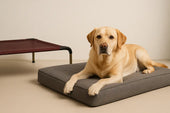

Key Takeaways
- The most common 3–6 month regret is “it went flat.” Low-density foam compresses quickly, and thin “orthopaedic” beds often do not provide lasting support—especially for medium to large dogs.
- Sizing mistakes show up later, not on day one. A bed that looks fine in photos can feel cramped once a dog settles into their preferred sleeping style. Measuring your dog (and adding extra length) prevents many returns and replacements.
- Australian conditions amplify certain problems. Heat retention, humidity, dust, and sandy coats can shorten the life of covers, zips, and foam if the bed is not matched to your climate and your dog’s habits.
- “Washable cover” does not always mean “easy to keep hygienic.” Owners often regret beds with difficult-to-remove covers, slow drying fabrics, or inserts that cannot be cleaned after accidents.
- Chewers and scratchers require construction choices, not just “durable fabric” claims. Seam placement, zip protection, inner liners, and replaceable covers matter more than marketing terms.
- Orthopaedic support is real, but quality varies. Veterinary guidance commonly recommends supportive surfaces (often memory foam) for dogs with osteoarthritis; however, thickness, layering, and density determine whether the benefit lasts. Clinical evidence has shown improvements in comfort measures when genuinely supportive beds are used for arthritic dogs. Sources also advise minimum thickness relative to body weight.
- Australian Consumer Law (ACL) can apply when beds fail early. Goods must be of acceptable quality, including reasonable durability. Understanding the difference between minor and major failures helps owners navigate remedies.
Recommended by PetCareShed: Smart Choices for Every Dog Owner
Introduction
Dog bed reviews often focus on the first week: how soft the cover feels, whether the colour suits the home, and whether the dog happily “approves.” Yet the most useful feedback arrives later—after three to six months of daily use. By then, the dog has created a routine, the foam has had time to compress, the cover has endured repeated washing, and the bed has faced the realities of muddy paws, hot nights, shedding seasons, and occasional accidents.
For Australian dog owners, these realities can be particularly unforgiving. Many homes experience a mix of warm summers, variable humidity, and indoor–outdoor living that brings in grit and sand. In some regions, winter nights are cold enough that insulation from hard flooring matters; in others, a bed that traps heat becomes uncomfortable. A bed that looked “premium” on arrival can become the most regretted purchase once the materials and construction are tested by time.
This article reviews dog beds through the lens of what owners commonly regret after 3–6 months, why those regrets happen, and how to avoid them. The aim is not to criticise any specific brand. Instead, it is to unpack the practical factors that determine whether a bed remains supportive, hygienic, and safe over the long term.
Why Dog Bed Regret Appears After 3–6 Months (Not in Week One)
Most dog beds look and feel acceptable when new. Early impressions are influenced by:
- Uncompressed foam: Fresh foam often feels thick and resilient.
- Clean fabric and intact stitching: No rubbing points have developed yet.
- Novelty for the dog: Many dogs enjoy a new sleeping spot, even if it is not ideal.
- Limited washing history: Covers may claim to be “machine washable,” but the true test is whether they survive repeated cycles without shrinkage, pilling, or zipper failure.
By 3–6 months, the bed has experienced multiple stressors. Common changes include foam settling, seams stretching, and the cover’s surface becoming rougher. If the design has a weak point—thin foam, poor zip protection, inadequate inner liner, or fabric that holds odours—owners begin to notice. Dogs notice too, often by moving off the bed more frequently or seeking cooler spots on the floor.
There is also a behavioural factor: dogs mature, routines change, and some owners discover their dog’s sleeping style is different from what they assumed. A dog that curls tightly as a puppy may sprawl as an adult. A dog that slept indoors may start moving between patio tiles and carpet, carrying in more grit. These changes make “initially fine” beds feel wrong later.
Because Every Dog Deserves the Best — from PetCareShed
The Top Regrets Owners Report (And What Causes Them)
The regrets below are written in the language owners commonly use. Under each regret is the underlying cause and the practical fix.
Regret 1: “It went flat and now my dog is basically on the floor.”
This is the most frequent durability complaint. Foam compression typically shows up as:
- A visible dip where the dog sleeps
- The dog’s hips or shoulders touching or nearly touching the floor
- The bed becoming harder to stand up from (especially for seniors)
Why it happens:
- Low-density foam breaks down faster.
- Thin foam depth cannot distribute weight effectively for larger dogs.
- Single-layer foam (especially soft foam) compresses more quickly than layered designs.
Veterinary and rehabilitation guidance frequently recommends supportive surfaces for dogs with osteoarthritis, often specifying orthopaedic or memory foam options to improve comfort. For example, VCA Animal Hospitals advises providing an orthopaedic or memory foam bed to improve sleeping comfort for dogs with osteoarthritis.
Evidence also suggests that genuinely supportive therapeutic beds can improve comfort measures in arthritic dogs. A clinical evaluation associated with a therapeutic bed reported improvements in pain and function scores for dogs with arthritis.
What to look for instead:
- A true mattress-style bed with substantial foam depth
- Layering (support foam base + comfort layer)
- Thickness appropriate to body weight (some rehab guidance suggests scaling thickness with dog weight).
Practical check at home: After your dog lies down, slide your hand under their shoulder/hip area. If you can feel the floor easily through the foam, the bed is under-spec for that dog.
Regret 2: “It’s ‘orthopaedic’ in name only.”
Many owners buy an “orthopaedic” bed expecting lasting joint support, then find it is simply a thin foam pad.
Why it happens:
- “Orthopaedic” is often used as a marketing descriptor rather than a standardised medical claim.
- Some beds rely on softness rather than support. Soft beds can feel pleasant to the hand but allow heavier dogs to sink too deeply, reducing alignment.
What to do:
- Look for a bed that balances pressure relief with a firm support base.
- Prioritise construction details (foam type, layer thickness, inner liner) over the label.
- If your dog has diagnosed arthritis, a history of cruciate injury, hip dysplasia, elbow issues, or mobility changes, discuss bedding with your veterinarian as part of an overall management plan.
Regret 3: “It’s too hot in summer.”
Heat retention is a common regret in Australia, particularly with foam beds that insulate strongly.
Why it happens:
- Foam, especially viscoelastic (memory) foam, can retain heat.
- Covers made from dense synthetic fabrics can reduce breathability.
- Raised bolster beds can reduce airflow around the body.
Some beds use cooling layers (including gel-infused foams) to address heat retention, but performance depends on airflow, room temperature, and whether the dog burrows into the bed.
What to do:
- In warm climates or homes without strong air conditioning, consider:
- breathable, lighter covers
- a cot-style elevated bed for airflow
- a separate cooling mat as a seasonal option
- For double-coat breeds, thick foam plus heavy faux-fur covers can be uncomfortable during hot periods.
Regret 4: “The cover is washable, but cleaning it is a nightmare.”
Owners often discover that “removable cover” is not the same as “easy to remove and maintain.”
Common pain points:
- Zips that snag, break, or are placed where a dog lies directly on them
- Covers that shrink slightly and become difficult to refit
- Fabrics that trap hair, requiring multiple lint rolls or vacuuming
- Inserts with no inner liner, so any accident reaches the foam
What to look for:
- A robust zip with a zip garage or protected placement
- A water-resistant inner liner (especially for puppies, seniors, or dogs prone to vomiting)
- Simple shapes that wash and dry evenly
Regret 5: “It smells, even after washing.”
Persistent odour is not always the dog—it can be the bed.
Why it happens:
- Foam can absorb oils and moisture.
- Thick covers can dry slowly, allowing odour to set.
- Beds without inner liners allow biological material to penetrate into the foam.
Mitigation:
- Use a two-layer system: washable cover + protective inner liner.
- Choose fabrics that dry efficiently.
- Rotate and air the bed in sun where appropriate (noting that prolonged harsh sun can degrade some fabrics).
Regret 6: “The seams ripped, and the stuffing exploded.”
This is common in bolster beds and plush-filled beds.
Why it happens:
- Seam stress concentrates where the dog steps into the bed.
- Thin thread, weak seam allowances, or decorative piping can fail under scratching.
- Dogs that “nest” by digging can damage seams quickly.
What to look for:
- Reinforced seams and durable stitching
- Hidden seams in high-wear areas
- Replaceable covers so the internal structure can be preserved
Regret 7: “My dog chewed the zip in one afternoon.”
Chewing is a behaviour problem and a product-design challenge. Even non-destructive dogs may chew a new bed during adjustment.
Design features that reduce chewing damage:
- Hidden zips and covered zip ends
- Minimal dangling tags
- Inner liners that prevent immediate access to foam
Important safety note: Foam ingestion can be hazardous. If your dog is prone to chewing bedding, select designs that limit access to foam and consider behavioural support, enrichment, and safe chew alternatives.
Regret 8: “It’s the wrong size, and now it’s wasted.”
Sizing regret is common because owners buy based on breed stereotypes or “S/M/L” labels.
Why it happens:
- Size charts vary widely between manufacturers.
- Dogs often sleep longer than they appear when standing.
- Bolsters reduce usable sleeping surface.
Sizing guidance commonly recommends measuring your dog’s body length and adding extra space. Multiple sizing guides advise measuring nose to tail base and adding approximately 6–10 inches (or similar) to select a comfortable bed length, particularly for dogs that stretch out.
Regret 9: “The non-slip base isn’t actually non-slip.”
On tiles and polished concrete—common in many Australian homes—beds can slide when a dog steps in or turns.
Consequences:
- Dogs may avoid the bed if it shifts.
- Seniors may slip when rising.
What to look for:
- A true grippy base
- Enough overall weight to stay put
- Consider placing a bed on a rug or non-slip mat if your flooring is particularly slick.
Regret 10: “It looked nice, but it doesn’t suit my dog’s needs.”
Aesthetic-led purchases often fail when the bed does not match:
- the dog’s coat type
- the dog’s mobility
- the dog’s anxiety levels
- the dog’s indoor–outdoor habits
A bed can be visually appealing yet impractical for a heavy shedder, a drooler, a dog with allergies, or a dog that overheats easily.
The 3–6 Month Dog Bed “Reality Check”: A Practical Assessment Framework
A useful way to avoid regret is to assess a bed like a piece of equipment rather than a soft furnishing. The questions below apply across bed types.
1) Support and pressure distribution
Ask:
- Does the bed keep the spine in a neutral line?
- Do hips and shoulders remain cushioned after 20–30 minutes of lying?
- Does your dog get up more easily from this bed than from the floor?
For dogs with osteoarthritis, supportive bedding is often recommended as part of home management.
2) Thermal comfort across seasons
Ask:
- Does your dog move off the bed on warm nights?
- Does the bed trap heat?
- Is there a cooler option available during summer?
In many Australian homes, the ideal setup is seasonal rather than single-bed perfection: a supportive indoor mattress bed paired with a cooling mat or elevated bed for hot periods.
3) Hygiene and cleaning lifecycle
Ask:
- Can the cover be removed quickly?
- Can the cover be washed at a practical frequency?
- Is there an inner liner to protect foam?
- Does the bed dry fast enough to avoid damp odours?
4) Durability against your dog’s behaviours
Ask:
- Does your dog dig, nest, chew, or scratch?
- Does your dog carry sticks inside or bring in sand?
- Is the bed used in a crate (extra friction on corners) or in an outdoor area?
5) Fit to your home layout
Ask:
- Does the bed slide on floors?
- Is it placed where your dog naturally rests (near you, in a quiet corner, away from drafts)?
- Is it small enough to move and clean around, but large enough for comfort?
Types of Dog Beds in Australia: How Regrets Differ by Style
Different bed types fail in different ways. Choosing the right style is about predicting which failure you can tolerate least.
Foam mattress beds
Common regrets:
- foam compression
- heat retention
- heavy to move or slow to dry
Best for:
- senior dogs
- large breeds needing support
- dogs sleeping on hard floors
Key design priorities:
- sufficient thickness
- layered construction
- removable cover + inner liner
Bolster beds
Common regrets:
- bolsters sag or collapse
- seams split at entry points
- reduced usable sleeping space
Best for:
- dogs that like to rest their head or feel “contained”
- dogs that curl
Key design priorities:
- robust seam construction
- bolster fill that keeps shape
- washable design
Donut / calming beds
Common regrets:
- fill mats down
- cover becomes matted with hair
- slow drying after washing
Best for:
- dogs that burrow
- dogs that prefer plush textures
Caution: Not ideal for dogs that overheat or for heavy dogs needing firm support.
Elevated (cot-style) beds
Common regrets:
- fabric sagging over time
- chewing of corners
- not warm enough in winter
Best for:
- hot climates
- outdoor shaded areas
- dogs with allergies (reduced contact with dusty floors)
Crate mats
Common regrets:
- rapid wear on corners
- sliding within the crate
- insufficient cushioning
Best for:
- crate-trained dogs
- travel
Outdoor beds
Common regrets:
- mould or mildew in humidity
- UV degradation
- water resistance that traps heat
Best for:
- sheltered verandas
- dogs that spend time outside but need insulation from hard surfaces
Foam, Fillings, and What “Support” Really Means Over Time
The core of long-term satisfaction is the inner material. Covers can be replaced; internal support usually cannot.
Foam: what matters in practice
Owners rarely regret choosing a bed that remains supportive; they frequently regret choosing one that becomes a thin pad.
Key points:
- Thickness matters: Heavier dogs need more depth so pressure is not concentrated on hips and shoulders.
- Layering matters: A supportive base layer helps prevent “bottoming out,” while a comfort layer can reduce pressure points.
- Quality varies: Two beds can both be called “memory foam,” yet behave very differently after months.
Some rehabilitation guidance suggests scaling bed thickness relative to body weight (for example, using a baseline thickness for each weight range). While exact specifications vary between sources and products, the underlying principle is consistent: a large dog requires more foam depth than a small dog for the same level of support.
Fibre fill and plush stuffing
Plush fill can be comfortable, but it tends to:
- mat down over time
- shift away from high-pressure areas
- become difficult to fully clean after accidents
Plush-filled beds are often best treated as comfort layers, not primary orthopaedic support—particularly for larger dogs or dogs with mobility issues.
Alternative fills (including latex or eco-certified foams)
Some owners prioritise material safety, low odour, and reduced chemical exposure. Certifications such as CertiPUR-US (for certain foams) and organic textile certifications (e.g., GOTS for cotton) are often discussed in non-toxic bedding guidance, though availability varies by product category and region. Where material sensitivity or allergies are a concern, selecting low-VOC, low-odour materials and washable covers becomes a practical priority.
Australia-Specific Factors That Change Which Bed Works Best
Heat, humidity, and airflow
Australian summers can make heat retention the deciding factor. Signs a bed is too warm include:
- your dog starts sleeping on tiles or near vents
- panting increases when resting
- the dog avoids the bed during the hottest part of the day
Practical adjustments:
- provide a cooling mat as an alternative
- use a breathable cover
- consider an elevated bed outdoors in shade
Sand, grit, and indoor–outdoor living
Coastal and suburban yards often bring in fine grit. Over time, grit:
- abrades fabric
- jams zips
- increases odour retention
A bed for indoor–outdoor dogs benefits from:
- removable covers that can be shaken out easily
- tightly woven, durable fabric
- inner liners that protect foam
Cold floors in winter (and draughts)
In cooler regions and on slab floors, insulation matters. A bed that is too thin can expose dogs to cold surfaces, contributing to stiffness in older dogs.
A thicker foam mattress bed often improves insulation, but balance is needed to avoid overheating in warmer months.
Allergens: dust, pollen, and mites
Allergic dogs often do better with:
- easily washable covers
- materials that do not trap hair and dander
- frequent cleaning routines
While not all allergen exposure can be eliminated, improving bedding hygiene is a practical control point.
How to Choose the Right Size (And Avoid the “Too Small” Regret)
Sizing is not cosmetic. A bed that is too small can cause:
- awkward curled postures
- reduced quality rest
- avoidance of the bed
Measuring properly
A consistent approach recommended across sizing guides is:
- Measure your dog from nose to the base of the tail while the dog is lying in their typical sleeping position.
- Add approximately 6–10 inches to that measurement to determine a comfortable bed length.
- Consider width based on shoulder breadth and whether your dog sprawls.
This approach is supported by multiple bed sizing references.
A practical sizing rule for bolster beds
Bolsters reduce the flat area. If the internal sleeping surface is not clearly stated, assume you need to size up—especially for dogs that stretch.
Sizing mistakes and consequences
| Mistake | What happens by 3–6 months | Better approach |
|---|---|---|
| Buying by breed stereotype | Dog doesn’t fit preferred sleeping style | Measure nose to tail base + add extra length |
| Ignoring bolsters | Usable surface too small | Check internal dimensions or size up |
| Not planning for growth | Puppy outgrows bed quickly | Choose adult size if breed growth is expected |
| Choosing a thin mat for a large dog | Bottoming out; pressure points | Select thicker, supportive foam construction |
Covers, Fabrics, and Zips: The Hidden Differences That Decide Longevity
Owners often focus on softness, but long-term satisfaction depends on how the cover performs under real conditions.
Fabric performance factors
Consider:
- Weave tightness: Tighter weaves resist snagging.
- Hair release: Some fabrics trap hair deeply.
- Drying speed: Thick plush covers can dry slowly.
- Colour fastness: Frequent washing can fade darker colours.
Zips and seam placement
A good cover design includes:
- zip positioned away from high-pressure contact areas
- protected zip ends (reducing chew access)
- sturdy stitching around corners and entry points
Inner liners: often the difference between “washable” and “hygienic”
An inner liner (water-resistant, removable if possible) helps protect foam from:
- urine accidents
- vomit
- damp odours
Without an inner liner, odour problems often become permanent.
Washing and Maintenance: What Owners Wish They Knew Earlier
A dog bed is a hygiene item. The best bed is the one you can realistically maintain.
A realistic maintenance routine
Many households find the following manageable:
- Weekly: shake out, vacuum, spot clean
- Fortnightly to monthly: wash cover (more often for allergy dogs)
- Seasonally: inspect foam, air the insert, check seams and zip function
Washing mistakes that shorten bed life
- Using harsh heat that shrinks or warps fabric
- Overloading the washing machine, causing poor rinse and odour retention
- Not drying fully, leading to damp smells
Odour control without masking
Fragrances can irritate sensitive dogs. A better approach is:
- thorough washing and complete drying
- inner liners to prevent penetration
- regular vacuuming to remove hair and skin flakes
Orthopaedic Beds and Senior Dogs: Comfort, Mobility, and Safety Considerations
For older dogs, the right bed is often a comfort and mobility aid rather than a luxury item.
Why supportive bedding matters
Dogs with osteoarthritis often experience pain, stiffness, and reduced mobility. Environmental modifications, including improved bedding, are commonly recommended as part of home management.
Clinical evaluation of a therapeutic bed used for arthritic dogs has reported improvements in comfort-related measures.
Entry height and edges
A bed that is too high or has stiff bolsters can be difficult for an older dog to step into. Conversely, a bed that is too thin may increase pressure on joints.
Look for:
- low, accessible entry points
- supportive foam depth
- non-slip base
Hygromas and pressure points
Large breeds that lie on hard surfaces may develop elbow calluses or hygromas. Supportive bedding helps reduce repeated pressure on bony points.
If your dog has existing pressure sores, consult your veterinarian for guidance on bedding and positioning.
Puppies, Adolescents, and Destructive Behaviour: Choosing Beds That Survive the Phase
Puppies and adolescents create a different risk profile.
Common owner regrets in this stage
- buying an expensive plush bed too early
- underestimating chewing
- choosing a bed that cannot be cleaned after toilet training accidents
A staged approach
A practical approach for many households is:
- Start with a washable crate mat or simple mattress with an inner liner.
- Upgrade to a more structured bed once chewing reduces and toileting is reliable.
Safety note on foam ingestion
If a dog chews into foam, pieces can be swallowed. This can become a veterinary emergency. For persistent chewers, focus on:
- beds with protected zips and tougher construction
- supervised introduction to new bedding
- adequate enrichment and appropriate chew items
Anxiety, “Calming” Beds, and the Comfort vs Hygiene Trade-Off
Calming beds can help some dogs settle by providing a soft boundary and a sense of containment. The common regret is not comfort—it is maintenance.
Typical 3–6 month issues
- hair becomes embedded
- the plush surface mats down
- washing and drying becomes difficult
Practical compromise
Some owners keep a calming bed as an occasional “resting” bed and maintain a primary mattress bed that is easier to clean and offers better long-term support.
Outdoor and Verandah Beds: Waterproofing, UV, and Mould Risks
Outdoor beds often fail because the environment is harsh.
Common regrets
- “waterproof” covers that become hot and sticky
- mildew developing in humid, shaded areas
- UV damage causing fabric cracking
Practical considerations
- Outdoor beds should be used in sheltered shade, not in direct sun all day.
- Choose materials that dry quickly and can be cleaned easily.
- If the bed becomes damp, dry it thoroughly before reuse.
“It Didn’t Last”: Understanding Reasonable Durability and ACL Basics
When a bed fails early, owners often wonder whether they simply chose poorly or whether the product is considered faulty.
Under the Australian Consumer Law (ACL), consumer guarantees apply to goods purchased from businesses. Goods must be of acceptable quality, which includes being safe and durable and lasting for a reasonable time given the product’s type, price, and description.
The ACCC’s product safety guidance also notes that some products must meet mandatory safety standards, and unsafe products may be recalled. While pet beds are not typically discussed as a specific regulated category in general consumer guidance, the broader principles about safety and acceptable quality remain relevant.
What owners commonly misunderstand
- A voluntary warranty is not the only protection; ACL consumer guarantees exist regardless.
- “Normal wear and tear” is not the same as a premature failure.
- Remedies differ depending on whether a failure is considered minor or major.
Practical documentation if a bed fails early
- photos of sagging foam, broken seams, or zip failure
- proof of purchase
- brief notes on usage (dog weight, indoor/outdoor use, washing frequency)
This documentation helps clarify whether a product met reasonable durability expectations.
A 3–6 Month Review Checklist You Can Use at Home
Use this checklist to assess whether your current bed is still meeting your dog’s needs.
Support and comfort
- Foam has not visibly flattened
- Dog does not avoid the bed
- Dog rises without obvious struggle
- Hips/shoulders do not bottom out
Heat and seasonal suitability
- Dog is comfortable in warm weather
- Alternative cooling option exists if needed
Hygiene
- Cover removes easily
- Cover washes and dries well
- Inner liner prevents foam contamination
- No persistent odour after cleaning
Durability
- Seams intact
- Zip intact and protected
- Base grips the floor
If multiple boxes are unchecked, replacement or adding complementary bedding (such as a mat or cooling layer) is often more effective than repeated patch repairs.
Recommended Related Products from PetCareShed
The most practical bedding setups often use more than one item, especially in Australian conditions where seasonal comfort and hygiene are major factors. The categories below are commonly paired to reduce regret over time.
- Orthopaedic foam mattress dog bed (removable cover): Suitable for dogs needing lasting support, particularly larger breeds and older dogs. Look for substantial thickness and a stable foam base.
- Water-resistant inner bed liner: Helps protect foam inserts from accidents and odour absorption, extending the useful life of a bed.
- Cooling mat for dogs: Useful in warmer months or for dogs that overheat on insulating foam. Often used alongside a supportive main bed.
- Elevated dog bed (cot-style): Provides airflow for hot climates, verandahs, and shaded outdoor areas. Can be a seasonal alternative.
- Non-slip pet mat: Helpful under beds placed on tiles or polished floors to reduce sliding and improve confidence for senior dogs.
- Washable crate mat: Practical for puppies, crate training, and travel, where easy cleaning and fast drying are priorities.
FAQ: Dog Bed Reviews in Australia (3–6 Month Regrets)
What is the most common regret dog owners have about beds after a few months?
The most common regret is foam flattening (loss of thickness and resilience). Owners often notice their dog’s hips and shoulders bottoming out, especially on thin foam pads or low-quality “orthopaedic” designs.
How can you tell if a dog bed has lost support?
A practical check is to press down where your dog usually lies. If the foam stays compressed, or if you can easily feel the floor through the foam, support has likely deteriorated. Also watch your dog: reluctance to use the bed or frequent repositioning can signal discomfort.
Are memory foam dog beds good for arthritis?
Supportive orthopaedic surfaces are commonly recommended as part of home care for dogs with osteoarthritis. VCA Animal Hospitals suggests providing an orthopaedic or memory foam bed to improve sleeping comfort.
Quality matters: thickness and a supportive base layer influence whether benefits last.
Is there evidence that orthopaedic beds help arthritic dogs?
Clinical evaluation of a therapeutic bed used in arthritic dogs has reported improvements in pain and function-related measures.
These results support the idea that truly supportive bedding can be beneficial, particularly when integrated into an overall arthritis management plan.
What thickness should a dog bed be for a large dog?
There is no single universal thickness, but a common principle in rehabilitation guidance is that thicker support is required as body weight increases. Some guidance suggests scaling minimum thickness to weight so dogs do not bottom out.
As a practical rule, if your dog’s hips/shoulders press to the floor, the bed is too thin for that dog.
Why do some beds feel comfortable at first but become uncomfortable later?
New foam can feel resilient before it compresses. Covers also feel softer before repeated washing and abrasion. After months, weak points show up: foam settles, seams stretch, and zips or bases fail.
What dog bed material is best for Australian summers?
Beds that breathe and allow airflow tend to work better. Elevated (cot-style) beds and cooling mats are common hot-weather options. Foam mattress beds can still be used, but many dogs prefer an alternative cooling surface during heat.
How do you stop a dog from chewing the bed?
Product design can reduce risk (hidden zips, protected seams, inner liners), but chewing is primarily behavioural. Ensure the dog has appropriate chew outlets, avoid leaving new bedding unsupervised for known chewers, and consider a tougher, simpler mat design during the chewing phase.
Are calming donut beds a good idea?
They can help some dogs settle, especially dogs that like to curl and burrow. The common drawback is hygiene: plush fibres trap hair and can be slow to dry. Many households use a calming bed as a secondary option rather than the primary everyday bed.
How often should you wash a dog bed?
This depends on shedding, allergies, and outdoor exposure. Many owners find a workable routine is vacuuming weekly and washing the cover every few weeks, increasing frequency for allergy-prone dogs or after muddy outings. The most important factor is complete drying.
What should you look for in a washable dog bed?
Look for:
- a genuinely removable cover
- a strong zip with protected placement
- an inner liner to protect foam
- fabrics that dry reasonably quickly
“Machine washable” claims are most useful when the bed is easy to disassemble and reassemble.
Can dog beds cause skin irritation or allergies?
They can contribute if they trap moisture, detergent residue, dust, or irritants. Selecting low-odour materials, washing thoroughly, and ensuring the bed dries fully can reduce risk. If your dog develops persistent skin issues, consult your veterinarian for diagnosis and management.
Do I need a different bed for indoors and outdoors?
Often, yes. Indoor beds usually prioritise support and hygiene. Outdoor beds prioritise airflow, weather resistance, and easy cleaning. In many Australian homes, a supportive indoor mattress bed plus an elevated outdoor bed (in shade) is a practical combination.
My dog sleeps on tiles instead of the bed—does that mean the bed is wrong?
Not always. Many dogs seek cool surfaces in warm weather. If your dog avoids the bed year-round or appears restless, the bed may be too hot, too small, lacking support, or placed in an undesirable location.
If a dog bed fails early, do I have rights under Australian Consumer Law?
Goods sold by businesses in Australia must be of acceptable quality, which includes reasonable durability. Consumer protections can apply even if a product has a limited warranty. If a bed fails prematurely, document the issue and contact the seller to discuss remedies under ACL principles.
What is the best way to measure my dog for a bed?
Measure your dog from the tip of the nose to the base of the tail in their typical sleeping position, then add about 6–10 inches to choose a comfortable bed length. This approach is recommended across multiple sizing guides.
Should you size up for bolster beds?
Often, yes. Bolsters reduce the internal sleeping area. If the usable internal dimensions are not clearly provided, sizing up helps avoid the “too small” regret—especially for dogs that stretch out.
What bed features matter most for senior dogs?
Key features include:
- supportive foam depth (to reduce pressure points)
- easy entry (not too high, not blocked by stiff bolsters)
- a non-slip base
- easy cleaning (older dogs may have accidents)
If your dog has a diagnosed condition, ask your veterinarian which bedding style best supports mobility and comfort.