
Key Takeaways
- Interactive dog toys are enrichment tools, not just entertainment. When used well, they support problem-solving, calm behaviour, and healthier daily routines.
- The “best” interactive toy depends on your dog’s chewing style, frustration tolerance, food motivation, and age—not the product label.
- In Australia, hot weather, hard surfaces, and higher heatstroke risk in some breeds mean indoor enrichment and low-impact play are often safer than high-intensity outdoor exercise during warm periods.
- Safety is a buying decision and a daily habit: correct sizing, supervision, regular inspection, and timely replacement reduce choking and gut obstruction risks.
- A toy rotation system and a simple enrichment plan usually outperform buying many toys at once.
Tail-Wagging Favourites from PetCareShed
Introduction
Interactive dog toys have become a mainstay of modern pet care because they solve a very Australian problem: many dogs live in busy households where walks can be irregular, summer heat can be intense, and daily stimulation is often competing with work, school, and traffic. Under-stimulation does not always look dramatic. It can appear as persistent restlessness, “attention-seeking” barking, nuisance chewing, or pacing before bed. For some dogs, it escalates into anxiety-like behaviours.
Interactive toys help because they turn normal instincts into structured, safe outlets—sniffing, licking, chewing, searching, and problem-solving. When used thoughtfully, they can support calmness and self-settling, reduce boredom-related behaviours, and add quality to the time a dog spends at home.
This guide is written for Australian dog owners who want practical, trustworthy advice with both care and buying decisions in mind. It explains what “interactive” really means, how to choose the right style for your dog, how to use toys safely (including heat considerations), and how to build a rotation plan that remains effective beyond the first week.
What “Interactive Dog Toys” Really Means (and Why It Matters)
In everyday shopping language, “interactive” can mean anything from a treat ball to a moving electronic toy. In behavioural terms, an interactive toy is one that changes the dog’s experience depending on the dog’s actions. The dog is not just chewing; the dog is working something out.
Interactive toys generally fall into two broad groups:
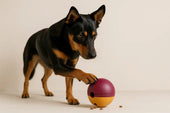
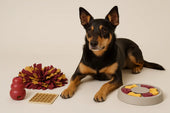
- Food-based interactive toys: puzzle feeders, treat dispensers, snuffle mats, lick mats, and slow feeders.
- Play-based interactive toys: tug toys, fetch toys with unpredictability (e.g., erratic bounce), and toys that involve structured human input.
Food-based enrichment has a special advantage: it taps into the dog’s natural foraging drive and can occupy time in a low-arousal way. For many dogs, a food puzzle can replace a portion of the “mental work” that would otherwise come from exploring outdoors.
It is also important to distinguish interactive from indestructible. Interactive toys should challenge the brain; durability is a separate quality. A toy can be durable yet mentally uninteresting, or mentally brilliant yet not suitable for strong chewers.
Tail-Wagging Favourites from PetCareShed
Why Mental Stimulation Matters: Behaviour, Welfare, and Everyday Calm
Mental stimulation is not a luxury for dogs. It is part of welfare. Dogs that have no meaningful outlets often create their own—digging, chewing door frames, shredding cushions, or pestering other pets. While the internet often frames these as “bad behaviour”, they are frequently unmet needs expressed through normal canine activities.
Environmental enrichment research in dogs supports the broader idea that enrichment can improve behavioural outcomes and welfare when applied thoughtfully, often in combination with social engagement and routine. A review on environmental enrichment in dogs highlights that enrichment strategies can influence behaviour and that social stimulation may have strong positive effects alongside other enrichment methods, such as toys (showing that toys are helpful, but not the only factor)
In practical terms, interactive toys can:
- provide a predictable, repeatable activity that fills “empty time”
- reduce boredom-driven destruction by offering a safer alternative outlet
- support calmer transitions (e.g., after visitors leave, after school drop-off)
- create low-impact engagement for dogs that cannot exercise heavily (recovering from injury, elderly dogs)
Some interactive formats, particularly licking and sniffing activities, are commonly used by trainers and veterinary behaviour professionals to support calm, because these activities can be self-reinforcing and naturally soothing for many dogs.
Australia-Specific Considerations: Heat, Surfaces, and Seasonal Routines
Australia’s climate influences how enrichment should be planned. On many days, especially in summer and in hotter regions, a dog may be unable to exercise safely outdoors for long periods. RSPCA guidance emphasises avoiding exercise during extreme heat and choosing cooler times such as early morning or late evening. RSPCA state branches also advise using the five-second rule on hot pavement: if you cannot hold the back of your hand on the surface for five seconds, it is too hot for paws.
This has direct relevance for interactive toys because it shifts enrichment indoors and toward low-impact options:
- puzzle feeders and snuffle mats in air conditioning or shaded rooms
- lick mats and frozen food toys during hot afternoons
- short training sessions that use the brain instead of the legs
Heat risk also varies by dog. Brachycephalic breeds and dogs with respiratory issues can overheat more easily. RSPCA Pet Insurance provides general information on heatstroke risk and prevention measures.
In Australian households, other local factors matter too:
- Backyard access can encourage unsupervised chewing. Many toy incidents occur when a dog is left alone with an item that degrades or fragments.
- Sand, salt, and moisture (beach walks) can change how toys wear, and can introduce bacteria if toys are not cleaned.
- Hard surfaces (tile, concrete) can influence toy choice; toys that bounce unpredictably may increase slip risk.
Safety First: Choosing and Using Interactive Toys Responsibly
Interactive toys are safe when chosen and used in a disciplined way. They become unsafe when dogs are left alone with items that can break, when toys are the wrong size, or when a dog chews in a way the toy was not designed to tolerate.
The core safety rules
- Size matters: a toy should be large enough that the dog cannot swallow it or wedge it in the back of the mouth. Many veterinary and pet safety resources emphasise choosing appropriately-sized toys and supervising use.
- Supervise new toys and new chews: supervision is most important during the first sessions, when you learn how your dog will use the toy.
- Inspect and replace: once a toy tears, cracks, or pieces begin to detach, remove it. Stuffing and fragments can present choking risk, and swallowed parts may cause gastrointestinal obstruction. An Australian first aid resource notes that stuffing from torn toys can contribute to choking incidents and advises discarding compromised toys promptly.
- Avoid “single-hole suction” hazards: some hollow enrichment toys are designed with airflow holes; designs that allow airflow reduce risk if a toy seals over a dog’s tongue or mouth.
Common hazard patterns to watch for
- “Destroy and swallow” chewers: dogs that rip off chunks and ingest them are higher risk for obstruction.
- Squeaker extraction: some dogs fixate on removing squeakers or internal components.
- Rope fraying: rope fibres can be swallowed; long fibres may cause intestinal issues.
If your dog has a history of swallowing non-food items, has had previous gastrointestinal surgery, or has dental disease, it is sensible to seek veterinary guidance before introducing new chew-based interactive toys.
Understanding Your Dog: The Four Traits That Determine the “Best” Interactive Toy
Selecting an interactive toy is not about popularity; it is about fit. Four traits shape success.
1) Chewing style and jaw strength
Dogs generally fall into these groups:
- Gentle mouths: likely to enjoy plush puzzles and soft treat toys.
- Moderate chewers: can use a wide range of rubber enrichment toys.
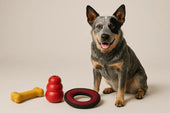
- Power chewers: need robust materials and close supervision; many “interactive” toys become chew debris quickly.
Harder is not always better. Very hard chews can contribute to tooth wear or fractures in some dogs. Veterinary guidance commonly cautions against excessively hard chew items and recommends choosing toys that are durable but not tooth-damaging.
2) Frustration tolerance
Some dogs become distressed if the puzzle is too hard. In these cases, the “best” interactive toy is one that provides fast success and a calm rhythm (snuffle mats, lick mats, simple treat dispensers).
3) Food motivation and dietary needs
Food-based toys work best when food matters. If your dog is on a weight-management plan, interactive toys can still be used by allocating part of the daily ration to the toy rather than adding extra calories.
4) Life stage and health
- Puppies benefit from simple, safe textures and short sessions.
- Adolescent dogs often need higher challenge and more frequent rotation.
- Senior dogs can benefit from low-impact puzzles and scent work, but may need softer options if dental health is reduced.
Categories of Interactive Dog Toys (with Practical Australian Use Cases)
Below are the most useful interactive categories for Australian households, with guidance on when each shines.
Puzzle Feeders and Treat-Dispensing Toys
Puzzle feeders and treat dispensers are often the most practical form of interactive toy because they integrate into daily feeding. Rather than viewing a toy as “extra”, you can use it to deliver meals more slowly and with more mental work.
Best for:
- dogs that eat too quickly
- dogs that are home alone for parts of the day
- rainy weeks, high heat days, or restricted exercise periods
Practical tips:
- Start with easy dispersion so your dog learns the “rules”.
- Use dry food for tidy indoor sessions; use damp food for more difficulty.
- If your dog slams the toy aggressively, move to a quieter room or use a non-slip mat.
Difficulty ladder (a reliable way to prevent frustration)
- Level 1: large kibble in a simple dispenser
- Level 2: smaller kibble, fewer pieces
- Level 3: mixed textures (kibble plus a small amount of dog-safe wet food)
- Level 4: partially frozen fill (short sessions)
Snuffle Mats and Scent-Based Toys
Scent games are often underused. Snuffle mats are simple but powerful because they allow dogs to use their nose—a core canine skill—without high physical effort.
Best for:
- anxious or easily overstimulated dogs
- older dogs needing low-impact enrichment
- households with limited yard time
Australian considerations:
- In humid conditions, snuffle mats can stay damp if washed and not dried thoroughly. Choose materials that dry well and keep a cleaning schedule.
Lick Mats and Calming Enrichment
Licking is a naturally self-reinforcing behaviour for many dogs. Lick mats can be used to create calm during grooming, after exercise, or when visitors arrive.
What to put on a lick mat (balanced approach):
- a measured portion of wet food from your dog’s diet
- plain dog-safe yoghurt (if tolerated)
- mashed pumpkin
- soaked kibble paste
Avoid high-salt human foods, onion/garlic, and any ingredients your veterinarian has advised against.
Freezing a lick mat increases session length and can be particularly useful during hot weather.
Tug-and-Play Interactive Toys (Human-Led Interaction)
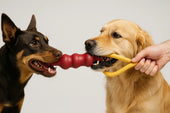
Not all interaction should be solitary. Tug toys and structured fetch provide social enrichment, which research suggests can be highly meaningful for dogs. Human-led play also allows immediate supervision, reducing the risk of ingesting fragments.
Best practices for safe tug:
- keep the tug line horizontal; avoid jerking upward (reduces neck strain)
- teach “take”, “drop”, and “wait” to keep arousal manageable
- end the game while the dog is still engaged, not exhausted
Chew-Interactive Toys (Stuffable and Long-Lasting)
Stuffable rubber toys can provide long, calm engagement. They also allow owners to control what the dog consumes.
A sensible approach to fillings:
- use part of the daily ration
- prefer simple, digestible ingredients
- freeze for longer engagement
For dogs with sensitive stomachs, avoid frequent changes. Consistency matters.
Motion and Electronic Interactive Toys
Motion-based toys can be useful for dogs that enjoy chasing and pouncing behaviours, but they require careful selection.
Use with caution when:
- your dog becomes obsessive or cannot disengage
- your dog is noise-sensitive
- your dog has mobility issues
If used, keep sessions short and structured, and store the toy away afterward.
What Makes an Interactive Toy “Good”? A Practical Evaluation Checklist
Use this checklist when comparing options.
Construction and materials
- smooth edges, no sharp seams
- robust join points
- minimal detachable parts
- non-toxic materials and clear manufacturer information
Dog suitability
- correct size for your dog’s mouth
- matches chewing intensity
- achievable difficulty with a progression pathway
Hygiene and maintenance
- easy to clean thoroughly
- dries well
- no deep cavities that trap residue unless you can access them
Noise and household fit
- manageable noise level for apartments
- non-slip performance on tile
Choosing the Right Interactive Toy for Your Dog: A Decision Guide
The simplest buying method is to choose by purpose.
- To calm and settle: lick mat, snuffle mat, slow feeder
- To reduce boredom while alone: treat dispenser, puzzle feeder rotation
- To replace high-energy exercise on hot days: scent games, frozen food toy, short training games
- To strengthen training and manners: tug toy used with impulse-control cues; reward-based puzzles
Quick matching list
- Small dogs: smaller capacity puzzles, gentle treat dispensers; avoid toys that become a “whole-mouth” choking risk.
- Large dogs: larger devices that cannot be swallowed; check weight and impact on floors.
- Flat-faced breeds: choose designs that do not require deep muzzle insertion; avoid prolonged intense exertion in heat.
Interactive Toy Safety in Detail: Choking, Teeth, and Gut Obstruction
Toy injuries are often preventable. The most common serious risks are choking and gastrointestinal obstruction.
Choking risk and supervision
Choking can occur with toy fragments, stuffing, squeakers, or poorly sized items. An Australian first aid resource highlights that torn toy stuffing can be a choking hazard and recommends discarding damaged toys.
Practical safety measures include:
- do not offer interactive chew toys when you cannot supervise, especially at first
- choose toys larger than what your dog can fit fully into the mouth
- remove toys once they are small enough to swallow
Dental safety
Excessively hard chews can damage teeth. A practical rule used in veterinary advice is the “thumbnail test”: if you cannot make an indentation with your thumbnail, the item may be too hard for many dogs’ teeth.
Rope and fabric ingestion
Rope toys are best treated as supervised tug toys, not “all-day chews”. If your dog begins to unravel fibres, retire the toy.
A Simple Toy Rotation System (That Actually Works)
Toy rotation is one of the most effective ways to keep enrichment fresh without constant buying. Guidance from enrichment resources recommends rotating toys on a weekly or one-to-two-week schedule to maintain novelty.
A realistic rotation method
- Select 8–12 toys across categories (food puzzle, chew, tug, scent, comfort).
- Keep 3–5 toys available at any time.
- Store the rest in a sealed tub.
- Swap weekly (or twice weekly for high-energy dogs).
Rotation principles that prevent common problems
- Keep one comfort toy constant if your dog sleeps with it.
- Pair “returning” toys with a small reward (e.g., a few pieces of kibble) to rebuild interest.
- Retire toys that cause obsessive behaviour or repeated frustration.
Building a Weekly Enrichment Plan for Australian Households
A plan helps owners avoid the cycle of “busy days followed by an exhausted weekend”. It also reduces decision fatigue.
Below is a sample framework. Adjust for your dog’s health and your veterinarian’s advice.
| Day | Primary interactive activity | Session length | Best time in Australian summer |
|---|---|---|---|
| Mon | Snuffle mat meal | 10–20 min | Midday (indoors) |
| Tue | Stuffable food toy (part frozen) | 15–30 min | Afternoon (cool room) |
| Wed | Short training + tug | 10–15 min | Morning/evening |
| Thu | Puzzle feeder | 10–25 min | Any time indoors |
| Fri | Scent game (find-it around house) | 5–10 min x 2 | Midday (indoors) |
| Sat | Outdoor play + water breaks | Variable | Early morning |
| Sun | Rest day + chew toy (supervised) | 10–20 min | Any time indoors |
This structure balances:
- food-based enrichment (low arousal)
- social play (relationship-building)
- scent work (fatiguing without heat load)
During heatwaves, RSPCA guidance supports shifting exercise to cooler times and limiting exposure to hot surfaces.
How to Use Food Interactive Toys Without Overfeeding
Many owners abandon food puzzles because weight creeps up. The solution is straightforward: interactive toys replace bowl feeding, not add to it.
A practical method
- Measure your dog’s daily ration as normal.
- Allocate:
- 40–60% in a puzzle feeder or dispenser
- 20–40% in a snuffle mat or scatter feed (indoors or in grass)
- the remainder for training rewards
If using wet food or spreads, reduce kibble accordingly.
Dogs on prescription diets
If your dog is on a veterinary diet, interactive toys can still be used. The key is to use the prescribed food and avoid unapproved add-ons.
Cleaning and Hygiene: Keeping Interactive Toys Safe Over Time
Dog toys pick up saliva, food residue, dirt, and biofilm. Cleaning is not only about smell; it is a health practice.
The US CDC provides general guidance for cleaning and disinfecting pet supplies, advising cleaning hard items with soapy water and using appropriate disinfectants where needed. Pet health sources note that toys can harbour bacteria and recommend regular washing.
Cleaning by toy type
| Toy type | Routine clean | Deep clean | Drying notes |
|---|---|---|---|
| Hard rubber / plastic puzzles | Rinse + hot soapy scrub | Vinegar soak or approved disinfectant | Air dry fully; avoid trapped water |
| Lick mats | Wash immediately after use | Dishwasher if manufacturer allows | Dry flat; check suction cups |
| Snuffle mats | Shake debris; spot clean | Machine wash (if safe) | Dry thoroughly to prevent mould |
| Rope toys | Rinse after outdoor use | Machine wash in bag/pillowcase | Sun-dry when possible |
| Plush puzzles | Spot clean | Machine wash if label allows | Ensure core dries; retire if torn |
When to disinfect (not just wash)
Consider disinfection if:
- a toy was used by multiple dogs (e.g., playdate)
- your dog has had diarrhoea or a known infection
- a toy was dropped in high-risk areas (dog parks, kennels)
Always rinse thoroughly after disinfecting and allow full drying.
Signs an Interactive Toy Is Not Working (and What to Do Instead)
Not every toy is appropriate for every dog. It is sensible to change approach if you see:
- frantic behaviour: pawing, biting, whining, inability to disengage
- resource guarding: growling when approached; stiff posture
- rapid destruction: large fragments torn off quickly
- avoidance: dog ignores toy repeatedly, even with easy rewards
Practical adjustments include:
- reduce difficulty (larger treats, easier access)
- shorten sessions and end on success
- switch from food puzzles to human-led tug/training
- use scent games instead of high-arousal moving toys
If guarding is significant, consult a qualified trainer or veterinary behaviour professional.
Recommended Related Products from PetCareShed
The most useful interactive toys tend to be foundational categories that can be used in rotation and adjusted for difficulty. The following PetCareShed product categories are commonly helpful in Australian households because they support mental stimulation while allowing controlled, safe play.
- Puzzle feeders (interactive feeders): useful for slowing meals and reducing boredom during indoor time.
- Treat-dispensing toys: helpful for self-directed problem-solving; can be adjusted by treat size and fill.
- Snuffle mats: strong option for calm scent work, especially during heat or wet weather.
- Lick mats: supportive for low-arousal enrichment during grooming, visitor routines, or recovery periods.
- Slow feeders: suitable for fast eaters and dogs prone to gulping.
- Durable chew toys (supervised use): useful for dogs that settle through chewing; select size and firmness to suit dental health.
- Tug toys: valuable for structured human-led interaction and impulse-control games.
When choosing within these categories, prioritise correct sizing, cleanability, and a difficulty level that your dog can learn without frustration.
Buying Guide: What to Look for in Product Descriptions (and What to Be Cautious About)
Interactive toys are often marketed with broad promises. A careful buyer reads for specifics.
Useful details in a product listing
- material type and whether it is described as non-toxic
- dishwasher-safe or cleaning instructions
- recommended dog size and weight range
- whether parts are replaceable
- difficulty level or adjustment options
Claims that deserve caution
- “indestructible” (no toy is truly indestructible for all dogs)
- “for all chewers” (chewing intensity varies dramatically)
- “leave your dog alone with this toy” (supervision is still best practice)
Interactive Playtime at Home: Practical Games That Pair Well With Toys
You can increase the value of interactive toys by using them within simple games.
- Find-it: hide a few pieces of kibble in one room, then gradually increase difficulty.
- Two-toy swap: teach “drop” by offering a second toy as a trade.
- Scatter feeding in grass (cool times): low-impact sniffing and foraging.
- Settle on a mat: give a lick mat or chew toy only when the dog lies calmly on a designated mat.
These activities strengthen training while keeping sessions short and achievable.
When to Seek Veterinary Advice
Interactive toys are generally safe, but a veterinarian should be consulted if:
- your dog repeatedly vomits after using food toys
- you suspect fragments have been swallowed
- your dog has cracked teeth, bleeding gums, or oral pain
- your dog shows signs consistent with heat stress during play
RSPCA resources on heat safety and heatstroke provide helpful prevention guidance, but veterinary care is essential if heatstroke is suspected.
FAQ: Best Interactive Dog Toys in Australia
Are interactive dog toys actually good for dogs, or are they just a trend?
Interactive toys are a practical enrichment tool when matched to the dog and used safely. Enrichment research supports the broader benefit of environmental enrichment for behaviour and welfare, especially when combined with social stimulation and routine. In real households, interactive toys are most valuable when they replace idle time and provide structured outlets for sniffing, licking, chewing, and problem-solving.
What is the best interactive dog toy for a dog that gets bored easily?
A rotation plan usually matters more than one “perfect” toy. For boredom-prone dogs, use a mix of:
- treat-dispensing toys
- snuffle mats
- short training games with tug
Rotate toys weekly to preserve novelty.
What is the safest interactive toy for dogs that destroy toys?
Safety depends on supervision and selecting toys designed for strong chewers with minimal detachable parts. Avoid plush toys that are quickly shredded and any toy that breaks into swallowable pieces. Discard damaged toys promptly; torn stuffing and fragments can contribute to choking risk.
Can I leave my dog alone with an interactive toy?
It depends on your dog’s history and the specific toy. Many dogs can use certain food puzzles safely while alone, but new toys should be supervised first. If your dog is known to swallow fragments, avoid unsupervised access.
How do I choose the right puzzle difficulty for my dog?
Start easy and increase difficulty gradually. A good puzzle should be challenging but achievable. Signs it is too hard include whining, frantic biting, or abandoning the toy. Reduce difficulty by using larger treats, fewer barriers, or a simpler design.
Are lick mats good for anxiety?
Lick mats can support calm routines for many dogs because licking is often soothing. They are particularly useful during grooming, crate time, or when visitors arrive. Always account for calories and avoid ingredients your dog cannot tolerate.
What can I put in a treat toy or on a lick mat?
Use dog-appropriate foods that suit your dog’s diet:
- measured kibble (often the easiest)
- a portion of wet food
- dog-safe yoghurt (if tolerated)
- mashed pumpkin
Avoid toxic foods (e.g., onion/garlic) and do not add extra calories on top of normal meals.
How often should I rotate interactive dog toys?
Weekly rotation is a common, practical schedule, though some households rotate every one to two weeks. Keep a few toys out, store the rest, and swap to renew interest.
How do I keep interactive toys clean and hygienic?
Clean hard toys with hot soapy water and scrub grooves where residue builds. For broader guidance on cleaning and disinfecting pet supplies, the CDC recommends cleaning hard items with soapy water and using appropriate disinfectants when needed. Pet health sources also emphasise that toys can carry bacteria and should be washed regularly.
Can interactive toys replace daily walks?
Interactive toys are not a full replacement for physical exercise and outdoor exploration, but they are very useful on days when walks are reduced due to heat, storms, or time constraints. In Australian summer conditions, shifting some enrichment indoors can be safer. RSPCA guidance recommends exercising dogs at cooler times and avoiding hot surfaces.
How can I keep my dog entertained in a heatwave?
Use low-impact indoor enrichment:
- frozen lick mats
- stuffable food toys (frozen)
- snuffle mat feeding
- short training games
Avoid high-intensity chasing games during the hottest periods. Follow RSPCA heat safety guidance and watch for heat stress.
Are electronic interactive toys suitable for all dogs?
No. Some dogs become overstimulated or obsessive with moving, noise-making toys. If your dog struggles to disengage, keep sessions short, supervise closely, and store the toy away after use.
What are the warning signs that a toy is unsafe for my dog?
Stop using a toy if you notice:
- cracks, tears, loose parts, or exposed stuffing
- pieces breaking off
- the toy becoming small enough to swallow
- fraying rope fibres
Discard damaged toys promptly; compromised toys increase choking and ingestion risks.
Final Thoughts: Choosing Interactive Toys That Fit Australian Life
The best interactive dog toys in Australia are the ones that fit your dog’s behaviour and your household routines. A calm snuffle mat session on a hot afternoon can be more valuable than an overstimulating chase game. A puzzle feeder that replaces bowl feeding can provide daily mental work without adding calories. Above all, safety and supervision turn interactive toys into reliable enrichment rather than a risk.
By focusing on the right categories, maintaining a rotation system, and using toys as part of a broader routine that includes social interaction and sensible exercise timing, Australian dog owners can create engaging playtime that supports both behaviour and wellbeing.