
Key Takeaways
- Choose leather based on your dog’s lifestyle, not just appearance. For beach dogs, frequent swimmers, or high-humidity regions, leather can still work, but only with the right finish and maintenance.
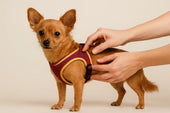
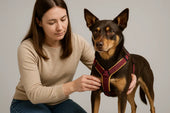
- Fit matters as much as material. A widely accepted rule is that you should be able to slide two fingers comfortably under the collar, balancing safety and security.
- Prioritise low-risk hardware and simple construction. A flat collar with a quick-release buckle and a secure D-ring is often recommended for everyday use.
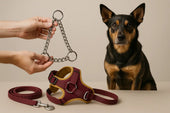
- Avoid aversive “training” collars designed to cause pain or fear (for example, prong collars and shock collars). The Australian Veterinary Association opposes their use due to welfare concerns.
- Understand tanning and allergies. Some chrome-tanned leather can release chromium, which is a known trigger for allergic contact dermatitis in sensitive individuals; vegetable-tanned leather avoids chromium tanning chemistry altogether.
- Leather lasts when cared for. Rinse after salt exposure, dry slowly out of sun, and condition periodically to prevent cracking—especially under Australia’s heat and UV conditions.
Your Dog’s Happiness Starts Here - at PetCareShed
Introduction
A leather dog collar has a particular appeal that is difficult to replicate. It is quiet (no stiff webbing rasping through a buckle), comfortable once broken in, and visually suited to everything from suburban walks to country properties. More importantly, high-quality leather can be exceptionally strong and stable over time, maintaining its shape and integrity when many fabric collars fray or soften.
However, “leather collar” is not a single category. In Australia, collar performance is heavily influenced by conditions that are often underestimated: salt water, humidity, abrasive sand, high UV, and sudden changes from air-conditioned interiors to hot pavement. This is why buying the best leather dog collar is not only about choosing a premium look; it is about selecting a collar that supports safety, comfort, hygiene, and appropriate use—for your dog’s body and behaviour.
This guide explains what premium leather quality actually means, how to judge strength without falling into gimmicks, how to fit and maintain leather collars in Australian conditions, and how to match collar design to real-world needs such as ID compliance, daily walking, training and handling, and outdoor adventures.
What “Best” Means for Leather Dog Collars (Australian Context)
For an Australian dog owner, a collar is not merely an accessory. It is a piece of safety equipment that must withstand environmental stress, provide reliable attachment points for leads and ID, and remain comfortable on skin and coat.
When assessing “best leather dog collars” in Australia, it is more accurate to think in terms of best for purpose:
- Best for everyday suburban wear: soft leather, smooth edges, reliable buckle, and low-bulk comfort under the jawline.
- Best for strength and control: thicker leather with robust hardware, but without creating pressure points or encouraging harsh handling.
- Best for sensitive skin or coat: clean finishing, minimal dye transfer, and attention to tanning and lining.
- Best for beach and wet conditions: protective finishes, rust-resistant hardware, and an owner willing to maintain leather properly.
- Best for long-term value: repairable construction (replaceable hardware), strong stitching, and leather that develops a stable patina rather than cracking.
In other words, the “best” collar is the one that remains safe and functional under your dog’s daily reality.
Your Dog’s Happiness Starts Here - at PetCareShed
Why Leather Collars Remain Popular (and When They Make Sense)
Leather collars hold their place in the Australian market for practical reasons:
1) Comfort and break-in Good leather becomes more pliable with wear. For many dogs, this reduces rubbing and “hot spots” compared with stiffer webbing.
2) Stability and shape retention A well-made leather collar keeps its shape. This is beneficial for consistent fit and may reduce the tendency for the collar to twist, particularly on thick-coated breeds.
3) Strength-to-bulk ratio Quality leather can be very strong without becoming excessively wide or bulky. That matters for dogs with shorter necks or dogs that dislike heavy gear.
4) Quiet handling Leather tends to move more quietly than plastic clips and stiff woven materials, which some noise-sensitive dogs appreciate.
When leather may not be the best primary choice Leather is not ideal for every situation. If your dog swims daily, lives in a very humid environment without good drying conditions, or repeatedly gets mud-soaked, you may find that waterproof materials are simpler. Leather can still be used, but it requires owner commitment to cleaning and drying. In those cases, some owners keep a leather collar for everyday wear (ID and outings) and a separate waterproof collar for swimming and messy adventures.
Understanding Leather Quality: What Actually Matters
Leather quality is often described with vague terms like “premium” and “genuine”. In practice, durability comes down to the type of hide, the tanning process, finishing, thickness, edge treatment, stitching, and hardware.
Full-grain vs corrected-grain vs bonded leather
Without relying on marketing labels, here is what matters:
- Full-grain leather: retains the strongest fibre structure. It typically ages well and forms a patina.
- Corrected-grain leather: has been sanded and treated to remove natural marks. It can still be durable, but the surface may not age as gracefully.
- Bonded leather: made from leather scraps and adhesives. This is generally unsuitable for dog collars expected to last or handle force.
A collar made from robust full-grain leather with strong stitching and good hardware usually outlasts one made from “leather” composites, even if both are marketed as genuine.
Vegetable-tanned vs chrome-tanned leather (and skin sensitivity)
Tanning affects both performance and potential skin compatibility.
- Vegetable-tanned leather uses plant-derived tannins. It is often chosen for premium collars due to its ability to mould and soften over time.
- Chrome-tanned leather uses chromium salts (typically chromium III). Under certain conditions, chromium VI can be present or form, and chromium exposure is a recognised cause of contact dermatitis in sensitive individuals.
Not every dog with a leather collar will develop irritation, and many dogs tolerate chrome-tanned leather without issue. However, if your dog has a history of skin sensitivity, recurring neck itch, or unexplained hair loss under the collar, it is prudent to consider the tanning type and overall finishing.
Practical guidance for sensitive dogs
- Prefer smoother finishing and well-burnished edges.
- Avoid heavily fragranced conditioners.
- Remove the collar at home where safe to do so, allowing the skin to breathe.
- If redness persists, consult your veterinarian.
Collar Fit: Safety, Comfort, and Behaviour Considerations
A premium leather collar is only “best” if it fits safely. Poor fit can contribute to rubbing, hair breakage, pressure injury, and escape risk.
The two-finger rule (everyday baseline)
A commonly recommended guide is that you should be able to slide two fingers comfortably under the collar.
This guidance is simple, but it must be applied thoughtfully:
- For small dogs, “two fingers” may be too generous if your fingers are large—use judgement and ensure the collar cannot slip over the head.
- For thick-coated dogs, check fit against the skin, not just the coat.
- For growing puppies, reassess fit frequently; a collar that fits on Monday may be too tight by the end of the month.
Where the collar should sit
For standard flat collars used for identification and everyday walking, a stable position on the neck that does not slide down to the base is preferable. If the collar rides too low, it can shift and rub, particularly on dogs with a broad chest and narrow head.
Leaving collars on: when caution is warranted
Collars can present a hazard if a dog is unsupervised and the collar catches on an object. The RSPCA Pet Insurance guidance notes that dogs can be seriously injured or strangled if a collar becomes caught, such as on fencing or other fixtures.
For this reason, many owners follow a practical approach:
- Collar on for outings and when supervision is high.
- Collar off when the dog is crated, roughhousing with other dogs, or unsupervised in a yard with potential snag points.
If your dog must wear ID at all times, consider a collar style with a safe quick-release mechanism and keep the environment free of protrusions.
Leather Collar Designs Explained (and How to Choose)
Flat buckle collars
A flat leather collar with a buckle is the classic everyday option. A standard flat collar is often recommended for daily wear, particularly when paired with visible identification tags.
Best for: most adult dogs, daily walks, attaching ID.
Considerations: ensure the buckle and keeper loops hold securely and that the D-ring is well fixed.
Quick-release collars (with leather)
Some leather collars integrate a quick-release buckle. This can be helpful for fast on/off, but quality varies significantly.
Best for: owners who remove collars at home and want easy handling.
Considerations: the release mechanism should not pop open under tension; hardware should be corrosion resistant.
Rolled leather collars
Rolled collars are designed to reduce coat breakage on long-haired breeds.
Best for: long-coated dogs where matting and hair breakage under a flat collar is an issue.
Considerations: rolled collars can concentrate pressure if a dog pulls heavily; they are typically better for ID wear than for strong leash pressure.
Padded or lined leather collars
Lining can improve comfort and reduce dye transfer, but thick padding can increase bulk.
A relevant welfare point is that extra layers do not automatically reduce pressure; some evidence indicates that cushioned, double-layer designs can increase pressure on the neck depending on construction.
Best for: dogs needing softer contact surfaces, short-coated breeds prone to rubbing.
Considerations: ensure edges are smooth; check for trapped moisture after rain.
Martingale-style collars (limited-slip)
Martingale collars are generally used for dogs with heads narrower than their neck (common in sighthounds) or dogs that back out of collars.
Best for: escape-prone dogs, sighthounds.
Considerations: should be fitted so it tightens only enough to prevent slip-out, not to choke.
What to avoid: aversive collars
Collars designed to cause pain or fear (for example, prong collars) are not appropriate for humane training. The Australian Veterinary Association states that prong collars must not be used under any circumstances and expresses strong opposition to aversive devices due to welfare implications.
If your dog pulls strongly or has behavioural challenges, consider professional force-free training and equipment such as a well-fitted harness (particularly front-attachment styles) rather than escalating collar harshness.
Strength and Safety: What Makes a Leather Collar “Strong”
Strength is not only about thickness. A collar fails where its weakest point is: holes stretching, stitching tearing, a buckle bending, or a D-ring pulling loose.
Key construction features to look for
- Leather thickness appropriate to the dog’s size and strength. Very thick leather can be uncomfortable on small dogs, while thin leather may stretch on strong, large breeds.
- Stitching quality: even spacing, no loose ends, and reinforced stress points.
- Rivets used correctly: rivets can reinforce, but poor placement can create sharp edges or stress risers.
- Hardware grade and finish: solid metal components with smooth edges reduce wear on leads and reduce snag risk.
- Hole reinforcement: clean punched holes that do not tear easily.
Matching collar width to dog size
As a general principle:
- Narrow collars can concentrate pressure.
- Wider collars distribute load but can be bulky.
A balanced approach is to choose a width that suits your dog’s neck length and coat. For short-necked breeds, excessively wide collars can interfere with movement; for large breeds, very narrow collars may be uncomfortable if leash pressure occurs.
Australia-Specific Conditions: Heat, UV, Beach, Bush, and Humidity
Australia is a demanding environment for leather. Understanding the risks helps you choose a collar finish and care routine that avoids premature cracking or odour.
Heat and UV exposure
High heat and direct sunlight can dry leather, stiffen it, and accelerate cracking. Owners often unintentionally damage collars by leaving them in a hot car, on a sunny windowsill, or in direct outdoor exposure after a wet outing.
Practical approach: dry leather in shade with airflow, never in direct sun.
Salt water and sand
Beach conditions are hard on leather and hardware. Salt can dry the leather and accelerate corrosion of metal parts. Fine sand can work into stitching and act as an abrasive.
Practical approach: rinse after beach use, wipe down, and dry slowly before conditioning.
Humidity and mould
In humid or coastal areas, leather that remains damp can develop mould and odour.
Practical approach: rotate collars if your dog is frequently wet, and store in a dry, ventilated space.
How to Measure for a Leather Collar (Sizing That Reduces Returns)
Sizing is simpler when you measure accurately and understand how leather behaves.
Step-by-step measurement
- Ask your dog to stand comfortably.
- Use a soft tape measure around the neck where the collar will sit.
- Aim for a snug measurement, then confirm that you can still allow comfortable breathing space.
- Apply the two-finger comfort check once the collar is on.
Leather “give” over time
Leather often softens and may stretch slightly with use. This is not a reason to buy a collar that is too small. Instead:
- Choose a size where your dog sits comfortably near the middle of the adjustment holes.
- For puppies, plan to re-size and replace as they grow.
Quick sizing reference (general guidance)
| Dog type | Common fit issue | Helpful collar features |
|---|---|---|
| Small breeds | Bulk and stiffness | Softer leather, lighter hardware |
| Short-coated dogs | Rubbing and hair loss | Lined collar, smooth edges |
| Long-coated dogs | Matting and coat breakage | Rolled leather or smooth lining |
| Sighthounds | Backing out of collars | Martingale or wider sighthound style |
| Large, strong dogs | Hardware stress | Reinforced D-ring, robust buckle |
Choosing Leather Collars for Different Australian Lifestyles
Everyday urban and suburban walking
For daily walking, the goal is reliability and comfort.
A practical setup is:
- A flat leather collar for ID and occasional lead attachment.
- A harness for dogs that pull strongly or are still learning leash skills.
This approach aligns with welfare guidance that no collar type can fully prevent pressure injury if a dog pulls; reducing pulling through training and equipment choice is important.
Coastal living and frequent swimming
If your dog swims regularly, leather is workable but requires discipline.
- Use a waterproof collar for swimming and a leather collar for everyday wear.
- If leather is worn to the beach, rinse it thoroughly and dry in shade.
Bush, hiking, and outdoor exploration
Outdoor conditions introduce burrs, abrasive dust, and snag hazards.
- Choose a collar with smooth, durable stitching.
- Avoid protruding rivets or decorative studs that can catch.
- Consider reflective accessories on the lead or harness if walking near roads at dawn or dusk.
Multi-dog homes and rough play
Collars can catch during play, particularly if one dog grabs another by the neck.
- Remove collars during active play where safe and practical.
- Avoid dangling accessories that can snag.
Leather Collar Care in Australia: Cleaning, Drying, Conditioning
Leather care is often presented as optional. In Australia, it is the difference between a collar that lasts years and one that cracks, smells, and stiffens.
Routine schedule (realistic and effective)
- Weekly: quick wipe with a slightly damp cloth, then dry.
- After beach or mud: rinse/wipe thoroughly, dry slowly out of sun.
- Every 1–3 months: condition lightly (more often in dry heat; less often in humidity).
Drying rules that prevent cracking
- Remove the collar if it is wet.
- Pat with a towel.
- Air dry in shade with ventilation.
- Do not use a hair dryer or leave in direct sun.
Conditioning: keep it simple
A thin, appropriate leather conditioner helps maintain flexibility. Over-conditioning can make leather too soft and may loosen fibres.
Avoid experimenting with household oils or heavily fragranced products. Dogs groom themselves, and residues can be ingested. If your dog has skin sensitivity, keep conditioning minimal and ensure the collar is fully dry before re-wearing.
Managing odour
Odour usually indicates moisture trapped in leather or lining.
- Dry thoroughly.
- Clean gently.
- Rotate collars if your dog is frequently wet.
If mould is visible, replace the collar unless you are confident it can be safely cleaned and fully dried without leaving spores in the material.
Common Problems (and How to Prevent Them)
Hair loss under the collar
Common causes include:
- Collar too tight.
- Wet collar worn for long periods.
- Rough edges, stiff leather, or abrasive stitching.
- Underlying skin conditions.
Prevention:
- Recheck fit using the two-finger check.
- Remove collars at home where safe.
- Choose smooth finishing or a lined collar.
Dye transfer onto coat
Some dyed leathers can transfer colour, especially when wet.
Prevention:
- Choose well-finished leather and allow new collars to “settle” before wet outings.
- Avoid saturating leather.
Stretching and hole tearing
Leather can stretch if it is repeatedly soaked or if the dog pulls strongly on the lead.
Prevention:
- Use a harness for dogs that pull.
- Keep leather as dry as practical.
- Choose a collar with strong hole punching and reinforcement.
Rust or corrosion on hardware
This is common for beach dogs.
Prevention:
- Rinse and dry hardware.
- Choose corrosion-resistant components.
Leather Collars, ID Tags, and Australian Compliance Considerations
Identification requirements differ by state and council, but in many areas dogs must wear registration and ID when in public. A collar should support secure ID attachment without creating noise or snag risk.
Practical tips:
- Ensure the D-ring is large enough for tags without overcrowding the lead clip.
- Consider a dedicated tag ring to reduce wear on the D-ring.
- Check tag edges for sharpness; tags can rub the chest in some dogs.
For microchipped dogs, a collar tag remains useful because it provides immediate contact details without requiring a scanner.
Comfort and Welfare: Minimising Neck Pressure During Walking
A leather collar is not designed to “fix” pulling. If a dog pulls, pressure is transmitted to the neck regardless of how premium the leather is.
Welfare-focused guidance supports equipment choices that reduce neck load where possible. For dogs learning loose-lead walking, a front-attaching harness is often recommended as a safer option than relying on collar pressure alone.
If your dog pulls strongly, consider:
- A well-fitted harness for walking.
- A leather collar for ID and as a backup attachment point.
- Reward-based leash training to reduce pulling behaviour.
How to Assess Value: What You’re Paying For
A premium leather collar typically costs more because of:
- Better leather selection and tanning.
- Stronger stitching and edge finishing.
- Higher-quality metal hardware.
- More consistent sizing and hole spacing.
It is reasonable to pay more for a collar that is comfortable, secure, and durable—particularly if your dog wears it daily.
A practical “value check” list
- Does the collar sit flat and stable on the neck?
- Are edges smooth and non-abrasive?
- Is the buckle secure and easy to fasten?
- Is the D-ring fixed in a way that resists twisting?
- Does the collar remain comfortable after 30–60 minutes of wear?
Recommended Related Products from PetCareShed
The best leather collar setup is usually a system rather than a single item. The following PetCareShed product categories are commonly helpful alongside a leather collar, depending on your dog’s lifestyle and training needs:
- Front-attachment dog harnesses: useful for dogs that pull, reducing neck pressure during training walks.
- Double-ended dog leads: allow connection to both harness and collar for stability and safety.
- Leather-safe grooming wipes or gentle pet wipes: practical for removing dust and light grime from the neck area before it becomes embedded in the collar.
- ID tag accessories (tag rings and silencers): help reduce noise and minimise wear on D-rings.
- Water-resistant dog collars (secondary collar): a practical alternative for beach days and swimming, preserving your leather collar for everyday wear.
- Long-line leads: useful for recall training in open spaces while keeping the collar for ID.
Frequently Asked Questions (FAQ)
Are leather dog collars good for dogs in Australia?
Yes, leather collars can be an excellent choice in Australia when they are well made, correctly fitted, and maintained. They are often comfortable and durable, but Australia’s heat, UV, and coastal conditions mean owners should rinse and dry collars properly after wet or salty outings.
How tight should a leather dog collar be?
A commonly used guideline is the two-finger rule: you should be able to slide two fingers comfortably under the collar. The collar should be snug enough that it cannot slip over the head, but not so tight that it causes rubbing or restricts breathing.
Can my dog wear a leather collar all the time?
Many dogs do, but it is not always advisable. Collars can become snag hazards when dogs are unsupervised, and welfare guidance notes that dogs can be injured if collars catch on objects such as fences. A practical approach is collar-on for outings and supervision, collar-off at home when safe.
What is the best leather type for a dog collar?
For long-term durability, full-grain leather is typically preferred. For dogs with sensitive skin, vegetable-tanned leather can be a sensible option because it avoids chromium tanning chemistry. Some chrome-tanned leather can release chromium, which is a recognised trigger for contact dermatitis in sensitive individuals.
Is vegetable-tanned leather always better?
Not always. Vegetable-tanned leather can be excellent, but quality still depends on thickness, finishing, stitching, and hardware. Some chrome-tanned leathers are also durable and soft. The “better” choice is the one that suits your dog’s skin tolerance and your maintenance routine.
How do I clean a leather dog collar after the beach?
Wipe or lightly rinse to remove salt and sand, then dry slowly in shade with airflow. Once fully dry, condition lightly if the leather feels stiff. Avoid drying in direct sun, which can accelerate cracking.
Why does my dog’s neck smell under the collar?
Odour usually indicates moisture and bacteria trapped between the collar and skin, or within the collar lining. Remove the collar to dry, clean gently, and consider rotating between collars if your dog is frequently wet.
My dog’s fur is thinning under the collar. Should I stop using leather?
Not necessarily, but you should investigate the cause. Check fit, remove the collar at home where safe, and ensure the collar is not staying wet against the skin. If irritation persists, consult your veterinarian and consider a softer-lined collar or a different material.
Are leather collars suitable for puppies?
They can be, but puppies grow quickly and sizing must be checked often. Lightweight collars are usually preferable for puppies. If you choose leather, ensure it is soft and not overly heavy, and recheck fit weekly.
Is it safe to attach a lead to a leather collar?
For many dogs, yes—provided the collar is well constructed and fitted. However, if your dog pulls strongly, a harness is often a safer walking tool because it reduces neck pressure. Many owners use the collar for ID and the harness for walking.
What collars should I avoid for humane reasons?
Avoid collars designed to inflict pain, discomfort, or fear. The Australian Veterinary Association opposes aversive collars and states that prong collars must not be used under any circumstances due to their highly aversive nature.
How long should a quality leather dog collar last?
With correct care, a quality leather collar can last for years. Lifespan depends on how often it is exposed to water, salt, and dirt, and how well it is dried and conditioned.
Should I choose a padded leather collar for comfort?
Sometimes, particularly for short-coated dogs or dogs prone to rubbing. However, padding is not automatically safer, and some constructions can increase pressure on the neck depending on design. Focus on smooth edges, proper fit, and appropriate walking equipment.
What is the best approach if my dog is an escape artist?
First, confirm collar fit and consider a martingale-style collar if appropriate for your dog’s anatomy. Second, use a well-fitted harness for walking and combine with reward-based training. For serious escape risk, consult a qualified force-free trainer.