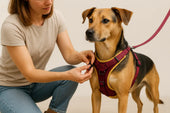

Key Takeaways
- A vet collar (often called an Elizabethan collar or “E-collar”) is primarily a safety device. Its main job is to prevent licking, chewing, and scratching that can reopen wounds, remove sutures, and introduce infection.
- Correct fit matters as much as the collar style. A poorly fitted collar can be ineffective (the dog can still reach the wound) or unsafe (choking risk, rubbing injuries, stress, and reduced appetite).
- In most cases, the collar must stay on full-time until healing is adequate. Veterinary guidance commonly advises continuous wear until the wound is fully healed, which may be a few days to a few weeks depending on the procedure and the dog’s healing progress. VCA notes the collar must be worn until the wound has fully healed, which can range from days to weeks.
- Australia’s heat is a real recovery factor. Post-surgery dogs are more vulnerable to heat stress, and any device around the head/neck can add discomfort. Know the warning signs (rapid panting, drooling, lethargy, weakness, tremors, collapse) and cool the dog promptly if concerned. Animal Welfare Victoria lists these heat stress signs and advises moving pets to a cool area and cooling them.
- Soft cones, inflatable collars, and recovery suits can be useful in the right case. They may improve comfort, sleep, and eating, but they are not universally suitable. Location of the incision (paws vs abdomen vs ear), the dog’s flexibility, and chewing behaviour determine what will work.
- Good recovery is a system, not a single product. The best outcomes come from combining a suitable collar with incision checks, medication compliance, exercise restriction, calm handling, and an adjusted home environment.
Your Dog’s Happiness Starts Here - at PetCareShed
Introduction
Few things unsettle an Australian dog owner more than bringing a dog home after surgery and watching them immediately try to lick, scratch, or nibble the very area that needs to stay clean and still. Veterinary collars can look awkward, and some dogs genuinely dislike them. However, the collar is often one of the most important protective measures in the early recovery window.
This guide explains what “vet collars” are, how they support healing, which types suit different dogs and procedures, and how to use them safely in real Australian conditions (including hot weather and common home layouts). It is written to support informed decisions, but it does not replace the instructions provided by a veterinarian who has examined the dog.
What Is a “Vet Collar” and Why Do Vets Prescribe Them?
A vet collar is any protective device designed to stop a dog from reaching a wound, bandage, surgical site, skin lesion, or topical medication with their mouth or claws. The classic example is the rigid plastic Elizabethan collar (E-collar), commonly known as a cone.
Veterinary teams prescribe these collars because dogs can cause significant damage in a short time. Licking and chewing are not harmless “cleaning” behaviours. They can:
- introduce bacteria to the incision
- soften and weaken surgical glue or dressings
- pull out stitches or staples
- irritate inflamed skin, creating a larger wound
- delay healing and increase the risk of infection
Clinical guidance from veterinary hospitals consistently emphasises that E-collars help prevent post-operative complications caused by licking and chewing at the incision.
In practice, the “best” collar is the one that:
- prevents access to the target area (the incision, paw, tail, ear, hot spot, etc.)
- is safe (does not restrict breathing or cause choking)
- is tolerable enough that the dog can eat, drink, rest, and move safely
- can be used consistently, because intermittent use often fails
Your Dog’s Happiness Starts Here - at PetCareShed
What “Best” Means for Vet Collars: Recovery, Safety, and Compliance
When Australian dog owners search for the “best dog vet collar”, they are often balancing two competing concerns:
- The collar must work (stop licking and chewing)
- The collar must be bearable (the dog can function without becoming distressed or unsafe)
In post-surgery care, “best” usually means the collar supports three outcomes.
1) Recovery protection
The collar must physically prevent the dog reaching the wound. A determined dog can open an incision quickly. Even “just a few minutes” of unsupervised access can be enough to create a complication.
2) Safety in the home
A collar changes how a dog moves through the world. They may bump furniture, misjudge steps, or catch the edge of a cone on chair legs. The best collar is one you can integrate into a safer environment (for example, using non-slip mats and restricting access to stairs).
3) Owner compliance
Even the most protective collar fails if it is taken off repeatedly because it is inconvenient. Comfort, ease of fitting, and practicality (sleeping, feeding, cleaning) all affect whether the dog actually wears it for the required duration.
VCA’s guidance that an Elizabethan collar must be worn until the wound has fully healed reinforces the importance of continuous use where prescribed.
Common Procedures and When a Vet Collar Is Typically Needed
A vet collar may be recommended after a wide range of treatments. Some of the most common include:
- Desexing (spay/neuter)
- Lump removal and biopsy sites
- Dental extractions (to prevent pawing at the mouth)
- Orthopaedic procedures (to protect surgical sites and bandages)
- Hot spots and dermatitis
- Ear haematoma and ear surgery
- Eye conditions (to prevent rubbing)
- Paw injuries (bandages, interdigital cysts)
The need also depends on the dog’s temperament. A calm dog that ignores the wound may still be advised to wear a collar because licking often begins later, especially when itchiness increases during healing.
Types of Dog Vet Collars Available in Australia (Pros, Cons, and Best Uses)
The Australian market generally offers four main categories of post-surgery protective options. No single type is ideal for all dogs.
Rigid plastic Elizabethan collars (classic cone)
This is the most recognised vet collar style and is commonly fitted at veterinary clinics.
Strengths
- Strong barrier; best for persistent lickers and chewers
- Helps protect a broad range of body sites (abdomen, flank, tail base)
- Generally durable and easy to wipe clean
Limitations
- Can be noisy and intimidating for some dogs
- Can interfere with eating/drinking depending on bowl shape and height
- May bump walls and furniture, increasing stress
Best suited to
- fresh surgical wounds where failure would be high risk
- dogs who will persistently chew at stitches
- households where consistent supervision is difficult
Soft fabric or padded “soft cone” collars
Soft cones are made of flexible fabric with internal supports. They look like a softer version of the classic cone.
Strengths
- Often more comfortable for sleep
- Quieter and less likely to damage walls or furniture
- Can reduce anxiety in noise-sensitive dogs
Limitations
- Some dogs can fold them and still reach the wound
- May absorb moisture and odour; require more frequent cleaning
- Not ideal for determined chewers
Best suited to
- mild skin conditions
- calm dogs with low determination to access the wound
- situations where comfort is a high priority and the wound location allows adequate coverage
Inflatable “donut” collars
Inflatable collars sit around the neck like a travel pillow.
Strengths
- Often easier for dogs to eat and drink
- Better peripheral vision compared to cones
- Comfortable for resting and sleeping for many dogs
Limitations
- May not protect paws, lower legs, tail tip, or some flank areas
- Strong or flexible dogs can sometimes reach around it
- Some dogs panic if the inflatable collar feels tight or shifts
Best suited to
- abdominal incisions in medium-to-large dogs with limited flexibility
- dogs that struggle to navigate doorways in a rigid cone
Recovery suits and surgical shirts
Recovery suits cover the torso and can prevent licking of abdominal wounds.
Strengths
- No obstruction around the head
- Often well tolerated for sleep
- Can reduce licking by providing a physical barrier and reducing access
Limitations
- Not suitable for all incision sites (paws, tail, face)
- Must be kept clean and dry; can trap moisture
- Some dogs chew the suit itself
Best suited to
- abdominal surgery (including desexing), when approved by the treating vet
- households able to monitor hygiene closely
Quick comparison table (Australian home practicality)
| Option | Protection level | Comfort (typical) | Best for | Watch-outs |
|---|---|---|---|---|
| Rigid plastic cone | High | Moderate | High-risk incisions | Bumping, eating/drinking issues |
| Soft cone | Moderate | High | Calm dogs, mild wounds | Folding, moisture retention |
| Inflatable collar | Moderate | High | Torso wounds in less-flexible dogs | May not block paws/tail |
| Recovery suit | Moderate | High | Abdominal wounds | Hygiene, chewing the fabric |
How to Choose the Right Vet Collar for Your Dog (A Practical Decision Framework)
Choosing well starts with three questions. The aim is to protect healing tissue without adding unnecessary stress.
1) What exactly are you protecting?
Be specific. “The wound” can mean many things.
- Abdominal incision (desexing, laparoscopic surgery): cones, inflatable collars, or recovery suits may work
- Paw/leg bandage: cones are usually more reliable; inflatable collars often fail
- Ear surgery or ear infection: cones can protect against scratching; inflatable collars may allow the paw to reach the ear
- Eye injury: rigid cones often provide the best protection
- Tail tip: cones can work; additional strategies may be needed for very flexible dogs
2) How determined is your dog?
A dog that repeatedly targets the wound needs a more secure option. Consider:
- history of licking hot spots or chewing bandages
- anxiety or restlessness when confined
- breed tendencies (some dogs are persistent problem-solvers)
3) What is your home environment like?
Australian homes vary greatly. A cone that is safe in a spacious single-level home may be risky in a narrow apartment stairwell.
- Stairs: increased fall risk; use gates and keep the dog on one level
- Slippery floors (tiles, polished boards): increase slipping risk; use non-slip mats
- Outdoor-only housing: usually not recommended post-surgery; indoor temperature control and monitoring are important
Sizing and Fitting: The Most Common Reason Vet Collars Fail
The most frequent problems with vet collars come down to fit. If the collar is the wrong size, the dog may still reach the surgical site or may experience rubbing, stress, or difficulty eating.
General fit principles
While specific fitting methods vary by product design, the following principles are widely used:
- The collar should extend beyond the dog’s nose so they cannot reach the wound with their mouth.
- The collar should be secure at the neck without compressing the throat.
- Two-finger rule: many veterinary resources use a “two fingers” guideline to ensure the collar is snug but not tight.
If your dog can reach the wound, the collar is effectively not working.
Measuring at home (useful when buying a collar online)
You can take two measurements:
- Neck circumference: measure where a normal collar sits
- Length from neck to nose: helps determine cone depth needed
Then compare to product sizing charts. If your dog is between sizes, discuss with your veterinarian or choose the size that maintains protection without restricting breathing.
Comfort adjustments that do not compromise safety
Small changes often improve tolerance:
- raise food and water bowls so the rim of the cone clears them
- use wide, heavy bowls that do not slide
- check for sharp edges; some cones have soft edging options
- keep the collar clean and dry to reduce skin irritation
Using a Vet Collar Safely in Australia: Heat, Humidity, and Bushlife Reality
Australian recovery care has unique environmental factors. Heat, flies, and outdoor hazards can complicate healing.
Heat stress risks during recovery
Dogs cool themselves mainly through panting. After surgery, they may already be uncomfortable, less mobile, or on medications that influence alertness. A collar can further increase stress or reduce comfort.
Animal Welfare Victoria lists signs of heat stress in pets such as rapid panting, lethargy, drooling, weakness, muscle tremors, or collapse, and advises moving pets to a cool area and cooling them.
Practical steps for hot days
- keep the dog indoors in the coolest room, especially during the afternoon
- use fans and air conditioning where available
- provide constant access to clean water
- avoid outdoor time on hot surfaces
- observe breathing and behaviour closely; if your dog is distressed, contact your vet promptly
High-risk dogs in Australian summers
Some dogs require extra caution:
- flat-faced breeds (brachycephalic)
- overweight dogs
- thick-coated dogs
- seniors and very young dogs
Flies and wound hygiene
In warmer climates, flies can be a serious concern for wounds and bandages. This is one reason indoor recovery is often recommended. A collar helps prevent licking, but it does not stop flies.
Helpful environmental steps
- keep the dog in a clean indoor area
- use screens where possible
- follow vet advice about wound cleaning and bandage changes
Outdoor hazards: burrs, grass seeds, and dust
If you live in areas with grass seeds (often called “spikelets”), dust, or burrs, restrict outdoor access during early recovery. A collar does not protect an incision from environmental contamination.
How Long Should a Dog Wear a Vet Collar After Surgery?
Duration is one of the most common questions. The most accurate answer is: for as long as your veterinarian instructs, and typically until adequate healing has occurred.
VCA’s guidance states that the collar must be worn until the wound has fully healed, which may be as short as a few days or as long as a few weeks, depending on the injury.
Why “it looks healed” can be misleading
External skin can appear sealed while deeper tissues are still healing. Removing protection too early can lead to:
- reopened incision (dehiscence)
- infection
- swelling and fluid buildup
- the need for additional treatment (and additional cost)
A practical rule for owners
If the dog is unsupervised, asleep, or you cannot watch them closely, assume the collar should stay on unless your vet has specifically advised otherwise.
Helping Your Dog Adjust to a Vet Collar (Without Increasing Anxiety)
Many dogs adapt within 24–48 hours. Others take longer. Adjustment is not simply about “toughing it out”; it is about preventing panic, falls, and refusal to eat.
Normal adjustment behaviours
It is common to see:
- mild freezing and reluctance to walk
- bumping into doorframes
- pawing at the collar
- head shaking
These often reduce as the dog learns the new boundaries.
Supportive strategies that improve tolerance
- Create a clear path: remove clutter at floor level; make doorways easier to navigate
- Use calm routines: predictable feeding times and gentle handling
- Encourage slow movement: short, controlled toilet breaks on lead
- Reassure without reinforcing panic: calm presence, gentle voice, slow movements
Eating and drinking with a collar
If your dog struggles to eat or drink:
- elevate bowls to cone height
- switch to a wider, shallower bowl
- consider a heavy ceramic bowl to prevent tipping
If appetite is significantly reduced, contact your veterinarian. Reduced food intake can occur due to pain, nausea from medication, or stress.
Safety Checklist: Preventing Common Collar-Related Problems
The collar itself can cause issues if not managed well. Use this checklist daily.
- Breathing: the dog should pant freely and swallow normally
- Neck skin: check for redness, hair loss, moisture, or rubbing
- Cone edge: check for cracks or sharp spots
- Mobility: watch for slipping, difficulty standing, or falls
- Hydration: monitor water intake and urination
- Incision: inspect as directed by your vet (look for redness, discharge, swelling, opening)
If you notice any concerning signs, contact a veterinarian promptly.
Special Cases: Puppies, Seniors, and Flat-Faced Breeds
Puppies
Puppies can be especially prone to collar frustration and accidental bumps. They also heal quickly but can damage stitches quickly too.
- use a secure option (often a rigid cone)
- keep activity restricted; prevent rough play
- supervise closely around furniture and steps
Senior dogs
Older dogs may have arthritis, reduced balance, and slower healing.
- prioritise slip prevention (mats, rugs)
- consider comfort-enhancing options if protection remains adequate
- monitor closely for reduced appetite or confusion
Brachycephalic (flat-faced) breeds
These dogs can have increased airway sensitivity.
- ensure the collar does not press on the throat
- monitor for excessive panting and distress, especially in heat
- ask your vet whether an alternative barrier (such as a suit) is appropriate for the procedure
When a Collar May Not Be Enough (and What Vets Often Add)
Some dogs will still find ways to reach wounds or will damage bandages by rubbing. In these cases, vets may recommend additional layers of protection, such as:
- bandage reinforcement
- bitter-tasting deterrents (only where safe and vet-approved)
- temporary sedation for severe anxiety (vet-directed)
- switching collar types (rigid for daytime, softer for supervised rest)
The key point is that persistent licking is a clinical risk, not a behavioural quirk.
Recommended Related Products from PetCareShed
The products below are commonly used to support safer, calmer recovery at home. Selection should match your veterinarian’s instructions and the location of the wound.
- Rigid dog recovery cone collars: commonly used for high-reliability protection after surgery, especially for abdominal, flank, and eye-related cases.
- Soft padded recovery collars: helpful when a dog struggles to sleep or becomes distressed in rigid plastic, provided the wound remains protected.
- Inflatable recovery collars: often useful for torso incisions in medium-to-large dogs that are not highly flexible, and for households prioritising easier feeding.
- Dog recovery suits / surgical shirts: useful for abdominal incisions when approved by the treating vet and when hygiene can be maintained.
- Non-slip pet mats: practical for preventing slips on tiles and floorboards during the awkward “cone period”, especially for seniors.
- Elevated pet bowls and sturdy feeding bowls: support eating and drinking while wearing a cone by improving alignment and stability.
- Gentle grooming wipes: can assist with keeping surrounding coat clean where bathing is restricted, as long as they are used away from the incision and vet-approved.
Step-by-Step: Setting Up a Recovery Area at Home (Australian Practicalities)
A controlled recovery space reduces complications and stress.
Step 1: Choose the right room
Aim for:
- quiet and low traffic
- easy-clean floors
- good ventilation and temperature control
- minimal need for stairs
Step 2: Make movement safe
- lay non-slip mats along common pathways
- block stairs with a gate
- remove unstable furniture or anything the cone could catch on
Step 3: Make rest easy
- provide a supportive bed with enough room for the cone
- keep lighting soft at night to reduce disorientation
- keep water accessible in multiple spots
Step 4: Plan toilet breaks
- short, calm lead walks only
- avoid hot pavement in summer
- avoid sand, mud, or long grass that could contaminate a wound
Monitoring the Incision and Knowing When to Call the Vet
A collar is not a substitute for observation. Good monitoring is one of the most “rarely discussed” elements of recovery success because problems are often caught early at home.
Contact your veterinarian urgently if you observe:
- incision opening, active bleeding, or visible tissue
- swelling that rapidly increases
- pus-like discharge, strong odour, or heat around the wound
- the dog becomes lethargic, collapses, or shows severe pain
- repeated vomiting or inability to keep fluids down
- refusal to eat or drink for a prolonged period (especially alongside other symptoms)
In hot weather, treat heavy panting, drooling, weakness, tremors, or collapse as an emergency risk. Animal Welfare Victoria lists these as key heat stress signs.
Frequently Made Mistakes (and How to Avoid Them)
- Taking the collar off “just for a moment” while distracted: this is when many dogs damage stitches.
- Assuming a donut collar will protect paws or ears: many dogs can still reach these areas.
- Using the wrong bowl: narrow bowls can be hard to access; use wider, stable bowls and consider elevation.
- Allowing unsupervised outdoor time: increases risk of contamination, flystrike, and running/jumping.
- Not checking the neck daily: moisture and friction can create skin irritation.
FAQ: Best Dog Vet Collars in Australia
1) Is an Elizabethan collar the same as a “vet collar”?
Often, yes. In everyday Australian usage, “vet collar” usually refers to an Elizabethan collar (E-collar). However, the term can also include soft cones, inflatable collars, and recovery suits used to prevent licking and self-trauma.
2) How do I know if the collar is long enough?
A practical guideline is that the collar should extend past the dog’s nose so they cannot reach the wound. If your dog can lick the incision or bandage while wearing it, the collar is not long enough or is not fitted correctly.
3) How tight should a vet collar be?
It should be secure but not tight. Many veterinary resources use a “two-finger” guideline at the neck. If the dog coughs, gags, struggles to swallow, or shows distress, the collar may be too tight or poorly positioned. If it slips off, it is too loose.
4) Can I take the collar off when I’m watching my dog?
Only if your veterinarian has said it is acceptable. Many dogs will lick a wound very quickly, including while you look away for seconds. VCA advises the collar must be worn until the wound is fully healed (days to weeks depending on the case).
5) My dog won’t eat with the cone on. What should I do?
First, try practical adjustments:
- raise the bowl
- use a wide, shallow bowl
- move food and water to a quiet area
If appetite remains poor, contact your veterinarian. Pain, nausea from medication, or stress may be involved. Do not remove the collar unsupervised to “solve” the problem.
6) Are inflatable collars safe and effective?
They can be effective for certain torso incisions in medium-to-large dogs that are not very flexible. They are often less disruptive for eating and sleeping. However, they may not protect paws, ears, or tail tips, and some dogs can still reach around them.
7) Are recovery suits better than cones?
They can be better for comfort and mobility because they do not surround the head. However, they are only suitable for certain wound locations (often abdominal incisions) and must be kept clean and dry. Some dogs chew the suit.
8) What are the signs my dog is overheating during recovery?
Heat stress can escalate quickly. Warning signs include rapid panting, drooling, lethargy, weakness, muscle tremors, or collapse. Animal Welfare Victoria lists these signs and advises immediate cooling and moving the pet to a cool area.
9) Can a vet collar cause neck sores?
Yes, especially if it rubs or traps moisture. Check the neck daily for redness, dampness, hair loss, or odour. Keep the collar clean and dry, and speak with your vet if irritation develops. Switching collar type or adding soft edging may help.
10) How do I stop my dog bumping into everything?
This usually improves with time. You can reduce the risk by:
- clearing pathways
- blocking stairs
- using non-slip mats
- keeping lighting adequate at night
Calm lead guidance indoors can help the dog re-learn their boundaries.
11) My dog seems depressed in the cone. Is that normal?
Some dogs appear subdued during the first 1–2 days as they adjust. Keep routines calm and predictable, and ensure the dog can rest comfortably. If your dog refuses food, becomes highly distressed, or shows abnormal behaviour, contact your veterinarian to discuss alternative options.
12) What should I do if my dog manages to reach the wound even with the collar?
Treat this as urgent. The collar may be too short, poorly secured, or the wrong type for the wound location. Contact your veterinarian promptly for a different collar size or a more protective option. Persistent licking can lead to infection and wound breakdown.