
Key Takeaways
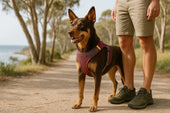
- Safety comes first: A “car travel bed” should not replace proper restraint. In Australia, drivers must maintain proper control and animals must not create a distraction; many jurisdictions also have animal-welfare requirements around safe transport, especially on utes and open vehicles. Using an appropriate restraint (crash-tested harness, secured crate, or barrier) remains best practice.
- The best travel bed is the one that stays put: Look for non-slip bases, anchor straps, and the right size so the bed cannot slide or bunch under your dog.
- Comfort is a health decision, not a luxury: Supportive padding, joint-friendly foam, washable covers, and low-stress textures reduce fatigue and can help dogs with arthritis or anxiety settle on longer trips.
- Australia’s heat is a major risk factor: Dogs overheat quickly in vehicles. Never leave a dog unattended in a parked car; temperatures can climb rapidly even on mild days. Heat-safe materials and ventilation matter on the road.
- Different trips need different beds: The ideal bed for a 10-minute suburb run is often not the best option for a multi-day road trip. Match the bed style to your vehicle layout, dog size, and travel frequency.
- Motion sickness and anxiety are common: Many dogs show early signs (drooling, panting, lip licking, whining, restlessness) long before vomiting. A stable, secure resting surface can reduce discomfort, but training and veterinary advice may be needed.
Recommended by PetCareShed: Smart Choices for Every Dog Owner
Introduction
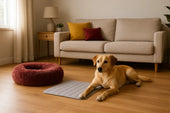
Car travel with dogs in Australia is increasingly common—weekend beach trips, visits to family across regions, camping holidays, and day-to-day errands. Yet the car is one of the least “dog-designed” environments a pet encounters. Vehicles have hard surfaces, changing temperatures, sudden noises, vibration, and unpredictable movement. A well-chosen dog bed for car travel can improve comfort and cleanliness, reduce stress behaviours, and protect your vehicle interior.
However, it is crucial to set the right expectation: a dog bed is not a restraint system. The role of a travel bed is to provide a stable, comfortable and hygienic resting place while your dog is secured appropriately. When a bed is designed with anchoring, bolsters, and non-slip materials, it can also reduce sliding and help your dog maintain a safer posture—but it should never be the sole safety measure.
This guide explains what “best” means in Australian conditions, how to choose a car travel bed that suits your dog and vehicle, and which product styles tend to be the most secure, comfortable, and portable.
A Note on Safety and Australian Legal Expectations
Australian road rules and animal welfare laws generally require that drivers remain in proper control of their vehicle and are not distracted. Across Australia, driving with a dog on your lap is an offence, and enforcement can also occur if an unrestrained animal interferes with driving. Several states and territories have specific requirements around safely transporting dogs—particularly on the back of utes or open vehicles—alongside animal welfare obligations to prevent avoidable harm.
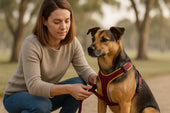
Government and welfare guidance consistently recommends securing dogs using a suitably fitted restraint such as a harness attached to a seatbelt, a secured crate, or a cargo barrier. For Victoria, Agriculture Victoria advises that dogs should be adequately restrained, and dogs on ute trays must be tethered or caged to prevent falling or injury. Queensland guidance similarly emphasises that dogs transported on trays or trailers must be secured to prevent injury. These expectations exist alongside broader animal welfare requirements. Sources include Agriculture Victoria, Business Queensland, and state/territory guidance, as well as legal summaries that compile jurisdictional differences.
It is also important to recognise the evidence base on restraint performance. Independent testing has shown that many products marketed for car travel perform poorly under crash conditions, and there is no mandatory pet-specific crash standard in Australia. The Center for Pet Safety (CPS) publishes protocols and a list of CPS-certified products; Australian motoring organisations have also tested restraints and demonstrated significant variation in performance. When a restraint claim matters, look for transparent test methods and reputable laboratories, not vague “crash-tested” language.
References and further reading (safety and restraint context): Center for Pet Safety (CPS-certified listings), Agriculture Victoria (travelling with dogs), Business Queensland (transporting dogs), and Australian welfare guidance.
Because Every Dog Deserves the Best — from PetCareShed
What Makes a Dog Bed “Best” for Car Travel?
The best dog bed for car travel is not necessarily the thickest or the most expensive. For travel, “best” means it performs reliably across four pillars:
- Security (stays in place)
- Comfort (supports the body during motion)
- Portability (easy to move, pack, and clean)
- Vehicle fit (works with your seat configuration and restraint plan)
A bed that slips, bunches, or blocks seatbelt access can create a safety issue. Likewise, a plush bed that traps heat may be risky in Australia’s warmer months, particularly for brachycephalic (short-nosed) breeds and older dogs that struggle to regulate temperature.
To help you evaluate options, the next sections break down the practical features that matter most.
Types of Dog Beds for Car Travel (and Who They Suit)
Different bed styles suit different vehicles, dog sizes, and travel habits. Understanding the main categories helps you avoid common mismatches, such as buying a bulky mattress for a small hatchback or using a slippery mat that slides across leather seats.
1) Back seat hammock-style bed covers with padding
These combine a seat protector with a padded resting area. They often attach to headrests, creating a “hammock” that reduces the chance of a dog falling into the footwell.
Best for: medium to large dogs travelling on the back seat; owners who want full seat protection.
Watch-outs: some hammocks reduce access to seatbelt buckles; check compatibility with a harness tether.
2) Booster-style travel beds (raised beds for small dogs)
A booster bed provides a raised, contained space—often with bolsters—secured to the seat via straps.
Best for: small dogs who prefer containment and visibility; dogs that settle better when they can see out.
Watch-outs: these should still be used with a restraint system designed for car travel; ensure the attachment points are strong and the bed does not shift.
3) Bolstered “car seat” beds (not necessarily raised)
A contained bed with high sides that sits on the seat or cargo area, usually with anchor straps.
Best for: dogs that like to curl up; anxious travellers who benefit from boundaries.
Watch-outs: bulky bolsters can push against door panels or seat edges in smaller cars.
4) Cargo-area travel mattresses
Flat or lightly bolstered mattresses designed for SUVs and wagons, often paired with a cargo barrier.
Best for: large dogs; long-distance travel; multi-dog households when paired with partitions.
Watch-outs: must be sized to prevent curling at the edges; ensure the mattress is compatible with tie-down points or anti-slip surfaces.
5) Foldable travel mats
Thin, portable mats that roll or fold. Ideal for frequent transitions (car, café, accommodation).
Best for: dogs that already settle easily; short trips; owners who want maximum portability.
Watch-outs: less support for older dogs; may slide unless the underside grips well.
6) Crate/kennel pads
Pads designed to fit inside a travel crate or kennel.
Best for: dogs travelling in secured crates; dogs that prefer den-like spaces.
Watch-outs: choose a pad that resists bunching; avoid thick fills that compromise ventilation in warm weather.
How to Choose the Right Size (A Practical Fit Guide)
Sizing is one of the most overlooked factors in car-travel comfort and safety. A bed that is too large will fold and bulge; a bed that is too small forces awkward posture, increasing fatigue and potentially aggravating joint pain.
Measure two things:
- Your dog’s resting length: nose to base of tail when lying on the side.
- Your vehicle space: width and depth of the intended area (back seat, footwell, cargo floor).
Then decide the posture you want to support:
- Curled posture: suited to bolstered beds; the bed can be slightly shorter.
- Stretched posture: suited to mattresses; aim for a bed length similar to your dog’s resting length.
A simple sizing rule for most dogs:
- Choose a bed at least as long as your dog’s side-lying length for stretched sleepers.
- Choose a bed 10–20% shorter if your dog naturally curls and you want a snug, secure boundary.
Seatbelt access check
Before committing to a back-seat bed, confirm you can still reach the seatbelt buckle or the dedicated tether point (depending on your restraint). If the bed blocks access, you may end up compromising restraint use—an outcome that defeats the purpose of travel gear.
Secure Fit Features That Matter in a Moving Car
A travel bed must resist the forces of cornering, braking, and vibration. Even “calm” driving involves repeated micro-movements that can shift a poorly designed bed.
Prioritise:
- Non-slip base material: helps reduce sliding on leather, vinyl, and fabric seats.
- Anchor straps: ideally two points of attachment, secured to headrests or seat anchors.
- Low-profile edges where seatbelts sit: improves access and reduces pressure on buckles.
- Structured shape: beds with some form hold (not just loose-fill) tend to stay stable.
Avoid:
- Smooth nylon bases without grip
- Beds with long dangling straps that can tangle
- Overly soft, under-structured beds that collapse under the dog’s weight
When a bed becomes a hazard
A bed can become problematic if it:
- slides into the door and prevents proper closure
- blocks air vents needed to keep the rear cabin cool
- interferes with restraint connection points
- encourages your dog to climb into the front seat (for example, if it creates a “step”)
Comfort and Orthopaedic Support: What Dogs Actually Need on the Road
Comfort in the car is about more than softness. Dogs need support that stabilises the body as the vehicle moves. Without support, muscles work continuously to counterbalance motion, which can lead to fatigue and restlessness.
Support features that improve travel comfort
- Medium-firm foam: reduces bottoming-out and helps distribute weight.
- Orthopaedic-style foam (e.g., memory foam or supportive foam layers): useful for older dogs, larger breeds, and dogs with arthritis.
- Bolsters: give a stable edge to lean on, particularly for anxious dogs.
- Low entry height: helps dogs with mobility issues step in and out safely.
Pressure points and long-distance travel
Long drives increase the risk of soreness, especially for:
- senior dogs
- large breeds prone to joint stress
- dogs recovering from injury
- dogs with thin coats or low body fat
For these dogs, a thicker, supportive travel mattress in the cargo area (secured appropriately) can be more comfortable than a thin mat.
Australia-Specific Considerations: Heat, Sun, Sand, and Distance
Australia presents practical travel challenges that differ from many overseas guides.
Heat management is not optional
Australian animal welfare organisations strongly warn against leaving dogs in cars. Evidence-based guidance shows that vehicle temperatures rise rapidly—even on mild days—placing dogs at high risk of heat stress and heatstroke. RSPCA guidance emphasises never leaving pets in a car, and NSW DPI provides specific examples of rapid temperature rises over short timeframes.
Travel bed implications:
- Choose breathable fabrics where possible.
- Prefer light colours that absorb less heat.
- Avoid overly insulating plush beds for summer road trips.
- Carry a separate cooling mat or breathable liner for warm regions.
Sand and salt exposure
Coastal trips create a durability problem: sand works into fibres and zippers; salt can degrade hardware.
Travel bed implications:
- Prefer removable, washable covers.
- Avoid delicate faux-fur fabrics if you frequently visit beaches.
- Choose beds with robust stitching and simple seams.
Long distances and remote travel
Australian road trips often involve long stretches between stops. Dogs may have fewer opportunities for toilet breaks and hydration, and the vehicle environment can remain warm for extended periods.
Travel bed implications:
- Choose beds that remain comfortable for hours, not minutes.
- Pack a foldable spare mat for rest stops.
- Consider waterproof liners for dogs prone to travel nausea.
Managing Motion Sickness and Anxiety: How a Travel Bed Helps (and Its Limits)
Motion sickness is common in dogs, particularly puppies, and may include drooling, lip licking, panting, yawning, whining, pacing, lethargy, vomiting, or diarrhoea. Veterinary sources explain that motion can stimulate the inner ear and create conflicting signals that trigger nausea; anxiety can also develop when a dog associates car travel with discomfort.
A travel bed may help by:
- giving the dog a consistent “place” cue
- improving body stability during turns and braking
- reducing sliding, which can worsen nausea
- providing a familiar scent (especially if the cover is used at home)
However, a bed will not solve motion sickness alone. Consider these evidence-aligned strategies:
- Gradual conditioning: short, positive trips that build tolerance.
- Temperature control: cool air and steady ventilation.
- Pre-trip feeding management: many veterinary resources recommend avoiding a large meal shortly before travel.
- Veterinary guidance for medication: in severe cases, your vet may recommend anti-nausea treatment.
If your dog has sudden new travel sickness, consult a veterinarian to rule out inner ear disease or other medical causes.
Materials and Build Quality: What to Look for (and What to Avoid)
Best materials for Australian car travel
- Tightly woven, durable covers: resist pilling and claw snags.
- Machine-washable fabrics: essential for mud, vomit, drool, and beach grit.
- Water-resistant liners: protect foam cores and simplify clean-up.
- Non-slip rubberised bases: improve security on car seats and cargo floors.
Materials to be cautious with
- Loose-fill beds (overly soft): can compress and shift, reducing stability.
- Heat-trapping faux fur: may be uncomfortable in warm weather.
- Low-quality zippers and thin stitching: fail quickly under frequent washing.
Cleaning practicality
For most Australian households, the best travel bed is one you can clean fast:
- removable cover
- simple shape that fits in a washing machine
- quick-dry materials
- minimal deep seams that trap sand
“Secure, Comfortable & Portable Picks”: Best Dog Bed Styles for Car Travel
Rather than naming external brands, the following “picks” are evidence-based categories that tend to perform well for Australian car travel. The best choice depends on your vehicle type and your dog’s needs.
Pick 1: Anchored back-seat travel bed with non-slip base
Why it works: This style addresses the most common problem—sliding on seats—while still being practical for everyday use.
Ideal for: medium dogs, family cars, regular weekend travel.
Key features to prioritise:
- two headrest anchors
- seat-back coverage to prevent paws on upholstery
- non-slip base
- low-profile entry edge
Pick 2: Booster travel bed for small dogs (with containment bolsters)
Why it works: Smaller dogs often feel insecure on open seats. A booster-style bed provides boundaries and a stable viewing position.
Ideal for: toy and small breeds; anxious travellers; dogs that settle better when they can see out.
Key features to prioritise:
- firm base structure
- wide strap system (not a single thin strap)
- washable interior
- low-snag fabric
Pick 3: Cargo-area orthopaedic travel mattress (SUV/wagon)
Why it works: A supportive flat mattress in the cargo area can be the most comfortable option for larger dogs on long drives.
Ideal for: large breeds; senior dogs; long-distance travel.
Key features to prioritise:
- supportive foam core
- removable washable cover
- non-slip base
- compatibility with cargo barrier and tie-down points
Pick 4: Foldable travel mat for multi-stop trips
Why it works: Many Australian trips involve multiple stops (parks, cafés, accommodation). A foldable mat provides a consistent resting place and keeps dogs off hot or dirty ground.
Ideal for: dogs that already settle easily; owners who want a lightweight option.
Key features to prioritise:
- grippy underside
- quick-dry cover
- carry handle or strap
Pick 5: Crate pad for dogs travelling in secured crates
Why it works: For dogs that travel in crates, a properly fitted pad reduces vibration and pressure without compromising crate ventilation.
Ideal for: crate-trained dogs; owners prioritising containment.
Key features to prioritise:
- correct crate sizing (no bunching)
- washable, water-resistant surface
- moderate thickness to maintain airflow
Decision Guide: Match the Bed to Your Car and Dog
Use this quick guide to narrow your options.
- If your dog travels on the back seat and you want upholstery protection: choose an anchored back-seat travel bed or padded hammock.
- If your dog is small and restless: consider a booster travel bed.
- If you drive an SUV/wagon and your dog is large or senior: choose a cargo orthopaedic travel mattress plus appropriate restraint strategy.
- If you travel often and stop frequently: pack a foldable travel mat as a secondary bed.
- If your dog travels in a crate: choose a crate pad designed to fit that crate and resist sliding.
Comparison Table: Travel Bed Styles at a Glance
| Bed style | Best for | Key security features | Comfort strengths | Main limitations |
|---|---|---|---|---|
| Anchored back-seat bed | Most medium dogs | Non-slip base, headrest straps | Stable surface, bolsters optional | May block seatbelt access if poorly designed |
| Padded hammock cover | Seat protection + stability | 4-point headrest straps, anti-slip backing | Prevents footwell slips | Not a bed unless well padded |
| Booster travel bed | Small dogs | Seat straps, contained walls | Security through boundaries | Limited space; must be well anchored |
| Cargo orthopaedic mattress | Large/senior dogs | Non-slip base; compatible with cargo barrier | Joint support for long trips | Less portable; needs correct sizing |
| Foldable travel mat | Multi-stop trips | Grippy underside (varies) | Lightweight, versatile | Less support for older dogs |
| Crate pad | Crate travel | Snug fit prevents bunching | Reduces vibration, improves rest | Depends on crate being properly secured |
How to Set Up a Safe Car “Sleep System” (Bed + Restraint + Position)
A safe setup typically combines three elements:
- Restraint or containment (harness/seatbelt connection, secured crate, or barrier)
- A stable resting surface (travel bed/mattress)
- A low-distraction layout (dog stays out of driver space)
Back seat setup
- Place the bed so it lies flat and does not block buckles.
- Attach anchors before the dog enters.
- Connect the dog’s travel harness to the seatbelt system as recommended for that harness.
Cargo setup (SUV/wagon)
- Use a cargo barrier where practical.
- Place the mattress flat and check it does not slide.
- If using a crate, secure it to tie-down points so it cannot move.
Avoid the front seat for most dogs
Even when technically allowed, the front seat brings airbag risk and tends to increase driver distraction. Most safety guidance favours rear seating or cargo areas (when safely arranged).
Portable Packing Checklist for Australian Road Trips
A bed is just one part of a travel plan. For long drives, pack for comfort, hygiene, and temperature management.
Consider:
- travel bed + spare foldable mat
- water + spill-resistant travel bowl
- absorbent towels (beach or rain)
- waste bags
- gentle grooming wipes or brush for sand
- restraint equipment (harness tether or crate straps)
- light blanket (for cool nights) and a breathable liner (for warm days)
Recommended Related Products from PetCareShed
The following PetCareShed product categories are commonly useful when setting up secure, comfortable car travel. Selection should be based on your dog’s size, health needs, and vehicle layout.
- Car Travel Dog Beds (anchored and non-slip styles): suitable for back seats where you want the bed to stay in place and remain easy to clean.
- Foldable Travel Mats: useful as a secondary bed for rest stops, accommodation, and cafés.
- Orthopaedic Dog Mattresses: helpful for larger or senior dogs travelling in cargo areas, providing consistent support on long drives.
- Crate Mats and Pads: appropriate for dogs travelling in secured crates, especially when you want a washable, snug-fitting pad.
- Dog Car Harnesses and Tethers: used alongside a travel bed to support safer restraint practices.
- Spill-Resistant Travel Bowls: help maintain hydration without soaking the bed or seat.
- Grooming Brushes and Wipes: practical for reducing sand and shedding before your dog settles into the travel bed.
Common Mistakes to Avoid (That Reduce Safety or Comfort)
- Using a collar and lead as a restraint: collars can injure the neck in a sudden stop and do not provide body support.
- Buying a bed that blocks seatbelt buckles: this often leads to inconsistent restraint use.
- Choosing overly plush beds for summer travel: heat build-up is a real risk.
- Ignoring non-slip requirements: sliding increases anxiety and may worsen motion sickness.
- Not washing the cover regularly: odours and allergens can build up quickly, especially after beach trips.
- Overfilling the car: cramped spaces can cause dogs to adopt awkward postures and may reduce airflow.
Maintenance and Hygiene: Keeping Travel Beds Fresh and Functional
Travel beds experience harsher use than home beds. Regular cleaning is not only about smell; it reduces allergens, bacteria load, and the risk of skin irritation.
A practical routine:
- After each trip: shake out grit; wipe down obvious dirt; air-dry thoroughly.
- Weekly (for frequent travellers): wash cover; inspect straps and stitching.
- Monthly: check the foam core for odour or dampness; replace liners if they no longer repel moisture.
If your dog is prone to travel nausea, consider using a removable waterproof liner and carrying spare covers. This can turn a difficult clean-up into a simple cover change.
When to Seek Veterinary Advice Before Car Travel
Car travel discomfort is sometimes a health signal, not a behavioural issue. Speak with your vet if your dog:
- suddenly develops motion sickness
- shows persistent drooling or vomiting on trips
- pants excessively despite cool conditions
- struggles to stand or lies awkwardly, suggesting pain
- has known heart/airway disease or is brachycephalic and travelling in warm weather
Veterinary sources note that motion sickness can be linked to inner ear stimulation and that anxiety conditioning can worsen symptoms. Medication may be appropriate in some cases, but it should be selected and dosed by a veterinarian.
Detailed FAQ
What is the safest way for a dog to travel in a car in Australia?
The safest approach combines proper restraint or containment with a stable resting surface. Best practice guidance supports using a crash-tested harness attached to a seatbelt, or a secured crate, or a cargo barrier depending on your vehicle and dog. A travel bed improves comfort but should not be relied on as the sole safety measure. Independent testing and safety organisations (including CPS) emphasise large differences in performance between restraint products, and Australian guidance focuses on preventing distraction and harm.
Can I just use a dog bed instead of a harness or crate?
No. A dog bed is designed for comfort and cleanliness, not crash protection. In a sudden stop, an unrestrained dog can be thrown forward, injure themselves, and injure passengers. A bed should be used together with an appropriate restraint strategy.
Are dog car restraints legally required in Australia?
Rules differ by state and territory, but Australia-wide, drivers must maintain proper control and dogs must not be on the driver’s lap. Many jurisdictions and animal welfare laws also address safe transport and preventing harm, especially for dogs on open vehicles such as ute trays. Government and welfare guidance strongly recommends restraining dogs in vehicles even where not explicitly mandated.
What is the best dog bed for long road trips?
For long trips, most dogs do best with a stable, supportive surface—often a cargo-area orthopaedic mattress for larger dogs in SUVs/wagons, or an anchored back-seat travel bed for back-seat travel. Look for a removable washable cover, non-slip base, and a support core that will not bottom out after hours of use.
What is the best car travel bed for a small dog?
A booster travel bed or a contained bolstered seat bed is often suitable for small dogs, provided it is well anchored. Small dogs commonly settle better when they have boundaries and a consistent place to rest.
Should my dog ride in the front seat if they have a travel bed?
Most dogs are better positioned in the back seat or cargo area (with an appropriate setup), as the front seat can increase distraction and carries airbag risk. Even with a bed, the front passenger area may not be the safest option.
How do I stop a dog bed from sliding on leather seats?
Choose a bed with a rubberised non-slip base and anchor straps to the headrests. If the bed still shifts, reassess sizing (too large can bunch and slide) and consider adding a dedicated non-slip underlay designed for car interiors.
Can a dog bed help with car anxiety?
A familiar bed can support calmer travel by providing a consistent resting place and familiar scent. For many dogs, the combination of a stable bed, gradual conditioning, and predictable routines helps. If anxiety is severe or escalating, consult a veterinarian or a qualified trainer.
What are the signs my dog is getting motion sick in the car?
Common early signs include drooling, lip licking, excessive swallowing, yawning, panting, whining, trembling, restlessness, lethargy, and in some cases vomiting or diarrhoea. Veterinary sources note that motion sickness is often related to inner ear stimulation and can be worsened by anxiety.
Should I feed my dog before a car trip?
Many veterinary resources recommend avoiding a large meal shortly before travel for dogs prone to nausea. Your vet can advise a suitable plan based on your dog’s age, health, and travel history.
How can I keep my dog cool during car travel in Australia?
Use air-conditioning or steady ventilation while driving, offer water at safe stops, and select bedding materials that are breathable and not overly insulating. Never leave your dog unattended in a parked vehicle, as Australian welfare guidance warns that car temperatures rise rapidly and heatstroke can be fatal.
What bed is best for dogs with arthritis or joint pain?
A supportive foam travel mattress or a well-constructed orthopaedic-style bed with medium-firm support is usually helpful. Low entry height reduces strain. Consider speaking with your vet about pain management and travel strategies if your dog struggles to settle or appears sore after trips.
How often should I wash a dog travel bed?
For frequent travellers, washing the cover weekly is a practical baseline, with spot-cleaning after each trip. After beach trips, sand and salt should be removed promptly to prevent fabric wear and odour.
Are “crash-tested” dog beds a real thing?
Some products may claim testing, but there is no mandatory pet-specific crash standard in Australia. A bed’s anchors can improve stability, but crash protection primarily comes from a properly tested restraint system (harness/crate). If a product claims crash testing, look for transparent details: test method, laboratory, pass criteria, and documentation.
Can my dog travel on the back of a ute on a bed?
A bed alone is not sufficient. Multiple states have requirements or welfare expectations that dogs on ute trays be restrained or contained to prevent falling or injury. For practical safety, a secured crate or an appropriate tethering system (designed to prevent jumping/falling and avoid neck injury) is usually necessary, alongside shade and heat management.
What should I do if I see a dog left in a hot car?
Australian welfare guidance advises contacting relevant authorities (such as the RSPCA inspectorate line in your state/territory or police if urgent). Do not place yourself at risk or escalate conflict. Heat stress can develop quickly; NSW DPI and RSPCA materials explain that cars heat rapidly and dogs can deteriorate fast.