
Key Takeaways
- A visible dog tag is still the fastest way for a stranger to contact you if your dog slips a lead, escapes a yard, or is found wandering. Microchips matter, but they rely on a scanner and up-to-date records.
- Australian rules commonly require a council registration tag on the collar in public, and in some places (notably NSW) there are explicit requirements for a dog to wear identification with owner contact details. Always check local council by-laws.
- The best dog tags for Australian conditions prioritise legibility, corrosion resistance, and secure attachment. For beach and coastal dogs, marine-grade stainless steel is typically the most reliable choice.
- Engraving quality is not cosmetic—it is safety-critical. Deep, durable engraving (often achieved via mechanical/rotary engraving) remains readable longer than shallow markings.
- Privacy matters: most owners can safely engrave a phone number and suburb/city while avoiding a full street address, reducing unnecessary personal risk while still enabling rapid reunification.
- The “best” tag depends on lifestyle: urban apartment dogs, beach dogs, bush-walkers, working dogs, and anxious escape artists benefit from different shapes, sizes, materials, and accessories.
Your Dog’s Happiness Starts Here - at PetCareShed
Introduction
A dog tag is one of the smallest purchases most owners make, yet it can be one of the most important. When a dog is found by a neighbour, a jogger, or a family at the park, that person rarely has a microchip scanner. What they do have is a phone. A clearly engraved tag turns a stressful situation into a simple call or text.
In Australia, dog identification is not only common sense but also part of responsible ownership. Councils issue registration tags and maintain owner details, and microchipping is widely mandated across jurisdictions. However, real-world reunifications often happen at the “front line”: someone reads a tag and contacts the owner immediately. The practical aim of this guide is to help Australian dog owners choose dog tags that remain readable, durable, and secure in local conditions—heat, coastal salt, heavy play, bush walks, and everyday wear.
This article explains what to put on a tag, how to choose materials and engraving, how to fit and maintain tags, and how to plan a layered identification system that works when it matters.
Dog Tags, Council Registration Tags, and Microchips: What Each One Does
Clear terminology prevents mistakes at the checkout and reduces risk later.
A personal ID dog tag (commonly called a “dog tag”) is the engraved tag you choose and attach to your dog’s collar or harness. It usually contains contact details.
A council registration tag is issued when you register your dog with your local council. Many councils require dogs to wear that registration tag when in public. Requirements vary by state and council, so it is important to confirm what applies to your address.
A microchip is an implanted device that stores an identification number. Vets, shelters, and pounds can scan a microchip, then contact the relevant database to find your details. RSPCA guidance emphasises using multiple forms of identification—microchip, council registration, and visible tags—because no single method is perfect and because tag-based contact is immediate when a member of the public finds your dog. The RSPCA Queensland “ID Your Pet” resource lists multiple forms of ID (microchip, council registration tag, and personal tag with contact details) as part of a strong identification approach.
Microchips are essential, but they are not a substitute for a readable tag. A microchip cannot be read from a distance, and a finder may not take your dog straight to a vet or shelter. A tag provides information where the dog is found, at the time it is found.
Your Dog’s Happiness Starts Here - at PetCareShed
Australian Legal and Practical Identification Expectations
Australia’s legal settings around dog identification are mostly managed through state/territory legislation and local council by-laws, which means owners should treat “legal requirements” as a two-step check: state rules and then council rules.
Across Australia, it is widely expected that a dog in public will be:
- Microchipped (commonly required by law, with age deadlines varying by jurisdiction)
- Registered with the local council (or relevant authority)
- Wearing the council registration tag attached to a collar
Animal Welfare Victoria provides practical collar guidance for registered dogs, including that the registration tag should be attached to a collar adjusted so you can fit two fingers comfortably between collar and neck.
In NSW, widely cited guidance indicates stronger expectations around visible ID (collar and tag with contact details) when a pet is outside the home.
Because councils can issue fines and may seize roaming dogs, identification has a compliance dimension as well as a welfare dimension. Most importantly, identification reduces the time a dog spends lost, exposed to roads, heat stress, snakes, other dogs, and panic-driven behaviour.
Identification Layers That Work in Real Life
A dependable, Australia-appropriate approach is layered:
- Microchip (permanent ID—ensure registry details are current)
- Council registration (tag displayed as required)
- Personal engraved tag (immediate public contact)
- Optional: GPS tracker for dogs with high escape risk (useful, but not a replacement)
RSPCA guidance supports multiple forms of identification, including a personal ID tag and council registration tag, alongside microchipping.
What Information Should Be on a Dog Tag in Australia?
Owners often assume “more is better”. In practice, clarity beats quantity. The best tag is the one a stranger can read quickly, in poor light, while a dog is moving.
Australian pet tag guidance commonly prioritises a phone number and the pet’s name, while cautioning against placing a full home address on the tag for privacy reasons.
Recommended Information (Most Dogs)
A strong default set for most Australian dogs is:
- Dog’s name (helps a finder handle the dog and builds trust)
- Primary phone number (mobile is most common)
- Secondary phone number (partner, family member, trusted friend)
- Suburb and state (or city + state)
If there is room and it remains readable:
- Owner surname (optional)
- “Microchipped” (short note; helps signal there is additional ID)
Special Cases: Medical and Behaviour Notes
Medical alerts can be appropriate when they are accurate, stable over time, and phrased clearly:
- “DIABETIC”
- “EPILEPSY”
- “ON MEDS”
Behaviour warnings should be used cautiously. A tag that says “Nervous” or “Fearful” can help a finder approach calmly. However, a tag that says “Aggressive” may discourage assistance. If a dog is bite-risk, it is better to focus on secure management (proper harness/collar system, muzzle training when appropriate, and containment), rather than expecting a tag to manage risk.
What to Avoid (Common Mistakes)
Avoid information that either reduces safety or consumes space needed for essentials:
- Full street address (privacy and personal safety concerns; suburb is usually enough)
- Long messages (“I am loved, please call my mum”)—well intentioned, but often reduces font size
- Outdated phone numbers (a very common reason tags “fail”)
- Social media handles as the only contact (too slow)
Privacy and Safety Considerations for Australian Households
Dog tags exist to help a stranger contact you quickly. They also create a small public window into your identity. The risk is usually low, but it should be managed sensibly.
A practical privacy-first approach is:
- Put phone numbers on the tag
- Add suburb/state rather than a full street address
- Ensure your voicemail greeting does not disclose personal details
If an owner prefers not to list any phone number, reunification tends to slow down because the finder must take the dog to a vet, shelter, or council. In a hot Australian summer, delays can be serious. A tag’s value is speed.
Best Dog Tag Materials for Australian Conditions
Australian conditions are hard on equipment: heat, dust, beach salt, chlorinated water, and high activity levels. The most common tag materials are metal and silicone.
Stainless Steel: The “Set-and-Forget” Option for Many Dogs
Stainless steel is widely used for dog tags because it resists corrosion and remains readable when engraved properly. Some Australian tag suppliers specify 316 stainless steel, which is commonly regarded as a high-corrosion-resistance (marine-grade) option, making it particularly suitable for coastal dogs.
Stainless steel suits:
- Beach and saltwater exposure
- Dogs that swim frequently
- High-wear urban dogs (pavements, concrete, frequent collar-on time)
Potential drawbacks include slightly higher weight than aluminium (usually minor) and the need to manage noise if your dog is sound-sensitive.
Aluminium and Anodised Aluminium: Light but More Wear-Prone
Aluminium tags are light and commonly available. They are often adequate for low-wear conditions, but may show faster wear to surface treatments and engraving compared with stainless steel, particularly when exposed to abrasion and salt.
Aluminium suits:
- Very small dogs where weight is a priority
- Dogs that rarely swim and are mostly indoor
Silicone Tags: Quiet and Comfortable, with Trade-Offs
Silicone tags are popular for noise reduction. They are often more comfortable for dogs that startle at tag noise or scratch at collars.
However, silicone tags can:
- Hold dirt and moisture against the collar if not cleaned
- Stretch or tear on strong chewers
- Have printing that may fade faster than deep engraving
Quick Comparison Table (Material Pros and Cons)
| Material | Best for | Strengths | Watch-outs |
|---|---|---|---|
| Stainless steel | Coastal, active, year-round wear | High corrosion resistance; long service life | Can be noisier; slightly heavier |
| Aluminium/anodised aluminium | Small dogs; lower-wear lifestyles | Very light; affordable | Engraving may wear sooner; finish can abrade |
| Silicone | Noise-sensitive dogs; indoor focus | Quiet; soft edges; comfortable | May tear or fade; needs cleaning |
Engraving Quality: The Difference Between “Nice” and “Readable”
Owners often compare tags by shape and colour. In practice, the most important technical features are engraving depth, font choice, and contrast.
A tag that is unreadable is functionally the same as no tag.
Laser vs Mechanical (Rotary) Engraving
In general terms, mechanical/rotary engraving tends to produce deeper markings than light surface etching, which can improve long-term readability. Some tag suppliers and guides emphasise the importance of durable engraving and replacing tags when text becomes worn.
When selecting engraving:
- Prefer clear, simple fonts
- Avoid decorative scripts
- Ensure enough line spacing
- Keep the message short to prevent tiny text
Legibility Checklist
Before deciding your engraving text, confirm:
- Can a stranger read it at arm’s length?
- Will it still be legible if the surface gets scratched?
- Is the phone number printed without spaces or with standard spacing that reduces mis-dials?
Practical formatting tips:
- Use a phone format that Australians recognise (for example, “04xx xxx xxx”)
- Avoid using brackets or special characters that confuse reading
Tag Shapes and Sizes: Practical Fit for Different Dogs
Shape is more than appearance. It affects how a tag swings, what surfaces it contacts, and how likely it is to catch on vegetation.
Common Shapes
- Round tags: fewer sharp edges; good all-round option
- Bone-shaped tags: visually common; can be easy to read
- Military-style rectangle/oval: often fits multiple lines cleanly
- Slide-on tags: sit flat on the collar; reduce noise and snag risk
Size and Weight Considerations
A small dog can be bothered by a heavy, swinging tag, especially if the collar is worn all day. Conversely, a very small tag on a large dog may force text to be too small.
A practical approach:
- Choose the largest tag your dog can comfortably wear without excessive movement
- If your dog is noise-sensitive, consider silicone or slide-on styles
Attachment Hardware: Split Rings, S-Clips, and Why Tags Go Missing
Tags fail as often from attachment problems as from engraving wear.
Typical Attachment Options
- Split rings: common and secure when quality is high
- S-clips: easy to attach, but can open under high load if low quality
- Bolt snap or small carabiner: convenient for swapping collars, but may add bulk
For dogs that run through scrub or wrestle at the dog park, attachment security is critical.
Practical Attachment Tips
- Use a quality split ring of appropriate thickness
- If your dog loses tags regularly, consider a slide-on collar tag
- Avoid attaching too many items to one ring (tag + bells + accessories), which increases leverage and wear
Noise, Comfort, and Behaviour: The “Quiet Tag” Question
Some dogs tolerate tags easily. Others scratch at their collar, startle from jingling, or become distressed when wearing equipment. It is worth taking this seriously because collar discomfort can lead to escape attempts.
If noise is a concern:
- Choose a silicone tag or silicone tag silencer
- Use a slide-on tag to reduce swinging
- Keep the collar properly fitted (snug enough to avoid twisting, not tight)
For dogs with anxiety or sensory sensitivity, small reductions in irritation can significantly improve compliance.
Climate and Lifestyle Scenarios (Australia-Specific)
Australia is not one uniform environment. The best dog tag for a Brisbane apartment dog may not be the best for a dog living on a coastal property in WA.
Beach and Coastal Dogs
The combination of salt, sand, and frequent wet-dry cycles accelerates wear.
Priorities:
- Stainless steel for corrosion resistance
- Simple engraving with strong contrast
- Regular rinsing after beach visits
316 stainless steel is commonly positioned as a high-quality option for corrosion resistance.
Bush Walks and Hiking Dogs
In scrub, tags can snag and rings can be pulled open.
Priorities:
- Low-profile tag style (such as slide-on)
- Strong attachment hardware
- Collar and harness fit check before and after walks
Urban Dogs and High Foot-Traffic Areas
In cities, dogs may slip leads at crossings or doors.
Priorities:
- Tag with a clearly readable mobile number
- Consider adding a secondary contact number
- Use reflective collar elements for visibility at night
Working Dogs and Property Dogs
For dogs that roam large properties under supervision, the goal is often rapid recovery by neighbours.
Priorities:
- Owner phone number + property region/suburb
- Consider a second tag or backup identification if the collar is damaged
Dog Tags and GPS Trackers: How They Work Together
GPS trackers can be valuable for certain risk profiles: escape artists, dogs that bolt, and dogs that accompany owners in unfamiliar areas.
However, GPS trackers have limitations:
- They usually rely on mobile/cellular coverage
- They require charging
- Many involve ongoing subscription costs
Independent reviews of GPS dog collars and trackers note the subscription-based nature of real-time tracking and that performance depends on network coverage.
A GPS tracker is best treated as a prevention and monitoring tool. A tag remains the immediate, universally readable contact method.
Practical Recommendation
- Use tag + microchip as the non-negotiable base
- Add GPS if your dog has a history of escape or you regularly visit large off-lead areas
How to Fit Tags Safely on Collars and Harnesses
A tag should not compromise safety. A few basic fitting practices reduce choking and snag risk.
Collar Fit
Animal Welfare Victoria advises collar adjustment so you can fit two fingers comfortably between collar and neck, a useful practical guideline for many dogs.
General fitting notes:
- Too loose: collar can slip over the head; tag can catch and twist
- Too tight: discomfort, hair loss, skin irritation
Harnesses and Tags
Some owners attach tags to a harness rather than a collar. This can be fine, but consider:
- Many dogs do not wear a harness all day
- If a dog escapes the harness, the tag goes with it
For most dogs, a collar-worn tag is the more consistent option.
Maintenance: When to Replace a Tag (and How to Prevent Failure)
Dog tags are exposed to abrasion every day. Maintenance is straightforward but often neglected.
Check the tag monthly for:
- Engraving still readable at a glance
- Split ring not stretched or opening
- No sharp edges forming
- No cracks (for silicone)
After beach swims:
- Rinse collar and tag with fresh water
- Dry before long storage to reduce odour and material breakdown
A simple replacement rule:
- If you cannot read the phone number quickly in normal light, replace the tag.
Choosing the Best Dog Tags in Australia: A Practical Buying Framework
The “best” tag is the one that suits your dog’s life and stays readable.
Step 1: Decide Your Risk Profile
Consider:
- Has your dog ever slipped a lead or gate?
- Does your dog bolt from fireworks or storms?
- Do you live near busy roads?
- Do you visit beaches or off-lead reserves?
Higher risk profiles justify:
- More durable material
- Larger, more legible engraving
- Backup contact number
Step 2: Choose Material and Form
- Coastal/swimmer: stainless steel
- Noise-sensitive: silicone or slide-on
- Small dogs: lightweight aluminium or small stainless with minimal lines
Step 3: Choose Engraving Content
Keep it short, clear, and current.
A strong example:
- “BASIL”
- “04xx xxx xxx”
- “04xx xxx xxx”
- “FREMANTLE WA”
Step 4: Plan Attachment and Redundancy
If your dog is prone to losing tags:
- Use a slide-on tag, or
- Use two different attachment methods (tag ring + separate registration tag ring)
Recommended Related Products from PetCareShed
The following product categories are commonly useful when setting up a reliable identification system. The focus is practical compatibility rather than style.
- Engraved dog ID tags (stainless steel options): suitable for coastal living and heavy wear; prioritise clear engraving and robust hardware.
- Engraved dog ID tags (silicone quiet options): helpful for noise-sensitive dogs or indoor dogs that wear collars for long periods.
- Dog collars (everyday wear): a well-fitted collar is the foundation for tags; select durable stitching and appropriate width for your dog’s size.
- Martingale collars (escape-prone dogs): useful for sighthounds and dogs that back out of flat collars; must be fitted correctly.
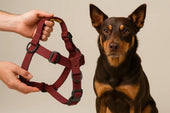
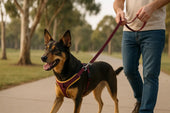
- Dog harnesses (walking control): supportive for dogs that pull, seniors, or brachycephalic breeds; consider keeping tags on the collar even if walking in a harness.
- Reflective collars and leads: improves visibility in early morning and evening walks, supporting safety in suburban and urban settings.
- Split rings and tag silencers: small accessories that reduce lost tags and noisy jingling.
Common Myths About Dog Tags (and the Reality)
Owners sometimes delay buying tags due to misconceptions. Clearing these up helps prevent avoidable losses.
- Myth: “My dog is microchipped, so a tag is unnecessary.”
- Reality: microchips require a scanner and correct database details. Tags enable immediate contact by the public.
- Myth: “My dog never leaves the yard.”
- Reality: gates are left ajar, storms damage fences, delivery drivers open doors, and visitors forget to latch gates.
- Myth: “A tag makes my dog a theft target.”
- Reality: the greater practical risk is a lost dog with no contact details. Manage privacy by avoiding a full street address and using a phone number and suburb.
- Myth: “Any engraving is fine.”
- Reality: small, decorative fonts and shallow engraving reduce readability quickly.
A Simple Identification Checklist for Australian Owners
Use this checklist as a practical standard.
- [ ] Microchip implanted
- [ ] Microchip registry details current (phone numbers and address)
- [ ] Council registration current
- [ ] Council registration tag attached to collar (as required)
- [ ] Personal engraved ID tag attached to collar
- [ ] Primary phone number correct and answered
- [ ] Secondary phone number included (recommended)
- [ ] Collar fit checked (two-finger rule)
- [ ] Tag and rings checked monthly
FAQ: Best Dog Tags in Australia
What is the best type of dog tag for Australian conditions?
For many Australian households—particularly in coastal areas—stainless steel tags are a strong choice due to corrosion resistance and long-term durability. Suppliers commonly position 316 stainless steel as a high-quality option for harsh environments. If your dog is noise-sensitive, a silicone or slide-on style can improve comfort, provided you monitor wear and readability.
Do dogs legally need to wear tags in Australia?
In practice, dogs in Australia are commonly expected to wear a council registration tag when in public, and microchipping is widely mandated. Requirements and wording vary by state and council.
For example, Animal Welfare Victoria provides collar and registration tag guidance for dog owners.
Some jurisdictions (often cited for NSW) have clearer expectations for visible identification with owner contact details when outside the home.
Always check your local council’s rules.
What should I put on my dog’s tag in Australia?
A practical, privacy-conscious standard is:
- Dog’s name
- Primary phone number
- Secondary phone number
- Suburb and state
Many Australian guides advise avoiding your full street address on the tag for privacy reasons, while still ensuring the tag enables immediate contact.
Should I put my address on my dog tag?
Most owners do not need a full street address. A phone number plus suburb/state usually provides enough information for a finder to contact you quickly, while reducing privacy risks.
If you live in a remote area where phone reception is unreliable and your neighbours may need to return your dog directly, consider at least including your suburb/region and ensuring your microchip details are current.
Is a microchip enough without a tag?
A microchip is essential but not enough on its own. Microchips must be scanned by a vet, shelter, or ranger, and the database details must be current. RSPCA resources emphasise using multiple forms of ID, including visible tags, to maximise reunification chances.
What is better: a hanging tag or a slide-on tag?
- Hanging tags are easy to move between collars and can hold more text, but they can jingle and may snag in scrub.
- Slide-on tags sit flat on the collar, reducing noise and snag risk, but you must ensure the tag fits the collar width and is transferred when you change collars.
For dogs that repeatedly lose tags on bush walks, slide-on styles can be a practical solution.
How often should I replace my dog’s tag?
Replace the tag when:
- The phone number is not readable at a glance
- The edges become sharp
- The ring or clip shows stretching, opening, or corrosion
For active dogs, an annual check is often not enough—monthly checks are safer.
Are silicone dog tags safe?
Silicone tags are generally safe and can be more comfortable for sound-sensitive dogs. The key is to monitor for tearing and fading, particularly if your dog chews at gear or plays roughly.
Can my dog wear multiple tags at once?
Yes. Many dogs wear:
- Council registration tag
- Personal engraved ID tag
If noise is a concern, reduce the number of dangling items and consider a tag silencer or slide-on style.
Do GPS trackers replace dog tags?
No. GPS trackers can help locate a dog in real time, but they depend on charging and network coverage and may require subscriptions. Reviews of GPS dog collars commonly note ongoing costs and coverage limitations.
Use GPS as an additional layer for higher-risk dogs, not as a replacement for a readable tag and microchip.
What if my dog is found—how do councils and shelters identify them?
Typically, councils and shelters will check for visible tags and scan for a microchip. Having both increases the chance of a fast reunion. RSPCA guidance highlights the value of multiple identification methods, including council registration tags and personal tags.
Should indoor dogs wear tags?
Many “indoor-only” dogs still escape due to door openings, visitors, storms, or fence failures. A light, comfortable tag on an everyday collar can prevent long search times if an unexpected escape occurs.
Are there any tips for engraving small tags for small dogs?
Yes—prioritise readability:
- Keep content to the essentials (name + one or two phone numbers)
- Use a plain, clear font
- Avoid long suburb names; use abbreviations where sensible
If you must choose between a second phone number and a long message, choose the second phone number.
If my number changes, is updating the tag enough?
Update both:
- The physical tag
- The microchip registry details and council registration details
Tags help in the moment. Registries matter when a dog is taken to a shelter or scanned by a vet.